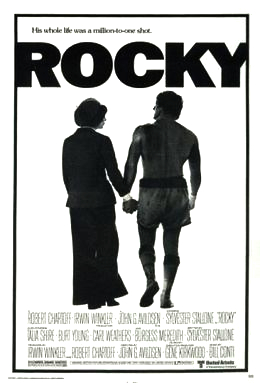
Career Overview
John G. Avildsen occupies a distinct space in the landscape of New Hollywood and its immediate aftermath. He is frequently identified as a populist auteur whose work bridges gritty realism with triumphant cinematic narratives. His career trajectory is irrevocably anchored to his masterful direction of Rocky, a film that not only defined his creative identity but also permanently altered the trajectory of the American sports drama. Avildsen found his true cinematic calling in chronicling the lives of marginalized individuals striving for dignity in unforgiving urban environments.
Before his ascent into the cultural zeitgeist, Avildsen honed a naturalistic approach that favored character study over spectacle. This grounding in authentic, lived-in environments became the bedrock of his most celebrated work. By situating narratives in specifically textured landscapes, most notably his evocative Philadelphia setting, Avildsen captured the unique rhythms of working class American life during the economic anxieties of the 1970s. His protagonists are typically individuals left behind by the American Dream, making their eventual ascension all the more resonant.
Ultimately, Avildsen carved out a legacy as a premier director of the quintessential underdog story. While some scholars occasionally reduce his output to formulaic crowd pleasers, a closer examination reveals a filmmaker of acute emotional intelligence. His ability to fuse savage authenticity with profoundly uplifting arcs ensures his position as a crucial figure in late twentieth century American cinema. His work continues to serve as a touchstone for filmmakers exploring narratives of athletic perseverance and personal revelation.
Thematic Preoccupations
The thematic architecture of Avildsen's cinema is built upon elemental themes of resilience, self actualization, and the pursuit of dignity. At the absolute core of his filmography lies the underdog story, a narrative construct he explores with rigorous devotion. In Rocky, this preoccupation manifests through the titular meat-factory worker who seeks not necessarily a victory in the ring, but rather a validation of his own existence. Avildsen is less interested in the mechanics of boxing than he is in the internal, spiritual battles his characters must fight to overcome their societal marginalization.
Intersecting with these narratives of athletic struggle is a deep investment in personal growth catalyzed by romantic love. Avildsen posits that genuine human connection is the necessary foundation for individual triumph. The tenderness found in these romantic subplots provides a vital counterweight to the aggressive authenticity of the physical combat. His protagonists are often deeply flawed individuals whose awakening is sparked by the stabilizing presence of an intimate partner, allowing them to transcend their bleak circumstances.
Furthermore, Avildsen frequently interrogates the mythology of the American Dream, sometimes inviting jingoism criticism from contemporary scholars who analyze the cultural impact of his work. However, the text of his most lauded films often subverts simple nationalism, focusing instead on the grueling, unglamorous reality of the working class struggle. The pursuit of the heavy-weight champion is portrayed not as an inevitable destiny, but as a Herculean task requiring monumental sacrifice, firmly rooting his thematic obsessions in a recognizable, grounded reality.
Stylistic Signatures
Avildsen's visual language is characterized by a deliberate shift from documentary style grit to soaring, operatic myth making. His films often open with a grounded, almost vérité aesthetic, utilizing drab color palettes and low light cinematography to emphasize the poverty and stagnation of his protagonists. His rendering of the Philadelphia setting is a prime example of this approach, where cold, industrial landscapes and cramped, claustrophobic domestic spaces physically manifest the protagonist's sense of entrapment.
As his narratives progress toward their climaxes, Avildsen's stylistic approach undergoes a striking transformation. He integrates extraordinary elements into an otherwise realistic framework, elevating the narrative through dynamic editing and sweeping musical cues. The integration of stirring themes to accompany montage sequences has become one of his most recognizable stylistic signatures. The classic scenes of the training run, climaxing on the steps of an art museum, demonstrate his unparalleled ability to synchronize kinesthetic movement with musical crescendo, creating an immensely involving narrative momentum.
In portraying physical conflict, particularly the brutal world of boxing, Avildsen relies on a visceral, kinetic shooting style. He employs close up framing and chaotic, subjective camera movements to trap the viewer inside the ring, ensuring a powerfully emotional experience. This tension between the intimate, quiet moments of character development and the loud, aggressively stylized set pieces represents the fundamental duality of his directorial approach. The result is a cinema that balances gritty realism with unabashed, triumphant spectacle.
Recurring Collaborators
While a strict quantitative analysis of his entire filmography may not yield a vast troupe of recurring actors, Avildsen's collaborative dynamic with his cast in Rocky provides a crucial template for understanding his directorial method. His partnership with Sylvester Stallone stands as one of the most symbiotic director and actor relationships of the era. Avildsen recognized and cultivated the raw, unpolished energy of his leading man, helping to sculpt a performance that critics have compared favorably to the visceral power found in A Streetcar Named Desire.
Avildsen exhibits a distinct talent for drawing out genuinely charming, winning performances from actors who are required to embody intense physicality. By working closely with performers like Carl Weathers, who brought an imposing arrogance and athleticism to the role of Apollo Creed, Avildsen establishes a perfect foil for his underdog protagonists. The director's ability to balance Stallone's vulnerability with Weathers' bravado highlights his skill in modulating performance tones to maximize narrative conflict.
Furthermore, Avildsen relies heavily on seasoned character actors to provide gravitas and emotional anchorage to his narratives. The casting of veteran performers like Burgess Meredith (frequently identified in critical discourse as Buster Meredith) in the role of the cantankerous but fiercely loyal coach is emblematic of this strategy. These vital supporting performances provide the necessary friction and mentorship that push the protagonists toward their ultimate cinematic catharsis.
Critical Standing
The critical standing of John G. Avildsen is complex, characterized by an enduring tension between immense popular appeal and rigorous academic scrutiny. Upon its release, his defining work was met with widespread acclaim for its masterful direction and its immensely involving narrative. Contemporaneous reviews frequently praised the savage authenticity he brought to the screen, acknowledging his rare ability to elevate a conventional sports narrative into a profound meditation on human endurance.
Over time, however, Avildsen's work has been subject to intense reevaluation, particularly concerning the cultural and political implications of his films. Some cultural theorists and critics have argued that the underdog mythology he popularized was later co-opted by the jingoism of the Reagan era. Despite these critiques, his finest work firmly resists simplistic categorization, offering a nuanced portrait of class struggle that predates the commercialized patriotism of the ensuing decade.
Within the pantheon of sports cinema, Avildsen's reputation remains largely unassailable. Leading publications continue to rank his achievements at the very apex of the genre, frequently citing Rocky as the second greatest boxing movie of all time, surpassed only by Martin Scorsese's Raging Bull. Ultimately, Avildsen is remembered not merely as a populist entertainer, but as a masterful architect of the American mythos, whose films provide a powerfully emotional experience that continues to resonate with both general audiences and academic film scholars.