Career Overview
John Lee Hancock occupies a uniquely traditionalist space within contemporary American cinema, often functioning as a modern heir to the populist sensibilities of Frank Capra. His career trajectory has been largely defined by a commitment to the biographical drama, a genre he utilizes to explore the mythology of American exceptionalism and meritocracy. While he began his cinematic journey with smaller sports narratives like The Rookie, it was his later work that solidified his status as a director capable of navigating the delicate balance between heartfelt storytelling and massive commercial appeal.
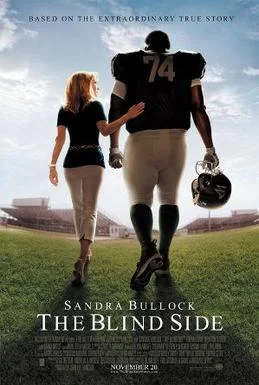
The release of The Blind Side marked a definitive turning point in Hancock's career, transforming him from a dependable journeyman into a director associated with major box office phenomena. At a time when mid-budget adult dramas were struggling to find footing in theaters, Hancock proved that culturally specific narratives could resonate with a massive domestic audience. His success largely stemmed from grassroots support in markets outside the traditional coastal entertainment hubs, demonstrating an acute understanding of audience reception in middle America.
Within cinema history, Hancock is often categorized as a proficient architect of the accessible success story, a filmmaker who prioritizes clear emotional stakes over avant-garde experimentation. Critics and scholars frequently debate his legacy, noting that his films often serve as cultural flashpoints. While his directorial voice may lack the overt stylistic rebellion favored by art critics, his undeniable ability to craft lucrative, emotionally resonant narratives secures his position as a pivotal figure in twenty-first-century mainstream filmmaking.
Thematic Preoccupations
At the core of Hancock's filmography is a sustained examination of family dynamics, particularly the ways in which non-traditional family units are forged through overcoming adversity. He returns obsessively to the concept of the protective matriarch or patriarch, individuals who utilize their privilege or willpower to reshape the lives of marginalized youth. This thematic preoccupation often intersects with the world of sports, which Hancock employs not merely as a backdrop, but as a crucible for social mobility and personal reflection.
Hancock's narratives are heavily invested in biographical drama and the mechanics of the American dream. He frequently constructs thought-provoking narratives that attempt to distill complex social issues into accessible, uplifting moments. However, this distillation frequently leads to controversial themes, particularly concerning racial dynamics and white savior tropes. By focusing on personal triumph over systemic critique, his films inadvertently invite rigorous social commentary regarding the nature of charity and the underlying assumptions of his protagonists.
Despite the frequent inclusion of nostalgic references and feel-good resolutions, a secondary thematic layer in Hancock's work involves the tension between audience perception and historical reality. His adaptations of true events often smooth over the harsher realities of his subjects to produce a more digestible narrative. Consequently, the critical commentary surrounding his work often questions whether these inspirational tales illuminate the truth or obscure it, leaving viewers to grapple with the complexities hidden beneath the surface of his most popular biographical portraits.
Stylistic Signatures
Hancock's visual language is characterized by a classical, unobtrusive approach to filmmaking, heavily favoring the tenets of invisible continuity editing. He eschews aggressive camera movements and hyperkinetic rhythms in favor of a steady, observational lens that centers the emotional weight of the performances. This restraint allows the audience to fully engage with the biographical drama unfolding on screen, creating a sense of intimacy and immediacy that amplifies the heartfelt nature of his scripts.
The mise-en-scene in a typical Hancock film often relies on a polished, slightly idealized rendering of Americana. By utilizing bright, naturalistic lighting and meticulously curated production design, he constructs environments that feel both authentic and subtly aspirational. Whether depicting affluent Southern suburbs or the gritty reality of a high school football field, his visual strategy remains focused on clarity and narrative efficiency. This approach ensures that the uplifting moments and surprising elements of his stories land with maximum emotional resonance.
Furthermore, Hancock demonstrates a distinct reliance on conventional musical cues and sound design to guide the audience through his thought-provoking narratives. His use of score typically swells during pivotal moments of personal reflection and athletic triumph, reinforcing the inspirational storytelling that defines his brand. While some critics might find this stylistic predictability to result in an unconvincing plot device, Hancock's mastery of these traditional cinematic tools is precisely what enables him to orchestrate such profound, revealing insights for his target demographic.
Recurring Collaborators
Although Hancock does not possess a rigid repertory company of recurring cast members across his broader filmography, his directorial method heavily relies on forging intense, singular partnerships with leading actors. The most defining collaboration of his career thus far has been with Sandra Bullock. Her commanding, Oscar-winning portrayal of Leigh Anne Tuohy in The Blind Side provided the necessary gravitational pull to elevate a conventional sports drama into a cultural phenomenon.
Hancock's skill lies in providing a stable, highly supportive environment that allows established stars to deliver career-defining performances. He builds his films around central figures who operate as forces of nature, ensuring that the entire production apparatus serves their emotional arc. By focusing on strong characterizations rather than overwhelming visual effects, he creates a cinematic space where actors can explore the nuanced family dynamics and personal reflections required by his scripts.
Behind the camera, Hancock's approach to production involves surrounding himself with technicians who understand the specific demands of mainstream biographical drama. While specific cinematographers and editors may rotate, the collective output always reflects a cohesive commitment to his signature style. This consistency in behind-the-scenes perspectives ensures that every film he directs maintains the polished, highly accessible veneer necessary to achieve widespread box office success.
Critical Standing
The critical reputation of John Lee Hancock is marked by a deep and enduring polarization. Mainstream audiences and industry guilds have frequently celebrated his work, rewarding him with massive box office success and prestigious accolades. Critics, however, often approach his filmography with a degree of skepticism, viewing his reliance on inspirational storytelling as a mask for controversial themes and unexamined social commentary. This dichotomy places Hancock at the center of ongoing debates regarding the intersection of popular entertainment and critical rigor.
Comparisons to diverse cinematic touchstones, from the populist warmth of Frank Capra to the raw social drama of Precious, highlight the difficulty critics face in categorizing his work. When emerging in the massive shadow of blockbuster spectacles like Avatar, Hancock's character-driven adult dramas offer a stark, traditionalist contrast. While some reviewers praise his films for offering revealing insights and nostalgic comfort during cynical times, others condemn them for relying on unconvincing plot resolutions and superficial racial dynamics. The critical consensus often suggests that his movies are as insightful regarding audience reception and hidden prejudices as they are about their actual biographical subjects.
Over time, Hancock's standing within critical discourse has evolved from being viewed merely as a competent craftsman of sports dramas to being recognized as a filmmaker whose work necessitates serious cultural interrogation. Even when his narratives are deemed emotionally manipulative or overly simplistic, the sheer scale of their popularity demands academic attention. Consequently, Hancock remains a fascinating case study for film scholars, representing the enduring power and inherent contradictions of the modern American populist director.