Career Overview
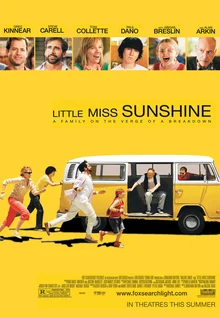
Jonathan Dayton occupies a fascinating space in twenty-first-century American cinema. Emerging prominently from the vibrant world of music videos and commercial direction, his transition to feature filmmaking represented a distinct shift in the indie film landscape. His feature debut, Little Miss Sunshine, arrived in 2006 to reshape the contours of American independent cinema. The picture blended commercial accessibility with a rigorous indie sensibility that recalled the anti-establishment comedies of the 1970s, establishing him as a prominent new voice in character-focused storytelling.
Prior to feature filmmaking, Dayton honed his craft in short-form media, developing a rigorous discipline regarding visual economy and character introduction. These traits would profoundly influence his narrative work, proving that his jump to features was not an abrupt abandonment of his aesthetic but rather an expansion of it. He brought a precise, highly tuned sense of pacing to the road trip movie, a genre often prone to meandering, and injected it with a fresh, dynamic energy.
The premiere of Little Miss Sunshine at the Sundance Film Festival marked a definitive moment in his career arc. The film was acquired to great fanfare, transforming Dayton from a celebrated short-form director into a high-profile awards contender. This trajectory underscores a broader historical trend in the 2000s where filmmakers with similar pedigrees began injecting a stylized visual grammar into working-class narratives, ultimately achieving both massive commercial hits and enduring critical prestige.
Thematic Preoccupations
At the core of Dayton's directorial vision is a profound interrogation of the American Dream and the concept of loserdom. In Little Miss Sunshine, this thematic preoccupation manifests through a family structured around starkly conflicting ideologies of success and failure. By juxtaposing characters obsessed with winning against those simply trying to survive, Dayton creates a microcosm of American capitalist anxieties. He dissects how these societal pressures fracture family dynamics and breed profound dysfunction, using humor to mask deep-seated existential panic.
The road trip serves as his primary narrative engine, functioning as both a literal and metaphorical journey toward collective self-realization. However, Dayton subverts the traditional road movie by stripping away the glamour of the open highway. The cramped quarters of a failing vehicle force his characters into uncomfortable proximity, stripping away their psychological defenses. This forced intimacy allows Dayton to explore themes of nonconformity and the inherent absurdity of middle-class aspirations, rooting his comedy in unavoidable domestic claustrophobia.
Dayton also consistently engages with the idea of authentic rebellion against sanitized culture. The child beauty pageant in his debut acts as a potent symbol of grotesque societal expectations, echoing the satiric bite of 1970s cinema like Smile. His characters, despite their bizarre behavior and outrageous scenarios, represent a working-class authenticity that pushes back against patronizing, manufactured ideals of perfection. Through their collective rebellion, Dayton uncovers grace in their shared imperfections and champions the beauty of the misfit.
Stylistic Signatures
Dayton's visual language is characterized by a deceptive simplicity that masks a highly calculated comedic geometry. He frequently employs wide, static frames to capture ensemble cast interactions in real time. This allows the physical comedy and unspoken reactions to breathe without the intrusion of rapid cutting. Such an approach demonstrates a profound trust in his actors to convey humor and pathos through subtle facial expressions rather than relying heavily on manufactured punchlines or frantic pacing.
His mise-en-scene heavily favors a vibrant, almost sun-bleached color palette that ironically contrasts with the darker, melancholic undertones of his narratives. The oppressive yellow of the central Volkswagen bus in Little Miss Sunshine operates as a visual anchor, constantly drawing the eye and emphasizing the inescapable gravity of the family unit. The framing within these confined spaces highlights a claustrophobic tension that visually articulates the family dysfunction at the heart of the story.
Editorially, Dayton balances breezy storytelling with moments of sudden, jarring stillness. He orchestrates a rhythm that lulls the audience into a genial sense of security before introducing unexpected twists or bursts of outrageous behavior. Furthermore, his background informs a highly specific use of diegetic and non-diegetic sound. He often utilizes idiosyncratic, upbeat indie instrumentation to counterpoint moments of profound emotional defeat, thereby elevating the quirky humor and satirical tone of his cinematic world.
Recurring Collaborators
While the current database highlights a single defining feature for Jonathan Dayton, his collaborative process is evident in how he builds a highly unified creative brain trust. In terms of narrative conception, his defining work was profoundly shaped by the screenplay written by Michael Arndt. Arndt provided the intricate scaffolding of quirky humor, sarcasm, and profound thematic depth that Dayton so carefully translated to the screen. This collaboration yielded a precise balance of character-driven comedy and layered social critique.
Dayton's approach to performance relies heavily on cultivating a cohesive ensemble rather than leaning on a single star vehicle. Although recurring cast members are not heavily chronicled across multiple database entries, his cast in Little Miss Sunshine functions as an essential, unified organism. Actors like Abigail Breslin, who embodies the innocent yet resolute Olive with dreams of beauty pageant glory, serve as the emotional center of his directorial experiments.
He extracts performances that are uniformly committed to the deadpan reality of outrageous scenarios. By fostering an environment where actors fully grasp how unspoken reactions can be funnier than dialogue, Dayton ensures that his casts never tip over into broad caricature. He relies on his performers to ground the satire in genuine, working-class humanity, making his collaborative process a cornerstone of his authentic cinematic voice.
Critical Standing
Jonathan Dayton's critical reputation was instantly solidified with the release of Little Miss Sunshine, a film that positioned him at the forefront of the mid-2000s independent cinema boom. Critics celebrated the picture as a refreshing and ultimately affirmative movie, frequently comparing it to the anti-establishment comedies of the 1970s such as Harold and Maude. It was lauded as a classic American road movie that successfully merged gentle family satire with a deeply resonant loserdom narrative, standing in stark contrast to more artificial studio comedies like Barry Sonnenfeld's RV.
Despite the overwhelming initial acclaim and high-profile awards recognition, critical discourse surrounding Dayton's work has occasionally invited deeper debate. Some commentators have interrogated the satiric intent of his narratives, suggesting that the tonal shifts between breezy comedy and dark thematic exploration can occasionally feel weirdly uncertain. Critics have debated whether his portrayal of working-class milieus and institutions acts as a sharp critique or risks slipping into the very grotesque spectacle it attempts to parody.
Nevertheless, Dayton's legacy remains strongly anchored by his ability to elevate the dysfunctional family trope to a new level of comic madness. His work is continuously studied for its humorous social commentary and its deft handling of ensemble dynamics. By successfully charting the precarious territory between independent quirk and mainstream accessibility, Dayton is recognized for injecting a much-needed dose of vital, character-driven authenticity into the modern American cinematic landscape.