Career Overview
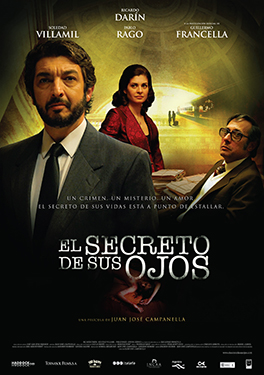
Juan José Campanella is a major figure in Argentine cinema whose work bridges the gap between commercial accessibility and rigorous historical reflection. His most internationally recognized work, The Secret in Their Eyes, cemented his position as a director capable of weaving personal tragedy with national trauma. By treating genre tropes with intense gravity, he manages to transcend simple categorization and create deeply authentic human experiences.
Throughout his career, Campanella has gravitated toward narratives that frame intimate, interpersonal struggles against a larger political backdrop. He often works within genre frameworks (like the traditional thriller or police procedural) to excavate deeper psychological truths. This approach has allowed him to build a filmography that appeals to mainstream audiences while retaining the intellectual rigor expected by art critics and cinephiles.
His position in cinema history is that of a classical craftsman who revitalized the suspense narrative. By filtering the aesthetics of classic Hollywood through the specific lens of South American history, Campanella achieved a unique international resonance. He is widely recognized for his ability to craft haunting, memorable cinema that resonates on a global scale while remaining firmly rooted in its local context.
Thematic Preoccupations
The core thematic preoccupation in the cinema of Campanella is the inescapable weight of the past. As evidenced by The Secret in Their Eyes, he frequently explores the concept of an unresolved crime, using it not merely as a plot device but as a potent metaphor for historical and personal stagnation. The obsessive pursuit of truth becomes a mechanism for his characters to confront their own unfulfilled desires and professional frustrations.
A persistent political backdrop heavily informs his narratives. Campanella intertwines intimate character dramas with the broader canvas of a fascist state or a politically compromised society. This juxtaposition highlights how systemic corruption infects the daily lives and interpersonal relationships of ordinary individuals. His protagonists are forced to navigate a dark world where justice is elusive and moral compromises are a daily necessity.
The exploration of memory, grief, and regret is another critical obsession for the director. His characters frequently look backward in an attempt to decipher exactly where their lives diverged from their youthful ideals. The authentic human experience in a Campanella film is inherently melancholic. It is defined by missed opportunities and the haunting realization that some wounds refuse to heal completely.
Stylistic Signatures
Campanella operates with a beautifully calibrated visual language that embraces the conventions of the traditional thriller while elevating them through deep character work. Critics often note his engaging storytelling, which relies on subtle shifts in perspective and mood rather than bombastic action. His cinematic environments are characterized by a dark atmosphere that perfectly mirrors the internal, psychological conflicts of his protagonists.
The pacing and structural choices in his work frequently draw comparisons to episodic police procedurals. Reviewers have repeatedly likened his narrative rhythms to a world-class episode of Law & Order, highlighting both the strength and potential pitfalls of this stylistic approach. While some view this as indicative of a formulaic plot structure or unimaginative execution, others argue that this familiar framework provides a steady, reliable foundation for his distinctive narrative digressions.
Tension in a Campanella film is consistently described as sinewy, relying on a slow and deliberate build rather than sudden, unearned shocks. His subtle storytelling utilizes shadow, confined bureaucratic spaces, and precise framing to enhance a feeling of claustrophobia. Even when critics point out predictable outcomes, they acknowledge that the journey is marked by an elegant craftsmanship that prioritizes emotional resonance over flashy experimentation.
Recurring Collaborators
While our specific database identifies no recurring cast members across multiple films for Campanella, a broader understanding of his career reveals a profound reliance on a stable troupe of trusted actors. The deep character work praised in The Secret in Their Eyes is largely the result of his enduring partnership with leading man Ricardo Darin. Their extensive collaborations form the emotional spine of the most celebrated works in the director's filmography.
Darin serves as the perfect avatar for the thematic concerns of Campanella. He typically portrays weary, cynical, yet fundamentally decent men who are pushed to their breaking points by both personal regrets and societal decay. This actor and director dynamic allows for an incredibly subtle storytelling shorthand, where a single, silent glance can convey decades of unresolved tension and unfulfilled love.
Beyond his actors, the creative partnerships Campanella maintains with his cinematographers and composers are crucial to establishing his signature dark atmosphere. These behind-the-scenes collaborations are built on a shared commitment to a traditional, beautifully calibrated cinematic experience. Together, these teams construct immersive worlds that anchor the overarching political and historical narratives in a tangible, deeply human reality.
Critical Standing
Campanella occupies a fascinating and sometimes polarized position within critical discourse. On one hand, he is widely celebrated for crafting cinema in the most traditional sense, championed by critics who praise his commitment to classic narrative forms. His ability to produce an Argentinian thriller of subtlety, distinction, and depth earned him immense international acclaim, culminating in prestigious awards like the Best Foreign Language Film Oscar for The Secret in Their Eyes.
Conversely, his heavy reliance on classical structures has invited accusations of predictable pacing from certain critical factions. Some reviewers have critiqued his work as resembling television procedurals, suggesting an unimaginative execution that occasionally leads to familiar resolutions. In assessing his standing, critics have drawn wide-ranging parallels, comparing his output to the high art of Michael Haneke in The White Ribbon or Jacques Audiard in A Prophet, as well as to the utilitarian storytelling of Sean Penn in The Pledge and Anatole Litvak in The Night of the Generals.
Despite these varying perspectives, his enduring reputation is that of a masterful storyteller capable of merging the intimate with the epic. The prevailing critical consensus recognizes his cinema as beautifully calibrated and exceptionally human. Ultimately, Campanella is revered for utilizing accessible genre frameworks to deliver profound, lasting commentary on justice, memory, and the enduring scars of political oppression.