Career Overview
Kemp Powers occupies a unique position in contemporary cinema as a filmmaker who bridges the gap between intimate narrative ambition and massive studio spectacle. His work in the animated medium, specifically his directorial contribution to Spider-Man: Across the Spider-Verse, represents a pivotal moment in the evolution of comic book adaptations. Powers has helped redefine what audiences and critics expect from mainstream animation, proving that the genre can sustain complex philosophical inquiries alongside hyperkinetic blockbuster thrills.
His career trajectory reflects a deliberate gravitation toward stories that challenge established mythologies. By stepping into an established cinematic universe, Powers faced the daunting task of not only matching previous stylistic heights but fundamentally expanding them. He navigates the formidable machinery of modern studio animation with a keen eye for character-driven storytelling, ensuring that technical innovation never overshadows emotional resonance. His approach marks a departure from traditional, formulaic superhero cinema, favoring a multidimensional storytelling framework that demands rigorous critical engagement.
The result is a directorial footprint characterized by a willingness to deconstruct lore from the top to the bottom. Powers champions a form of cinematic evolution where familiar tropes are shredded and woven back together in entirely new, surprising ways. His position in cinema history is increasingly defined by this commitment to stylistic and narrative experimentation. He stands alongside contemporary filmmakers who view the comic book adaptation not as a commercial constraint but as a vast, kaleidoscopic canvas for sophisticated artistry.
Thematic Preoccupations
A central preoccupation of Powers is the rigorous interrogation of destiny versus self-determination. In Spider-Man: Across the Spider-Verse, he actively dismantles the concept of a predetermined heroic path, opting instead to explore heroism that exists beyond a rigid script. His thematic architecture is built on the premise that true empowerment comes from actively rejecting fatalistic narratives. The protagonist must navigate an existential crisis where defying a canonical destiny becomes the ultimate act of liberation. This philosophical concern elevates his work above standard genre exercises, transforming a superhero tale into a profound exploration of free will.
Powers consistently questions the foundational tenets of his own genre, particularly the notion of who is allowed to participate in heroism. He challenges the mythology of the superhero by presenting identity as a fragmented, fluid construct rather than a fixed state. The multidimensional storytelling inherent in his work serves as a literal and figurative exploration of these fractured identities. Characters are forced to confront multiple versions of themselves and their ideologies, which forces the audience to reconsider the very nature of individual agency and the sacrifices required by the hero archetype.
Despite the vast cosmic scales of his narratives, Powers grounds his thematic inquiries in the intimate reality of adolescent struggles and family dynamics. The spectacular multiverse is heavily anchored by the very grounded friction of exasperated parents and rebellious youth. This juxtaposition creates a rich thematic tension, where the pressure of saving multiple universes mirrors the overwhelming anxiety of coming of age. By rooting complex, existential themes in recognizable domestic conflict, Powers ensures that his sprawling narrative ambitions remain deeply and powerfully human.
Stylistic Signatures
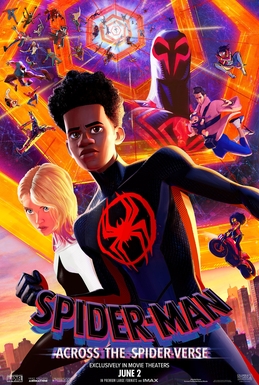
The visual language employed by Powers is defined by an astonishing level of stylistic experimentation and shapeshifting animation. In Spider-Man: Across the Spider-Verse, the aesthetic is never static, shifting constantly to reflect the emotional and psychological states of the characters. He utilizes a spectacular visual innovation that blends various artistic mediums, creating a cinematic experience that feels entirely unrestricted by traditional animation rules. This approach yields breathlessly beautiful scenes that function as both narrative progression and standalone works of pop art.
His mise-en-scène is characterized by kaleidoscopic colors and a hyperkinetic sense of constant movement. Powers orchestrates sequences that are eye-sizzling in their vibrancy, utilizing splashy palettes that overwhelm the senses in a calculated manner. The frame is often packed with dense visual information, requiring multiple viewings to fully parse the layers of artistic detail. This unrelenting kinetic energy is not merely decorative but serves to externalize the chaotic, multidimensional reality the characters inhabit, making the visual style a direct extension of the film's thematic core.
Furthermore, Powers integrates elements of traditional comic book aesthetics directly into the cinematic frame, fundamentally blurring the line between print and screen. He utilizes visual gags, such as the famous pointing meme, alongside deeply poignant imagery, navigating rapid shifts in tone through sudden alterations in lighting, texture, and frame rate. The editing rhythms are incredibly fast-paced, mirroring the relentless anxiety of his teenage protagonists. This stunning blend of techniques results in an emotionally powerful visual vocabulary that redefines the aesthetic possibilities of modern animated cinema.
Recurring Collaborators
The nature of large-scale animated filmmaking is inherently collaborative, and Powers operates highly effectively within complex creative partnerships. His most notable collaboration in this database is with co-directors Joaquim Dos Santos and Justin K. Thompson on Spider-Man: Across the Spider-Verse. This tripartite directing model is essential to managing the colossal narrative and visual scope of the project. Together, they achieve a synthesis of character work, action choreography, and production design that would be nearly impossible for a singular auteur to execute with such precision.
The partnership with Dos Santos and Thompson clearly allows Powers to focus on the multi-tiered narrative ambition of the script while ensuring the stylistic experimentation remains cohesive. Their combined efforts result in a forceful reminder of the aesthetic possibilities of animation, blending distinct artistic sensibilities into a singular, unified vision. The synergy of this directing team enables the film to maintain its hyperkinetic momentum without losing the intimate, character-driven focus that Powers so clearly values.
While current database records do not identify a recurring stable of cast members across multiple films, his work heavily relies on expansive, highly talented vocal ensembles. Powers demonstrates a distinct ability to guide vocal performances that cut through the endless maelstrom of the visual spectacle. He ensures that the actors ground the kaleidoscopic animation with raw, emotional authenticity. As his filmography expands, it is highly likely that he will develop a troupe of trusted performers who align with his rigorous, multifaceted approach to storytelling.
Critical Standing
The critical standing of Kemp Powers is defined by overwhelming acclaim, particularly regarding his ability to push the boundaries of artistic innovation. Critics routinely highlight Spider-Man: Across the Spider-Verse as a staggering achievement in both animation and storytelling. He is frequently praised for his willingness to challenge established mythology and for delivering complex themes that elevate the entire superhero genre. Reviewers consistently note that his work possesses an overwhelming power, driven by sheer visual excellence and profound emotional depth.
His reputation is further solidified by the lofty comparisons his work invites from the critical establishment. Prominent voices in film criticism have placed his directorial efforts alongside universally revered sequels such as The Empire Strikes Back and The Dark Knight. These comparisons underscore his success in crafting multi-tiered narratives that deepen the lore of their respective universes while adopting a darker, more sophisticated tone. To be mentioned in such elite company indicates that critics view Powers not just as a competent craftsman, but as a major voice capable of delivering genre-defining masterpieces.
As his career progresses, his place within critical discourse centers on his role as a vanguard of modern animated cinema. He is celebrated as a filmmaker who proves that animated features can tackle existential philosophy, identity exploration, and structural deconstruction with just as much rigor as live-action cinema. While some critics occasionally note that the endless visual maelstrom can obscure smaller poignant touches, the consensus remains that his narrative ambition and stylistic mastery are groundbreaking. Powers stands as a vital figure in contemporary film, highly respected for redefining the aesthetic and emotional limits of the blockbuster.