Career Overview
Lee Unkrich occupies a crucial position in the trajectory of modern computer-generated animation, acting as a bridge between early digital experimentation and the deeply complex emotional narratives of contemporary cinema. Coming up through the editorial ranks at Pixar Animation Studios, his career arc reflects a steady maturation of both the artist and the medium. His progression from editing and co-directing to helming major solo projects allowed him to shape the foundational language of three-dimensional animated storytelling.
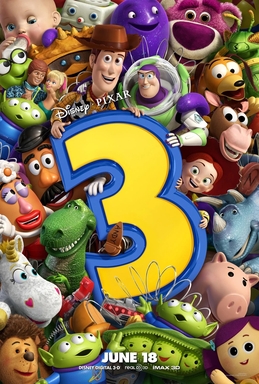
With the release of Toy Story 3 in 2010, Unkrich established himself as a premier architect of the legacy sequel. Rather than merely coasting on the built-in audience of prior Toy Story installments, he matured the franchise alongside its aging demographic. This project solidified his reputation as a filmmaker capable of balancing commercial studio mandates with rigorous, adult-oriented thematic depth.
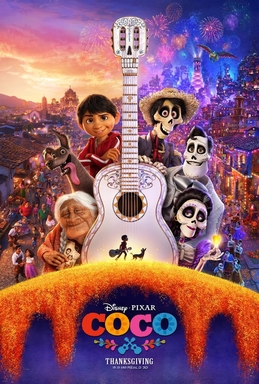
His subsequent solo directorial effort, Coco in 2017, marked a significant evolution in his career. Pivoting away from established intellectual property, Unkrich ventured into original, culturally specific storytelling. This film signaled a transition in mainstream American animation toward international perspectives, proving that rigorous cultural research and reverent storytelling could resonate on a massive global scale.
Thematic Preoccupations
At the core of Unkrich's filmography is a profound exploration of identity and family-oriented themes. His protagonists consistently find themselves caught between individual ambition and the gravity of familial expectation. In Coco, a young boy's desperation to forge his own path in music puts him in direct conflict with his family's generational trauma and established rules. Similarly, Toy Story 3 interrogates the concept of belonging and purpose when the foundational family unit of toys and their owner faces inevitable dissolution.
The transition to adulthood and the subsequent loss of innocence are philosophical obsessions that permeate his narratives. Critics frequently highlight the surprisingly adult themes in his work, noting that his films often grapple with obsolescence, the passage of time, and the reality of death. Toy Story 3 confronts the death of childhood directly, forcing its characters to face their own mortality and the impermanence of their relationships in a universe that relentlessly moves forward.
Furthermore, Unkrich relies heavily on the concepts of nostalgia, tradition, and cultural legacy to anchor his adventurous plots. Memory functions not just as an emotion but as a literal survival mechanism in his universes. In the world of Coco, memory is the currency that sustains life after death, making tradition a vital component of existence. In Toy Story 3, nostalgia provides comfort but also threatens to trap the characters in the past, forcing them to navigate significant changes in their relationships to survive.
Stylistic Signatures
Unkrich's visual language is defined by a vibrant animation style that utilizes highly colorful visuals to offset deeply melancholic undertones. His mise-en-scene often features rich, festive atmospheres, as seen in the meticulously detailed Land of the Dead in Coco. This reverent, wide-ranging pastiche relies on luminous lighting and dynamic color palettes to create immersive environments that still retain a tactile, grounded reality.
Despite the medium of animation, his cinematographic approach mirrors rigorous live-action filmmaking, particularly in his use of pacing and tonal juxtaposition. He frequently employs slapstick comedy and humorous elements to disarm the audience before delivering moments of acute emotional resonance. This technique is evident in Toy Story 3, where sequences of physical comedy, such as a character being transformed into an uncooked taco shell, seamlessly give way to profound, moving narratives about abandonment and loyalty.
Sound and musical integration are arguably his most potent stylistic signatures. Rather than relying on traditional musical numbers, Unkrich weaves music into the diegetic fabric of his films to communicate character psychology and cultural context. The integration of music in Coco serves as both the narrative engine and the primary vehicle for emotional catharsis, proving that his sonic landscapes are just as vital as his impressive visual compositions.
Recurring Collaborators
While specific recurring cast members do not define Unkrich's overarching filmography, his most significant creative partnership has been with the institution of Pixar Animation Studios itself. The studio's collaborative brain trust model heavily influenced his directorial approach, allowing him to workshop complex narratives within a community of veteran animators and writers. This institutional backing provided the resources necessary to execute his highly detailed, ambitious visions.
Instead of relying on a stable of singular celebrity voices across multiple projects, Unkrich frequently builds dense ensemble casts that prioritize the specific texture of the characters over recognizable star personas. This approach ensures that the vocal performances serve the emotional and heartfelt moments of the story rather than distracting from them. The ensembles he curates must be adept at balancing slapstick comedic timing with the heavy, adult themes that characterize his scripts.
His reliance on vast teams of cultural consultants and musical experts also functions as a crucial collaborative partnership. To achieve the reverent storytelling praised by critics, Unkrich shares creative agency with external researchers and musicians. This decentralization of the traditional auteur role allows for a more authentic exploration of tradition and culture, elevating the final product beyond standard studio animation.
Critical Standing
Lee Unkrich enjoys a formidable reputation within critical discourse, frequently cited as one of the most consistently creative forces in mainstream animation. Reviewers often frame his successes in contrast to the broader studio landscape, praising Coco as a rousing, affecting, and much-needed return to form following underwhelming franchise entries like the Cars sequels and Finding Nemo follow-ups. His ability to deliver deeply moving narratives has made him a darling among critics who value emotional intelligence in family cinema.
His standing is further elevated by how often critics compare his animated features to canonical adult dramas. Toy Story 3 was notoriously celebrated by publications like the Los Angeles Times as the best movie of the summer, with other critics drawing thematic parallels to films as weighty as The Godfather Part III. Reviewers frequently note that the humor, drama, and adult themes in his work seem targeted more at parents than children, cementing his status as a filmmaker capable of transcending demographic boundaries.
However, his critical reception is not entirely without detraction. Some purists have argued that his later franchise work lacks the eerie humanity that infused earlier Toy Story sagas. Additionally, certain critics have found fault with his narrative mechanics, suggesting that films like Coco can occasionally become bogged down in over-plotted family melodrama, or that Toy Story 3 possesses a sketchy structural foundation despite its profound emotional payoff.
Ultimately, Unkrich's legacy is defined by his mastery of both the impactful sequel and the original cultural epic. Critics admire how his films prosper by simultaneously staying true to their roots and expanding their reach. He is recognized as a director who wields cutting-edge animation not merely as a spectacle, but as an essential tool for rendering profound, universal human experiences.