Career Overview
Lisa Cholodenko has secured a vital position in the landscape of contemporary American independent cinema. Her career arc demonstrates a steady evolution from a chronicler of marginalized bohemian subcultures to a mainstream auteur dissecting the complexities of the modern American family. Emerging in the late 1990s and early 2000s, she quickly established herself as a filmmaker who refused to sensationalize queer lives, choosing instead to present them with clear-eyed realism and sophisticated wit. This foundational approach set the stage for her mature phase as a director of profound domestic dramas.
Her chronological development reveals a deliberate progression toward broader, yet equally nuanced, storytelling. Early critical comparisons often link her thematic interests to the indie sensibilities seen in films like High Art and Laurel Canyon, works that explored the fluid boundaries of sexuality and artistic ambition. These foundational projects allowed her to refine her authorial voice, preparing her to tackle more universal subjects without sacrificing her unique independent edge. Her work bridges the gap between raw independent cinema and accessible, character driven studio projects.
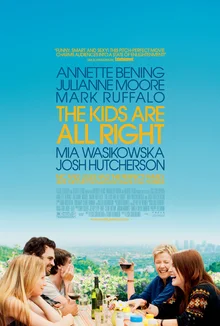
With the release of The Kids Are All Right, Cholodenko cemented her historical importance in modern film. She successfully mainstreamed the postmodern family narrative, bringing queer domesticity into the center of American cinematic discourse. By treating a lesbian marriage as a universal template for exploring love, aging, and betrayal, she pushed queer cinema past early tropes of coming out or tragic isolation. Her resulting body of work stands as a testament to her visionary capability to weave together urbane intelligence and deep emotional resonance.
Thematic Preoccupations
At the core of Lisa Cholodenko's filmography is a rigorous, ongoing investigation of family dynamics and the friction inherent in domestic partnerships. She is fundamentally preoccupied with the architecture of modern relationships, consistently asking how families stay together when faced with internal stagnation and external disruptions. In The Kids Are All Right, this thematic obsession manifests through a deep dive into the universal challenges of raising children and navigating the middle years of marriage. She portrays the marital bond as an institution requiring constant negotiation, idealism, and painful compromise.
Another central philosophical concern is the tension between biological ties and chosen families. Cholodenko often introduces a disruptive outsider, such as an anonymous sperm donor, to act as a catalyst that exposes the dormant resentments and unspoken secrets within a household. This narrative device allows her to explore parenting challenges not merely as logistical hurdles, but as profound emotional crucibles. The resulting drama asks the audience to consider what truly constitutes a family in the postmodern era, emphasizing love and shared history over traditional biological imperatives.
Furthermore, Cholodenko delights in portraying the messy, contradictory nature of adulthood. A recurring motif in her work is the realization that adults are often just as conflicted, impulsive, and lost as the adolescents they are attempting to raise. By framing her characters with this level of emotional complexity, she achieves a highly realistic portrayal of human frailty. Her characters are hardworking individuals striving to maintain a facade of control, yet she reveals their flaws with a gentle, witty humor that underscores the universal absurdity of the human condition.
Stylistic Signatures
Lisa Cholodenko's visual and narrative language is defined by subtle storytelling and a steadfast commitment to emotional realism. Her directorial vision rejects overt stylistic flourishes or manipulative melodrama in favor of a grounded, observational camera. The mise en scene in her films often emphasizes the lived-in clutter and warmth of domestic spaces, rooting the narrative in a palpable, everyday reality. This unobtrusive cinematographic approach ensures that the beautifully acted performances remain the undisputed focal point of every scene.
Tonally, Cholodenko is a master of balancing engaging comedy with profound emotional gravity. Critics frequently highlight the urbane intelligence and sparkling narrative rhythm that propel her films forward. Her superb writing is characterized by sharp, naturalistic dialogue that can pivot from witty humor to devastating heartbreak within a single exchange. This tonal elasticity allows her to maintain an easygoing atmosphere even as she unpacks complex psychological betrayals, making her films intellectually stimulating yet deeply accessible.
Editing in Cholodenko's work prioritizes the rhythm of human interaction and the quiet, reactive moments between characters. She frequently lingers on silent reactions, capturing the subtle strain on a relationship through micro-expressions and body language rather than relying solely on dialogue. This focus on the unspoken elements of communication amplifies the emotional complexity of her narratives. Her stylistic signature is ultimately one of profound empathy, using cinematic tools to observe rather than judge the complicated lives of her protagonists.
Recurring Collaborators
While the current database highlights a filmography characterized by distinct, standalone projects rather than a rigid troupe of recurring cast members, Lisa Cholodenko's approach to collaboration is a cornerstone of her success. Her directorial method depends heavily on the generative, deeply trusting partnerships she forms with elite acting talent. She is renowned for creating an environment where seasoned performers can safely explore the vulnerable shadings of long term companionship and middle aged disillusionment.
Cholodenko's casting choices are frequently cited as masterstrokes of her directorial vision. By recruiting high-profile, celebrated actors such as Julianne Moore and Annette Bening for The Kids Are All Right, she leverages their immense cultural cachet and formidable craft to legitimize and elevate her deeply personal, independent narratives. These collaborations result in a polyphonic narrative texture where every character, from the central matriarchs to the teenage children, is rendered with equal depth, agency, and convincing authenticity.
Beyond her work with actors, Cholodenko operates as a writer and director who frequently engages in collaborative screenwriting. This dual role ensures that her superb, witty writing translates seamlessly onto the screen. Her collaborative ethos extends to her production teams, where she works closely with cinematographers and production designers to build the hyper-realistic domestic worlds her characters inhabit. It is this holistic approach to creative partnership that allows her acute studies of modern relationships to resonate with such striking clarity.
Critical Standing
Within the realm of critical discourse, Lisa Cholodenko is widely celebrated as a radical visionary working in American indie cinema. Her reputation is built on her unique capacity to merge easygoing comedy with profound emotional difficulty. Reviewers consistently laud her for delivering wise insights into the human condition, crafting films that serve as witty portraits of postmodern family life. Early in her career, she was championed as a vital voice in queer cinema, but her critical standing has since expanded, recognizing her as a major chronicler of universal domestic truths.
Her reception history marks a significant evolution in how mainstream critics evaluate queer narratives. Critical analysis of The Kids Are All Right often emphasizes that while the film centers on a lesbian marriage, it is fundamentally a film about the institution of marriage itself. This shift in critical framing highlights her success in transcending niche categorization. Critics praise her ability to depict an alternative family structure while exploring the universal challenges of commitment, aging, and infidelity, drawing comparisons to classic, character driven works like The Children's Hour and You Can Count on Me.
Today, Cholodenko occupies a respected space among film academics and cinephiles as a master of the contemporary dramedy. Her standing is characterized by immense respect for her superb writing and compelling direction. She is viewed as a filmmaker who respects the intelligence of her audience, offering sparkling narratives that do not offer easy resolutions. As discussions around cinematic representation continue to evolve, Cholodenko's pioneering, beautifully acted studies of relationship dynamics remain foundational texts in the ongoing critical conversation about the modern American family.