Career Overview
Michael Cimino emerged as a defining, if ultimately polarizing, visionary of the New Hollywood movement of the 1970s. Following his earlier, more straightforward effort Thunderbolt and Lightfoot, Cimino rapidly ascended to the top ranks of American auteurs. His ambition was to craft sprawling cinematic treatises on the national character, blending sweeping historical tragedy with intimate ethnographic detail. He positioned himself not merely as a storyteller but as an anthropologist of the American working class.
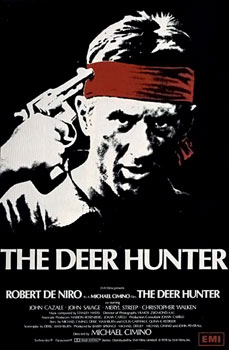
His defining achievement, The Deer Hunter, catapulted him into the highest echelons of critical and commercial success. By daring to confront the raw, unhealed wounds of recent national trauma, Cimino demonstrated an audacious storytelling capability that captured the zeitgeist. He utilized a massive canvas to explore the lives of ordinary citizens caught in the machinery of geopolitics, establishing a career arc characterized by monumental artistic ambition.
Within cinema history, Cimino represents both the zenith of director-driven studio filmmaking and the perilous edge of auteurist freedom. His trajectory from a promising talent to the creator of a defining epic solidified his legacy. Even as industry trends shifted toward safer blockbusters, Cimino remained committed to emotionally shattering narratives that challenged audiences, cementing his status as a fiercely independent voice in American film.
Thematic Preoccupations
At the core of Cimino's filmography is a profound interrogation of American masculinity and the cultural identity of the working class. He is deeply invested in the rituals and rhythms of ethnic communities, particularly those tethered to industrial labor. In The Deer Hunter, the steel mills and local taverns of Pennsylvania serve as the bedrock of his characters' existence. He explores how these tight-knit communities forge bonds of friendship and resilience, only to have those bonds tested by forces beyond their control.
The impact of the Vietnam War and the dehumanization of war itself stand as central philosophical obsessions. Cimino does not merely depict combat (he investigates the psychological annihilation it leaves in its wake). The trauma and endurance required to survive such brutality become a crucible for his protagonists. He returns repeatedly to the concept of sacrifice, examining what individuals are willing to lose for their country and, more intimately, for each other.
Patriotism, in Cimino's worldview, is never a simple virtue but a complicated, often tragic burden. He asks how ethnic, working-class people can reconcile their deep love for their homeland with the horrific realities of foreign conflicts. This conflict generates a bleak portrayal of national duty, where the romanticized ideals of heroism are violently stripped away, leaving only the raw will to endure.
Ultimately, his thematic pursuits coalesce around the fragility of the human spirit when subjected to unrelenting intensity. He is fascinated by male bonding in war, treating it as both a lifeline and a source of profound vulnerability. By contrasting the celebratory rituals of civilian life with the terrifying descent into combat, Cimino questions the very foundation of the American Dream, rendering a heartbreakingly effective portrait of innocence lost.
Stylistic Signatures
Cimino's visual language is defined by an impressive blending of styles, merging the deliberate pacing of European art cinema with the epic sweep of traditional Hollywood filmmaking. He frequently employs a grand, tripartite narrative structure, most visibly in The Deer Hunter, where the film meticulously transitions from a long, immersive domestic sequence to the chaotic horrors of war, and finally to a fractured homecoming. This structural audacity demands patience but rewards the viewer with a deeply gripping narrative experience.
His mise-en-scene is characterized by vivid and intense imagery that juxtaposes the mundane with the terrifying. Cimino lingers on environmental details (the fiery glow of a steel mill, the cluttered warmth of a wedding reception, the claustrophobic filth of a prisoner-of-war camp) to ground his stories in a tangible reality. He utilizes wide, expansive landscapes to emphasize the insignificance of the individual, only to sharply pivot to extreme, suffocating close-ups during moments of psychological crisis.
The editing rhythms in Cimino's work often mirror the emotional state of his characters. He allows scenes of communal celebration to breathe and unfold organically, creating a documentary-like authenticity. In stark contrast, sequences of violence and trauma are edited with unrelenting intensity. The infamous Russian roulette sequence in The Deer Hunter stands as a masterclass in this approach, utilizing rapid cuts and agonizing pauses to craft one of the most terrifying scenes in celluloid history.
Sound and music are equally critical to his stylistic signature. Cimino contrasts the diegetic noise of heavy industry and the chaotic soundscapes of battle with sweeping, melancholic musical motifs. This auditory dissonance heightens the emotionally shattering impact of his narratives. The result is an unflinching, visceral cinema that assaults the senses while maintaining a profound, thought-provoking emotional undercurrent.
Recurring Collaborators
The available database identifies no recurring cast members across multiple films for Cimino, a fact that highlights his tendency to construct entirely new, self-contained ensembles for his massive cinematic endeavors. Rather than relying on a stable repertory company of actors, Cimino sought specific, often transformative performances tailored to the distinct, heavily researched microcosms of his narratives. He demanded that actors fully assimilate into the specific cultural and geographical realities he was constructing.
For The Deer Hunter, this meant assembling a cast capable of authentically projecting working-class camaraderie and profound, lingering trauma. The focus was on finding performers who could embody the rugged endurance and tragic arc of American masculinity. Cimino pushed his ensembles to their absolute limits, placing them in rigorous, sometimes dangerous environments to strip away artifice and capture a raw, unflinching reality on screen.
This approach to casting reflects a broader directorial philosophy where the holistic vision of the project supersedes the comfort of familiar faces. By isolating his casts in immersive environments, he fostered an intense male bonding among the actors that translated directly to the screen. The resulting performances are frequently described as heartbreakingly effective, serving as a testament to his exacting methods and his singular dedication to the emotional truth of the moment.
Critical Standing
Michael Cimino occupies a complex, polarizing, and ultimately legendary space in the history of film criticism. Upon the release of The Deer Hunter, he was universally hailed as a defining voice of his generation. Critics celebrated his work as an impressive blending of box office appeal and high art, drawing favorable comparisons to monumental achievements like Bonnie and Clyde, The Godfather, and Nashville. He was recognized for taking immense creative risks that resulted in an unlikely blockbuster of staggering emotional weight.
Reviewers frequently note the unrelenting intensity and thought-provoking themes that permeate his filmmaking. The Deer Hunter was immediately recognized as an epic treatise on endurance, praised for its gripping narrative and its ability to completely engulf the viewer. Critics highlighted how his films gather the audience up and refuse to let go, offering an emotionally shattering experience that lingers long in the memory.
Over time, his critical reputation has been the subject of intense debate, often centering around discussions of auteurial excess and the politics of historical representation. Some contemporary critics grapple with his bleak portrayal of the Vietnam War and his specific ideological framing. However, even his fiercest detractors acknowledge the visceral power of his cinematic technique and his unparalleled ability to stage startling, horrifying set pieces.
Today, Cimino is widely studied as a master of the American epic. His work is revered by filmmakers and scholars for its audacious storytelling and its uncompromising examination of working-class struggles. He remains a towering figure in the pantheon of 1970s American cinema, respected for crafting terrifyingly vivid imagery and for his unflinching willingness to explore the darkest corners of the American soul.