Career Overview
Michel Hazanavicius holds a peculiar position in twenty-first-century cinema as a craftsman who built his international reputation on meticulous acts of cinematic archaeology. While his broader filmography encompasses various genres, his breakthrough on the global stage arrived through a deliberate and audacious resurrection of obsolete cinematic forms. Rather than pursuing modernist innovation, he positions himself as a cinematic preservationist who repurposes the vernacular of classical Hollywood for contemporary audiences.
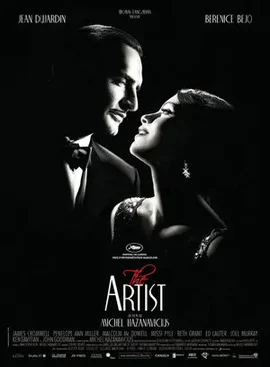
The trajectory of his career reached an unprecedented apex with the release of The Artist in 2011. This project, which chronicles the decline of a silent film star during the advent of sound cinema, demonstrated a daring rejection of modern commercial imperatives. By fully committing to a black-and-white silent format, Hazanavicius managed to bridge the seemingly insurmountable gap between historical homage and global commercial viability.
His approach to cinematic history is characterized by an exacting balance between the traditions of the past and the demands of the present. He does not merely replicate historical aesthetics but weaponizes nostalgia as a dominant narrative force. This unique historical positioning allows him to engage in a profound dialogue with cinema itself, crafting narratives that function simultaneously as entertainment and as historiographical essays on the evolution of the medium.
Thematic Preoccupations
At the core of Hazanavicius's most celebrated work is a deep preoccupation with Hollywood nostalgia and the treacherous nature of technological progress within the arts. He consistently returns to the friction generated by historical transitions, particularly the tumultuous shift from silent film to synchronized sound. This focus on the transition to talkies allows him to explore broader anxieties about obsolescence, artistic purity, and the commodification of celebrity.
The concept of cinematic authenticity operates as a central thematic pillar. His work frequently investigates what it means to be a true artist when the foundational rules of the medium are abruptly rewritten. Through narratives functioning as romantic drama and classic romantic comedy, he examines the personal cost of technological advancement. The tragicomic decline of the stubbornly anachronistic artist, juxtaposed against the rise of the adaptable newcomer, serves as a poignant allegory for the cruelty of the industrial studio system.
Furthermore, his narratives are deeply saturated with intertextuality and referential homage. The thematic architecture of his cinema relies heavily on invoking seminal works like Singin' in the Rain, Sunset Boulevard, and A Star Is Born. By explicitly weaving these touchstones into his thematic fabric, Hazanavicius contemplates the cyclical nature of storytelling and the enduring resonance of archetypal Hollywood narratives, ultimately arguing for a universal, old-fashioned charm that transcends technological eras.
Stylistic Signatures
The visual language of Hazanavicius is defined by an absolute commitment to formal pastiche and a beguiling aesthetic that mirrors the exact era he seeks to recreate. His most distinct cinematic style emerges from rigorous adherence to antiquated techniques. This includes shooting in the academy ratio, utilizing period-accurate lighting strategies, and manipulating frame rates to replicate the kinetic energy of early cinema. Such choices are not mere gimmicks but fundamental components of his world-building.
Despite operating within the constraints of a silent film homage, he demonstrates a profound understanding of pacing and physical performance. The absence of synchronized dialogue necessitates a heightened reliance on visual storytelling and expressive acting reminiscent of Gene Kelly or Rudolph Valentino. Consequently, his mise-en-scene is meticulously choreographed to convey complex emotional states through gesture, blocking, and the strategic deployment of intertitles. When dialogue is implied, it retains a witty, rhythmic quality that transcends the lack of audible speech.
His auditory landscapes are equally crucial to his stylistic signature. In the absence of spoken words, the musical score is elevated from mere accompaniment to a primary narrative driver. The orchestration dictates the emotional register of every sequence, oscillating between lighthearted comedic beats and sweeping romantic melodrama. This cinematic purity creates an immersive, nostalgic atmosphere that paradoxically feels both fresh and intimately familiar to students of classical film form.
Recurring Collaborators
While evaluating his broader cinematic output, the creative partnerships forged by Hazanavicius are integral to the realization of his highly specific aesthetic goals. The execution of his ambitious historical pastiches requires an ensemble capable of modulating their performances to suit the demands of obsolete acting styles. The success of a film like The Artist relies entirely on performers who can embody the unthinking insouciance and physical grace required by silent cinema without descending into broad caricature.
Jean Dujardin stands as the quintessential avatar for the director's cinematic vision. Dujardin possesses a highly malleable, expressive face that serves perfectly for the purposes of silent storytelling. His ability to channel the debonair charm of early screen idols, while simultaneously projecting deep vulnerability, provides the emotional anchor necessary to ground the director's high-concept stylistic experiments. Dujardin's performances echo the athletic grace of classic studio system stars, anchoring the romantic comedy elements in genuine humanity.
The broader collaborative network extends to key below-the-line talent who meticulously craft the illusion of the past. From production designers tasked with resurrecting late 1920s Hollywood to cinematographers who must light scenes using classical paradigms, these partnerships are built on a shared devotion to historical accuracy. It is this collective dedication to formal precision that prevents the work from devolving into mere parody, elevating it instead to a glorious throwback.
Critical Standing
The critical reception of Hazanavicius is uniquely polarized, largely contingent upon a reviewer's tolerance for unironic nostalgia. Among mainstream critics and voting bodies, he has been celebrated as a miracle worker of entertainment. Proponents argue that his work strikes an exact balance between historical homage and accessible emotionality, praising his films for their glorious throwback qualities and the airy lightness with which they wear their pastiche. For these critics, his cinematic revivals provide one of the most entertaining experiences in contemporary film.
However, this widespread adulation is frequently countered by more skeptical voices within the critical establishment. Detractors often read his stylistic exercises as superficial, comparing them unfavorably to more avant-garde explorations of cinematic history. Some critics view his pastiche as an unthinking hodgepodge, explicitly contrasting his work with the dreamlike, subversive silent film experiments of directors like Guy Maddin. These formalists argue that his approach leans too heavily on familiar references to Singin' in the Rain and Sunset Boulevard rather than reinventing the form.
Despite these critical schisms, his place within cinematic discourse is firmly established around debates concerning the value of historical replication. Whether viewed as an utterly beguiling love story to the medium or a beautifully constructed but hollow nostalgia piece, his work forces critics to examine the ongoing relevance of classical Hollywood structures. His cinematic endeavors remain essential touchstones for discussions regarding how modern cinema processes its own history and the enduring power of classic romantic tropes.