Career Overview
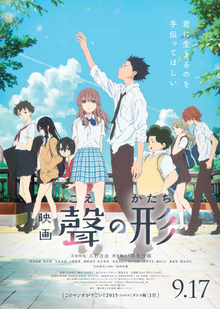
Naoko Yamada has established herself as a distinct auteur in Japanese animation, carving out a unique position in contemporary cinema. Her career arc demonstrates a steady transition from television projects to ambitious feature films. This progression is most notably marked by her critically acclaimed work on A Silent Voice: The Movie, which brought her international recognition and cemented her reputation for tackling complex psychological subjects.
Her background in the rigorous studio system provided the foundation for her later, more mature thematic explorations. By developing a meticulous eye for detail and a profound sensitivity to adolescent experiences, she broke away from traditional anime tropes. She established herself as a director who pushes the boundaries of the medium, elevating the coming of age narrative to the level of serious cinematic art.
In the broader context of cinema history, her work is increasingly defined by her ability to bridge the gap between popular animated entertainment and rigorous arthouse drama. By addressing profound subjects with unyielding sincerity, she has proven that animation can handle the darkest corners of human emotion. Yamada continues to be celebrated as a crucial voice in modern international filmmaking.
Thematic Preoccupations
Yamada obsesses over the painful intricacies of youth, returning constantly to the heavy burdens of guilt and redemption. In A Silent Voice: The Movie, she dissects the lingering trauma of childhood bullying, refusing to offer easy answers or unearned resolutions. The film explores how self-loathing shapes adolescent identity, forcing audiences to witness the arduous journey toward true forgiveness.
Disability representation emerges as a major thematic pillar in her filmography, handled with an honest portrayal rather than melodramatic pity. Her narratives focus on the interpersonal failures surrounding a deaf character, turning a critical lens on the abled peers who must confront their own obnoxious behaviors and systemic complicity. This approach highlights her philosophical concern with human cruelty and the difficult path to moral accountability.
Her work operates as a potent counter to sanitized narratives of youth. Unlike the simplistic morality found in Western properties, which critics often compare to her films, Yamada prefers moral ambiguity. Her shy adolescent characters are deeply flawed, making their eventual arcs of forgiveness all the more evocative and emotionally resonant. She refuses the simple minded inanities of films like The Emoji Movie or My Little Pony, favoring a grueling, honest examination of human frailty.
Stylistic Signatures
Yamada employs a visual language characterized by lush imagery and meticulous spatial design. Her animation style relies on a wallowing emotional embrace of her subjects, utilizing soft color palettes that contrast sharply with the harsh psychological realities her characters endure. This aesthetic tension elevates the emotional depth of her narratives, creating a deeply immersive subjective experience.
Her cinematographic approach often features fragmented framing, isolating character features like hands, feet, and shifting postures to convey anxiety and shy adolescent awkwardness without relying on dialogue. This potent storytelling technique emphasizes internal emotional states over external exposition. By focusing on micro-expressions and body language, she translates complex psychological distress into purely visual terms.
The editing rhythms in her work can sometimes feel dragging to conventional audiences, a point noted in some critical reception. However, this deliberate pacing allows the evocative narrative to breathe naturally. It forces the audience to sit with the discomfort of self-loathing and the slow, agonizing process of interpersonal reconciliation, proving that her stylistic choices are inextricably linked to her thematic goals.
Recurring Collaborators
While standard auteur theory often focuses on singular geniuses, Yamada operates within a highly collaborative studio system that fundamentally shapes her directorial voice. Her most vital partnerships are with the dedicated animation teams and character designers who bring her nuanced, shy adolescent characters to life. Together, they achieve an astonishing anatomical specificity and behavioral realism that defines her aesthetic.
In the realm of voice acting, she eschews a strict reliance on recurring cast members across multiple films, preferring to find the exact vocal texture required for each unique psychological profile. This casting philosophy ensures that the emotional depth of her protagonists feels entirely specific to the diegetic world. By casting voices that perfectly capture the nuance of guilt and redemption, she avoids the meta-textual baggage of celebrity voice actors.
Furthermore, her collaborations with screenwriters allow her to adapt complex manga properties into feature length films. Although critics have occasionally pointed out a slightly inelegant adaptation process when condensing lengthy serials into single features, her writers work closely with her to maintain thematic integrity. These creative partnerships ensure that difficult topics like bullying and disability representation remain the uncompromising focus of the final work.
Critical Standing
The critical reputation of Naoko Yamada has grown steadily, positioning her as a leading figure in the international animation discourse. Reviewers frequently engage in comparative analysis, contrasting her substantive explorations of trauma with the simple minded inanities of mainstream Western animation. Critics specifically cite her as a potent counter to commercial fare like My Little Pony or The Emoji Movie, positioning her as an antidote to cinematic fluff.
Her masterpiece, A Silent Voice: The Movie, elicited polarizing but deeply engaged responses from major publications. Outlets like The Guardian praised its lush emotional resonance while acknowledging its occasional narrative inelegance. Meanwhile, the Los Angeles Times lauded its potent storytelling and its unflinching look at obnoxious, deeply flawed youths. It is frequently compared to other anime milestones like Your Name, solidifying her place at the forefront of the medium.
Today, her standing within film criticism is firmly rooted in her uncompromising vision and honest portrayal of adolescent struggle. While some critics note a dragging pacing in her more indulgent sequences, this is widely accepted as a necessary byproduct of her meticulous psychological world building. Yamada remains highly regarded by art critics and cinephiles for pushing animation into uncomfortable, profoundly rewarding dramatic territories.