Career Overview
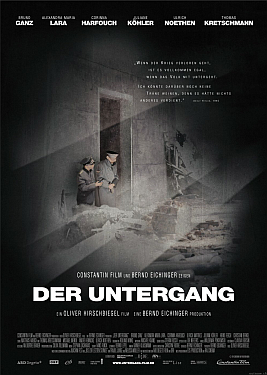
Oliver Hirschbiegel stands as a pivotal figure in contemporary German cinema. His directorial career is defined by an unflinching willingness to examine the darkest chapters of European history. Breaking through to international acclaim with Downfall, he established himself as a filmmaker uniquely capable of balancing historical accuracy with immense dramatic weight. His approach requires a meticulous reconstruction of events that forces viewers to confront uncomfortable historical truths directly.
Hirschbiegel emerged during a period when German cinema was beginning to reevaluate its relationship with national trauma. By tackling the collapse of the Nazi regime head on, he shattered long held taboos regarding the cinematic representation of Adolf Hitler and his inner circle. His ability to synthesize complex historical data into a compelling narrative arc secured his position as a fearless chronicler of the twentieth century.
His subsequent career trajectory has been profoundly shaped by this monumental success. Critics and audiences alike look to Hirschbiegel for narratives that do not shy away from grim realities. By anchoring sweeping historical devastation to intimate human perspectives, he has carved out a distinct legacy within the canon of modern historical dramas.
Thematic Preoccupations
The central preoccupation of Hirschbiegel revolves around the unsettling proximity of humanity amidst evil. He consistently investigates how monstrous acts are perpetrated not by caricatures, but by recognizable human beings. By focusing on the mundane details of daily life within oppressive systems, he forces the audience to acknowledge the banal roots of historical atrocities. This philosophical concern strips away the comfort of viewing historical villains as otherworldly monsters.
A secondary theme prevalent in his work is the corruption and exploitation of a youth's innocence. Hirschbiegel frequently employs young, naive characters as audience surrogates. These individuals become trapped in the machinery of destruction, allowing the director to explore the mechanics of complicity, denial, and ideological indoctrination. The viewer is compelled to witness the gradual erosion of their moral compasses as they navigate unimaginable circumstances.
Furthermore, his narratives often explore the complete story arc of systemic collapse. Instead of concluding his films at the moment a central figure perishes, Hirschbiegel soldiers on to examine the immediate aftermath. He lingers on the opportunistic minions and misplaced idealists who are left behind to face the consequences. This enduring fascination with the lingering fallout of totalitarian regimes gives his films a resonant and tragic depth.
Stylistic Signatures
Visually, Hirschbiegel is a master of spatial confinement. He frequently traps his subjects and his audience in subterranean spaces to cultivate a profoundly claustrophobic atmosphere. This technique draws frequent critical comparisons to Wolfgang Petersen and his seminal work Das Boot. By limiting physical movement and cutting off characters from the outside world, Hirschbiegel externalizes their psychological deterioration and escalating panic.
His storytelling often takes on a labyrinthine quality, mirroring the confusion and moral disorientation of his subjects. The pacing of his films deliberately leans toward an exhausting narrative structure. He is willing to utilize an overlong runtime to ensure the audience feels the suffocating weight of the historical moment. This deliberate pacing choice demands endurance, aligning the viewer with the fatigue of the characters on screen.
Sonically and textually, his films are defined by chilling undertones and remarkably blunt dialogue. Characters speak with a stark pragmatism that contrasts sharply with the horror of their actions. Hirschbiegel occasionally punctuates this grimness with moments of crude humor, highlighting the absurdities of crumbling authority. Yet, his scorn for these figures is often tempered with a compassionate depiction of their fear, presenting a vision that critics have likened to rats being slowly flushed down a drain.
Recurring Collaborators
While the provided cinematic database does not identify specific recurring cast members across multiple projects, the nature of his work reveals a profound reliance on dense ensemble casts. Hirschbiegel demands rigorous dedication from his actors, requiring them to deliver impressive performances under immense psychological strain. His films succeed precisely because his ensembles can portray historical figures with chilling authenticity.
His approach to casting prioritizes performers who can navigate the nuanced intersection of vulnerability and malice. By avoiding actors prone to melodramatic excess, he ensures that the blunt dialogue lands with maximum impact. The dynamic between his cast members is essential for generating the claustrophobic tension that defines his finest work, as the actors must continually react to one another in tightly confined spaces.
Beyond the cast, the necessity for a historically accurate portrayal dictates a deep synergy with production designers, art directors, and historical consultants. These behind the scenes collaborations are vital to constructing the labyrinthine environments that serve as the crucible for his narratives. The meticulous set designs function as silent collaborators, amplifying the grim realities of the scripts and cementing the immersive quality of his cinema.
Critical Standing
The critical reputation of Hirschbiegel is both formidable and intensely debated. He occupies a complex position within film discourse, lauded for his technical mastery while drawing scrutiny for his provocative moral stances. Reviewers frequently praise his immersive historical reconstructions, noting that his ability to capture the grim realities of warfare is nearly unparalleled in modern European cinema. Publications like Slant Magazine have celebrated his nuanced approach, commending his ability to temper righteous scorn with unexpected compassion.
However, this same nuanced approach has generated significant critical backlash. Certain critics, such as those writing for The Guardian, have argued that his compassionate depiction of war criminals is dangerously misguided. These detractors claim his films can leave audiences very cold, warning that an ambiguous tone might inadvertently delight extremist groups who seek to humanize historical monsters. This polarization highlights the inherent risks of his philosophical preoccupations.
Ultimately, his standing in cinema history remains secure precisely because of this friction. He challenges the medium to operate as a space for uncomfortable historical confrontation. Whether praised for his exhaustive narrative detail or criticized for his moral ambiguity, Hirschbiegel remains a central figure in discussions about the ethics of historical representation. His willingness to linger on humanity amidst evil guarantees that his films will be analyzed by scholars and cinephiles for decades to come.