Career Overview
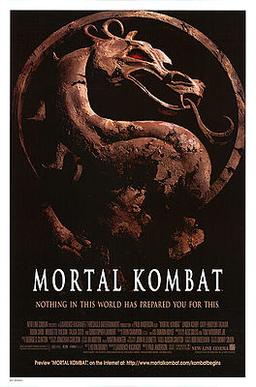
Paul W.S. Anderson occupies a uniquely contested position in contemporary cinema history, largely defined by his pioneering work in transmedia translation. Emerging in the mid-1990s, Anderson pivoted toward big-budget intellectual property, effectively establishing the modern template for video game adaptations. His career trajectory was indelibly shaped by the massive commercial triumph of Mortal Kombat, a film that proved digital interactive properties could be successfully migrated to the silver screen.
Prior to Anderson entering the fray, the subgenre of video game adaptations was littered with critical and commercial disasters. Films like Super Mario Bros and Double Dragon had demonstrated the immense difficulty of adapting interactive lore for passive audiences. Anderson solved this problem by treating the source material with absolute earnestness, prioritizing world-building and aesthetic fidelity over traditional Hollywood narrative conventions. His strategy proved remarkably effective at the box office, capturing the top spot for consecutive weeks despite fierce competition.
The legacy of his early success established a blueprint that would dictate his entire career, eventually leading to massive franchises such as Resident Evil. By successfully navigating the demands of interactive entertainment and cinematic narrative, he created a hybrid cinematic language. He occupies a highly debated space in film history as a populist auteur of the digital era, prioritizing visceral audience engagement over classical cinematic prestige.
Thematic Preoccupations
A central preoccupation across Anderson's filmography is the concept of competition in entertainment, inextricably linked to the depiction of violence in media. In Mortal Kombat, the narrative itself is structured around an existential tournament, reflecting the interactive architecture of the arcade source material. He uses this framework to examine the nature of spectator violence, presenting physical combat as the ultimate mechanism for resolving cosmic disputes.
The tension between intellectual property fidelity and imaginative storytelling forms another major thematic obsession. Anderson frequently prioritizes fan service moments and popular culture references, meticulously replicating recognizable iconography. This creates narratives that critics often label as disjointed, yet they serve a specific, highly engineered function of satisfying preexisting audience expectations and establishing immediate engagement.
Beneath the kinetic action and supernatural elements, Anderson often structures his narratives around journeys of self-discovery. His protagonists frequently embark on mythical, slay-the-dragon odysseys that combine spiritual quests with immense physical trials. The internal journey of self-knowledge is strictly externalized through martial arts combat and physical endurance, turning the video game logic of progressing through levels into a literal path toward enlightenment.
Furthermore, Anderson consistently explores artificial environments and isolated arenas. The special-effects-heavy island in Mortal Kombat acts as a hermetically sealed microcosm for universal stakes. By removing his characters from the grounded reality of modern society, he strips away sociopolitical context to focus purely on the archetypal clash of heroes and villains within supernatural domains.
Stylistic Signatures
The visual language of Paul W.S. Anderson privileges kinetic momentum and action-packed narratives driven by high-energy performances. His stylistic approach favors relentless pacing over classical continuity, utilizing martial arts choreography as his primary communicative tool. In this framework, physical expression and combat sequences frequently replace psychological dialogue as the main vehicle for character development.
Anderson intentionally mimics the structural format of the video game medium. Rather than masking the episodic nature of the source material, he embraces it wholeheartedly. Critics have observed that his films often consist of a relentless series of fights, a deliberate structural choice that discards traditional three-act structures in favor of escalating combat scenarios, immediate visceral thrills, and climatic boss battles.
The aesthetic of his transmedia translation relies heavily on sensory overload. Anderson employs techno-pop music, lasers, and extensive special effects to recreate the vibrant, chaotic atmosphere of a 1990s arcade. This results in a distinctive stylistic hybridity, merging classical cinematic staging with the burgeoning digital aesthetic that would come to define turn-of-the-century blockbuster filmmaking.
There is a deliberate artificiality to his mise-en-scene. The stylized environments and frequently noted wooden dialogue are components of a highly theatrical reality that foregrounds spectacle. By treating cinematic space as a digital playground, Anderson utilizes illusion and visual excess to craft distinctly heightened universes that operate entirely on their own internal, stylized logic.
Recurring Collaborators
The nature of Anderson's early career, particularly within the context of his foundational work on films like Mortal Kombat, is defined less by a recurring acting troupe and more by the overarching presence of corporate partnerships. The primary recurring collaborator in his filmography is arguably the video game industry itself. His creative process is deeply entwined with intellectual property holders and brand managers, ensuring that the transition from console to cinema satisfies corporate mandates.
While specific recurring cast members are notably absent from early cross-film critical analyses of his breakout period, his cinema heavily relies on a dedicated cadre of technical artisans. The translation of interactive combat into choreographed cinematic sequences requires specialized stunt coordinators, martial artists, and visual effects supervisors. These behind-the-scenes collaborations are the true engine of his filmmaking process.
Institutional collaboration with studios like New Line Cinema highlights a corporate mindset that heavily influences the final aesthetic and narrative shape of his films. Anderson works in close tandem with marketing departments to ensure optimal box office returns. His films are designed to weather competitive release windows, successfully holding their ground against massive ad campaigns from rival studio properties like Batman Forever or Pocahontas.
This reliance on technical crews and corporate entities, rather than traditional character actors, underscores his focus on audience engagement strategies over intimate character studies. The ensemble cast is frequently treated as a collection of physical avatars. They function as moving pieces within his highly engineered, special-effects-heavy environments, executing the physical demands of his ambitious choreographers.
Critical Standing
Paul W.S. Anderson occupies a deeply polarized space within professional film criticism. Historically, he is often maligned by traditional critics for prioritizing spectacle over substance, with detractors pointing to disappointing outcomes and uninspired storytelling. Negative reviews frequently cite his wooden dialogue and indifferent performances as evidence of a commercial, anti-intellectual approach that sees IP fidelity and imaginative storytelling as mutually exclusive aims.
Conversely, his box office numbers and audience reception metrics paint a picture of a highly successful populist filmmaker. Mortal Kombat proved remarkably resilient against fierce competition, expanding its audience and dominating theaters for consecutive weeks. Even his harshest detractors have occasionally conceded to the terrific, high-energy panache of his direction, noting his ability to effectively combine supernatural terror with spiritual odysseys.
In the broader critical discourse surrounding video game adaptations, Anderson is universally acknowledged as a foundational figure. When compared to the critical and commercial failures of contemporary adaptations like Street Fighter or Teenage Mutant Ninja Turtles, his work is recognized as the first genuinely successful translation of the medium. He established a baseline standard that redefined how Hollywood approached interactive intellectual property.
Over time, his critical reputation has undergone a subtle, fascinating reevaluation among genre scholars and formalist critics. What was once dismissed by publications like Empire as a mere series of fights is now sometimes analyzed as a radical approach to narrative structure. In this revised view, his unwavering commitment to kinetic movement and literalized combat represents an unpretentious, pure form of action cinema.