Career Overview
Peter Cattaneo emerged as a prominent figure in the 1990s British cinematic renaissance. He is widely recognized for bridging the gap between bleak working-class social realism and broad commercial comedy. His breakout success in the late twentieth century demonstrated a rare ability to translate hyper-specific regional economic anxieties into universally embraced cinema. By centering stories on marginalized communities facing profound systemic shifts, he established a directorial identity rooted in deep empathy and sharp observational humor.
Cattaneo traces his cinematic lineage directly to the British social realist tradition. Critics frequently note the influence of directors like Ken Loach in his grounding of narratives within authentic, economically depressed environments. However, Cattaneo pivoted away from pure political tragedy, aligning himself closer to the feel-good, crowd-pleasing mechanisms of the classic Ealing comedies. He emerged during a period of transitional British cinema where localized stories of hardship suddenly found unprecedented global appeal, driven by audiences hungry for authenticity paired with hope.
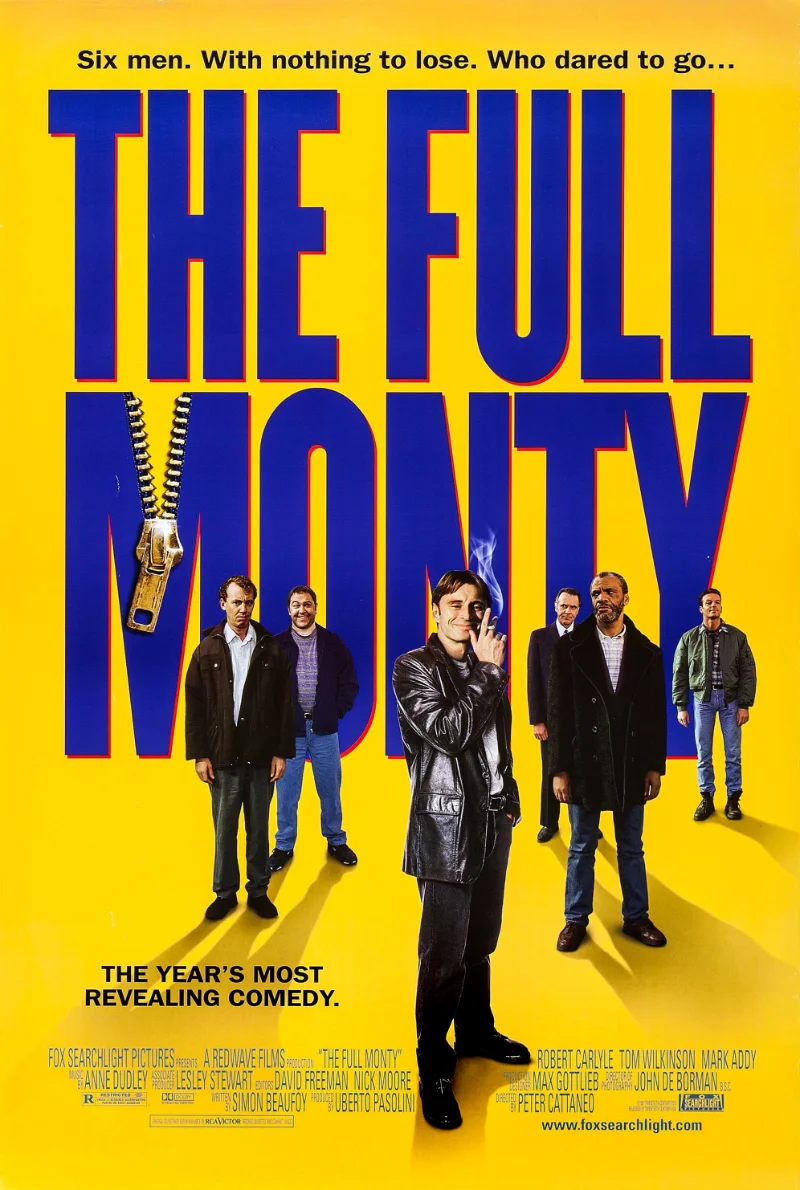
His feature work, most notably The Full Monty, cemented his legacy as a filmmaker capable of mining profound economic despair for cathartic laughter. His trajectory became intrinsically linked to the underdog narrative. He marked himself as a director who could navigate the delicate balance between raucous entertainment and socio-political commentary without alienating a mainstream audience. The resounding box office success of his early work proved that low budget regional cinema could compete on a massive global scale.
Today, Cattaneo holds a secure position in cinema history as a purveyor of light-hearted yet politically observant British cinema. He redefined the commercial viability of the working-class comedy, proving that the devastating loss of industrial jobs could be explored with both dignity and raunchy humor. His career arc reflects a sustained dedication to the resilience of ordinary people, capturing the distinct mood of communities left behind by post-industrial economies.
Thematic Preoccupations
Cattaneo frequently interrogates the intersection of economic disenfranchisement and masculine identity. In The Full Monty, the loss of industrial labor equates directly to a crisis of purpose and dignity for his protagonists. Unemployment is not merely a financial burden but a fundamental erosion of self-worth that his characters must overcome. He explores how a generation of men, who realized their secure jobs in the steel industry were gone, navigated the psychological scrap heap of the 1980s and 1990s.
To combat this systemic neglect, his narratives heavily rely on male camaraderie and bonding experiences. He suggests that resilience in adversity is best achieved through collective action rather than individual exceptionalism. His characters, often marginalized or discarded by society, find salvation and renewed agency through quirky, desperate, and ultimately unifying group endeavors. The formation of surrogate families out of economic necessity remains a central philosophical concern across his filmography.
The director also exhibits a recurring preoccupation with body image and the vulnerability of the male form. By stripping away traditional markers of virility, Cattaneo exposes the fragile nature of working-class masculinity. The literal exposure of the physical body mirrors the emotional baring required to heal from economic trauma. He utilizes discussions around physical imperfection to dismantle toxic machismo, replacing it with a tender and touching exploration of self-acceptance.
Ultimately, his work operates within an uplifting, feel-good framework that consistently champions the underdog narrative. Despite the grim realities of post-industrial decline, Cattaneo infuses his films with nostalgic reflections and heartfelt moments. He repeatedly asks how individuals reclaim their dignity when societal structures collapse, answering that salvation lies in shared laughter, mutual support, and the courage to embrace vulnerability.
Stylistic Signatures
The visual language of Cattaneo blends the bleak, unvarnished aesthetics of British social realism with the warm, accessible framing of a conventional sitcom. His mise-en-scene often highlights the decay of industrial landscapes, utilizing abandoned factories, sterile job clubs, and gray urban sprawl to establish a grounded, melancholic reality. This visual austerity ensures that the comedic elements never feel entirely disconnected from the very real stakes of poverty and unemployment.
Within these grim environments, Cattaneo directs with a surprisingly light-hearted tone, creating deliberate stylistic friction. He utilizes observational, understated camera work reminiscent of kitchen-sink dramas, but paces his scenes with the rhythmic timing of classic stage farce. This juxtaposition prevents the material from becoming overly dour, allowing the raunchy humor and quirky character beats to surface naturally from the bleak settings. The camera rarely passes judgment, maintaining a respectful distance that affords his subjects complete dignity.
The editing rhythms in his films prioritize ensemble dynamics, frequently utilizing medium shots and group framing to emphasize male camaraderie over isolated character studies. The comedic pacing is sharp and unpretentious, cutting away to perfectly timed reaction shots that highlight the absurdity of his characters' situations. Despite the often raucous energy of the physical comedy, the editing always leaves room to linger on tender, touching emotional beats.
Music and sound play a crucial role in juxtaposing the desolate surroundings with uplifting themes. Diegetic music often serves as a catalyst for movement and liberation, transforming mundane or oppressive spaces into arenas of sudden, joyous expression. This auditory rebellion provides a crowd-pleasing release valve for the pent-up frustrations of his working-class protagonists, turning nostalgic pop anthems into powerful tools of personal reclamation.
Recurring Collaborators
A definitive element of Cattaneo's approach to filmmaking is his reliance on strong ensemble casts that function as a cohesive unit rather than a collection of isolated star vehicles. While individual actors like Robert Carlyle have anchored his narratives, the director's true collaborative strength lies in forging believable camaraderie among diverse groups of character actors. This ensemble-first mentality is essential to executing the intricate group dynamics that drive his uplifting themes.
Although specific on-screen talent may vary from project to project, Cattaneo consistently collaborates with casting directors who prioritize regional authenticity and unconventional physical types. This dedication ensures that his ensembles reflect the authentic realities of the working class. By casting actors who resemble everyday people rather than polished Hollywood stars, he bolsters the thematic discussions of body image and relatable masculinity found in his most celebrated work.
Behind the camera, his synergy with screenwriters is vital to achieving his signature tonal balance. His interpretation of Simon Beaufoy's script for The Full Monty exemplifies a perfect alignment between writer and director, where sharp, colloquial dialogue meets empathetic visual execution. This creative partnership translated localized Yorkshire slang and regional economic despair into a universally accessible cinematic language that resonated with global audiences.
Furthermore, Cattaneo's work with editors and musical supervisors reflects a sustained effort to harmonize disparate tonal elements. By working closely with teams that understand the delicate pivot between tragedy and farce, he successfully orchestrates the tender, nostalgic, and raucous elements that define his feel-good storytelling model. These ongoing collaborative philosophies ensure his films maintain a unified, crowd-pleasing rhythm without sacrificing political awareness.
Critical Standing
Peter Cattaneo occupies a unique space in contemporary film criticism, often celebrated for mastering the rare alchemy of the commercial crossover. Critics have long fascinated over how his work managed to achieve resounding box office success on a minimal budget while tackling genuinely depressing socio-political realities. His critical reputation is firmly tied to this ability to synthesize political outrage with the mainstream appeal of Hollywood underdog narratives.
Upon its release, his defining work was met with rapturous acclaim, lauded by outlets as a raucous and touching piece of popular cinema that perfectly captured the cultural zeitgeist. However, some critical circles initially debated whether his crowd-pleasing elements and reliance on raunchy humor diluted the serious exploration of unemployment. Yet, over time, the consensus has shifted to recognize the profound subversive intelligence required to package a critique of Thatcher-era industrial collapse within a highly commercial framework.
In retrospective evaluations, critics frequently compare his films to the classic Ealing comedies, noting his exceptional talent for capturing the resilient, eccentric spirit of everyday people. Reviewers consistently praise his ability to maintain dignity for his subjects even when the characters are engaged in profoundly undignified scenarios. His approach to storytelling is often cited as the gold standard for blending heartfelt moments with sharp social commentary.
Today, Cattaneo is regarded as a vital architect of the British cinematic boom of the late twentieth century. While evaluating his career holistically, critics acknowledge that he proved localized stories of economic hardship could transcend cultural barriers. He is celebrated as a director whose films navigate the scrap heap of post-industrial society with an abundance of heart, humor, and an unwavering affection for the working class.