Career Overview
Peter Farrelly is most historically associated with broad, irreverent comedies co-directed with his brother, Bobby. However, his solo directorial evolution marks a pivot toward more earnest, conventional dramatic narratives that retain a comedic underpinning. The release of Green Book signaled this distinct transition. Farrelly moved from the transgressive, bodily humor of the 1990s into a register of prestige, middlebrow filmmaking. This shift highlights a desire to engage with American historical narratives while utilizing the crowd-pleasing mechanisms honed during his earlier comedic endeavors.
The trajectory of Farrelly's career reflects a broader trend among comedic auteurs who eventually seek critical validation through dramatic, socially conscious projects. By venturing into the racially divided landscape of 1960s America, Farrelly repositioned himself not as a purveyor of shock value, but as a custodian of old-fashioned filmmaking. His background in crafting buddy comedies smoothly translated into the structure of historical road trips, allowing him to navigate heavier subject matter with a familiar structural compass.
Consequently, Farrelly occupies a curious position in contemporary cinema history. He straddles the line between lowbrow comedic royalty and Academy-validated prestige. His solo work demonstrates an enduring belief in the power of cinematic populism. He leverages accessible narrative frameworks to address systemic issues, preferring the gentle, character-driven humor of classic Hollywood over modernist alienation or bleak realism.
Thematic Preoccupations
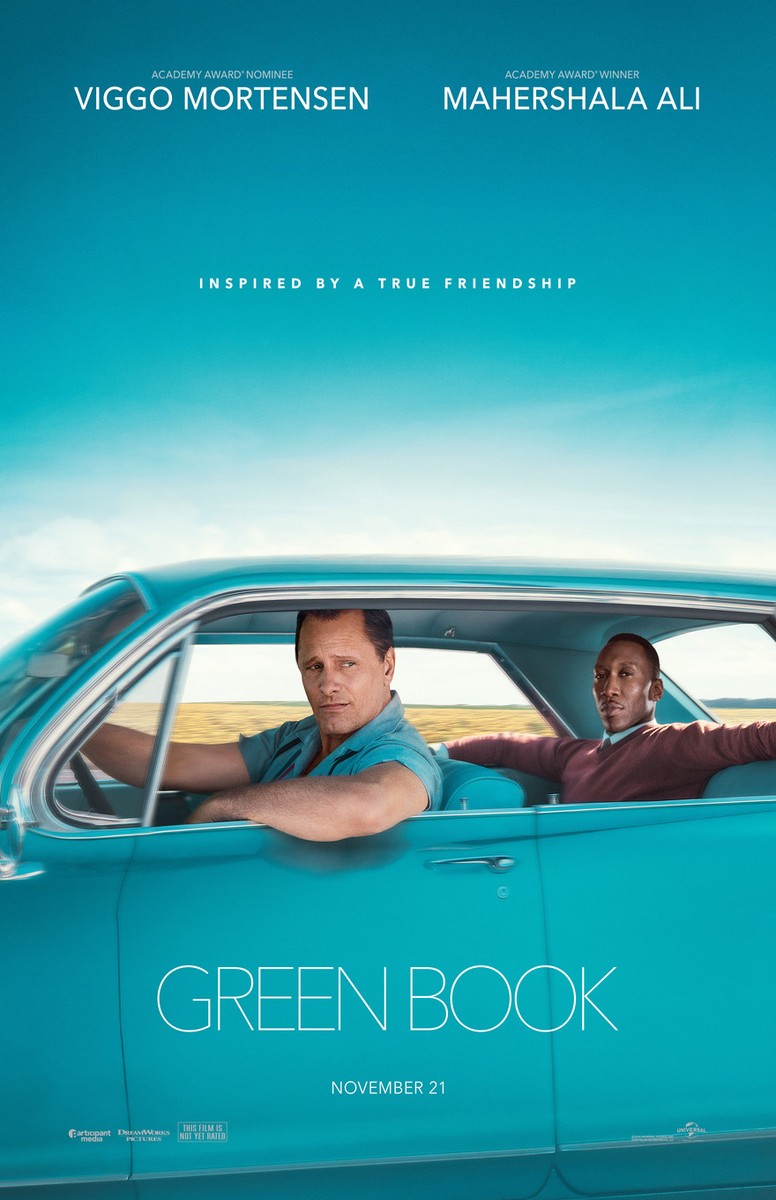
Central to Farrelly's solo work is the exploration of unlikely friendships forged across deep social and cultural divides. In Green Book, this preoccupation manifests in the dynamic between characters defined by contrasting racial and class backgrounds traversing 1960s America. The road trip serves as both a literal and philosophical vehicle for personal growth, where the physical journey mirrors an internal awakening. Farrelly repeatedly asks how proximity and forced cooperation can dismantle ingrained prejudices, portraying interpersonal connection as a primary antidote to systemic racial discrimination.
The thematic architecture of his narratives often relies on the friction between self-satisfied swagger and quiet dignity. Farrelly examines masculinity through these contrasting archetypes, placing loud, gregarious personas in confined spaces with reserved, highly educated counterparts. This dynamic, reminiscent of classic mismatched duos like those in The Odd Couple or Planes, Trains and Automobiles, allows him to interrogate class assumptions and cultural alienation. The resulting synthesis usually points toward a shared, universal humanity.
Furthermore, Farrelly approaches the severity of historical social contexts with a fundamentally good-hearted optimism. Rather than delving into the biting, hopeless realities of racial relations, he prefers to map a trajectory of reconciliation. His philosophical outlook suggests that exposure and empathy are sufficient tools for overcoming deep-seated bigotry. This focus on gentle, personal revelation over structural upheaval anchors his narratives in a deeply traditional, populist ethos that prioritizes emotional resolution.
Stylistic Signatures
Farrelly favors an elegant, unobtrusive visual language that prioritizes performance and character interaction over showy directorial flourishes. His approach is often described as old-fashioned filmmaking, where the camera serves as an invisible observer designed to capture the nuanced dynamics of his leads. In Green Book, the mise-en-scene meticulously recreates the texture of 1960s America without drawing undue attention to its own artifice. The framing frequently emphasizes the claustrophobia of the automobile interior, contrasting it with the expansive, often hostile landscapes of the segregated American South.
The editing rhythms in Farrelly's dramatic work are dictated by the cadence of human conversation and comedic timing. He relies on adept, fluid pacing that allows humorous exchanges to breathe while giving dramatic moments the necessary space to land. This rhythm creates a pleasurable viewing experience, guiding the audience through tonal shifts from lighthearted banter to scenes of moving vulnerability. Farrelly avoids aggressive montage or disorienting cuts, preferring a classical continuity that keeps the audience anchored in the emotional reality of the characters.
Sound and music play crucial roles in establishing atmosphere and underlining thematic contrasts. Farrelly utilizes diegetic music to highlight the cultural differences between his protagonists, using classical compositions and popular period tracks to underscore class and racial divides. The auditory landscape acts as a secondary text, reinforcing the social context while smoothing the narrative transitions of the road trip. This restrained, respectful orchestration of cinematic elements ensures that the central relationship remains the undisputed focal point of the work.
Recurring Collaborators
While Peter Farrelly's earlier career was defined by an inextricable co-directing partnership with his brother Bobby, his transition into solo filmmaking marked a departure from his traditional ensemble of comedic actors. In his recent dramatic pivot, Farrelly has not yet established a recognizable troupe of recurring cast members across multiple films. Instead, he relies on casting established, highly skilled character actors capable of carrying character-driven narratives with a mix of humor and gravitas.
This shift in collaborative strategy requires Farrelly to build immediate trust with leading men who possess chameleon-like abilities. The success of a film like Green Book depends entirely on the alchemy between its principal performers. By selecting actors who can seamlessly project both gregarious energy and quiet dignity, Farrelly delegates a significant portion of the film's tonal responsibility to his cast. The absence of a familiar stock company allows each project to stand alone, unburdened by the audience expectations attached to his past comedic troupes.
Behind the camera, Farrelly's partnerships emphasize functional, classical storytelling over auteurist experimentation. He collaborates with cinematographers and editors who understand the assignment of crafting outrageously appealing, accessible cinema. These technical partnerships focus on ensuring the severity of the social context is respected without overshadowing the intimate, endearing character dynamics that define his current cinematic output.
Critical Standing
The critical reception of Peter Farrelly's solo directorial efforts is characterized by a stark division between popular embrace and rigorous academic skepticism. Reviewers frequently compare his work to canonical mismatched buddy comedies and racial reconciliation dramas like Driving Miss Daisy and Lethal Weapon. Mainstream critics often praise his adept handling of tone, noting that surrendering to the charms of his outrageously appealing narratives feels like the only option. His ability to summon a gentler, more character-driven kind of humor has earned him significant accolades and positioned him as a master of the middlebrow crowd-pleaser.
Conversely, cultural critics and film scholars frequently scrutinize Farrelly's approach to complex historical trauma, contrasting his current trajectory with his earlier comedic output like Kingpin. While some applaud his respectful treatment of social contexts, others argue that his good-hearted optimism simplifies systemic racial discrimination into a matter of interpersonal misunderstanding. This tension places Farrelly at the center of ongoing debates about the responsibilities of historical filmmaking and the limitations of the white savior trope in contemporary cinema. His reliance on old-fashioned filmmaking techniques is thus viewed simultaneously as a comforting strength and an ideological liability.
Despite these analytical polarizing debates, Farrelly's standing in the industry remains remarkably robust. He has successfully rebranded himself from a purveyor of lowbrow gross-out comedy to an Academy Award-winning director of prestige cinema. His work continues to generate immense discourse precisely because it operates at the intersection of undeniable populist entertainment and fraught socio-political history. Ultimately, Farrelly is recognized as an enduring, chameleon-like filmmaker whose mastery of the endearing, pleasurable road trip narrative secures his place in the modern Hollywood establishment.