Career Overview
Ryan Coogler occupies a distinctive position in contemporary American cinema. He operates at the precarious intersection of independent auteurism and mainstream blockbuster filmmaking. His trajectory demonstrates a rare ability to infuse massive studio properties with a deeply personal, unapologetically Black perspective.
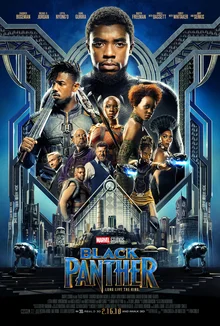
The foundation of his career rests on rendering intimate, culturally significant narratives that resonate on a global scale. By the time he directed Black Panther, Coogler had already established himself as a filmmaker deeply invested in the historical and contemporary realities of the Black experience. This specific film cemented his status not merely as a franchise steward, but as a visionary capable of reshaping the cultural landscape.
Critics often note how his work feels intensely personal, a quality that is particularly striking when juxtaposed against the highly serialized, often sanitized landscape of modern franchise ecosystems. Coogler bends the commercial imperatives of the studio system to serve his own artistic and sociopolitical inquiries. His historical importance is inextricably linked to this achievement, proving that popcorn entertainment can simultaneously function as a radical exploration of global Black identity.
Thematic Preoccupations
At the core of Coogler's cinematic project is a sustained inquiry into identity exploration and social justice. Black Panther serves as a primary text for this thematic obsession, presenting Wakanda not just as a setting, but as a complex sociopolitical commentary. Coogler interrogates the historical trauma of the African diaspora by contrasting it with the Afrofuturist utopianism of an uncolonized nation.
Leadership and its associated burdens form another major pillar of his thematic architecture. His protagonists are often thrust into positions of power where they must navigate internal and external threats while wrestling with the legacy of their forebears. The family dynamics in his work are never merely interpersonal. They are inextricably tied to broader questions of inherited responsibility and statecraft.
Furthermore, Coogler utilizes these grand narratives to stage debates about isolationism versus global responsibility. The tension between preserving a pristine cultural heritage and actively fighting against systemic racial oppression worldwide is a central conflict. By anchoring these massive philosophical questions in emotionally resonant character arcs, Coogler ensures his themes are deeply felt rather than merely observed.
Stylistic Signatures
Coogler's visual language is characterized by a commitment to rich, textured worldbuilding that transcends the typical aesthetic confines of the superhero genre. Reviews frequently describe his work as visually stunning, noting the deliberate use of sharp, vibrant colors that draw upon a multitude of African cultures. This synthesis creates an Afrofuturist aesthetic that feels simultaneously grounded in ancient tradition and aggressively forward looking.
While operating within the framework of modern action cinema, Coogler frequently evokes the surreal and delirious energy of classic adventure literature. Critics have drawn compelling comparisons between his visual storytelling and the sweeping, imaginative vistas found in the works of Jules Verne and Edgar Rice Burroughs. However, Coogler recontextualizes these classic literary tropes within an unapologetically Black universe, stripping away the colonialist undertones of traditional adventure narratives.
The pacing and editing rhythms in his films often strive for operatic proportions. Coogler balances intimate character moments with massive, culturally significant set pieces. Even when navigating the expected narrative formulas of big budget filmmaking, he embeds his frames with profound narrative depth. The resulting mise en scene is one where every costume, prop, and production design choice carries specific historical and thematic weight.
Recurring Collaborators
Although our specific database highlights only a single feature, the critical discourse surrounding Coogler repeatedly emphasizes the profound nature of his creative partnerships. Reviewers frequently compare his approach to collaboration to legendary cinematic pairings, most notably invoking the historic dynamic between Martin Scorsese and Robert De Niro. This comparison underscores the level of trust and shared artistic vision that defines his work with his primary actors.
Coogler relies on a deep bench of talented actors of color to populate his expansive narratives. By repeatedly casting performers who can anchor his grandiose visual spectacles with grounded emotional resonance, he ensures that the humanity of his characters is never lost amid the special effects. His actors are tasked with delivering performances that navigate complex sociopolitical allegories while maintaining psychological realism.
Behind the camera, Coogler's collaborations with screenwriters, such as Joe Robert Cole on Black Panther, are instrumental in achieving his signature blend of popcorn entertainment and radical sociopolitical commentary. These writing partnerships allow him to effectively tackle complex questions regarding superheroes of color. Together, they subvert narrative expectations to deliver stories that feel remarkably personal and culturally urgent.
Critical Standing
The critical reception of Ryan Coogler is overwhelmingly characterized by a recognition of his ability to elevate commercial cinema into the realm of high art. Major publications like Variety have praised his work for transcending its genre to emerge as an epic of operatic proportions. Critics widely acknowledge Black Panther as a culturally significant milestone that fundamentally altered industry expectations regarding representation and box office viability.
However, his standing is not entirely without critical nuance. While many reviewers celebrate his films as radical and unconventional, some critics, such as those at Slant Magazine, have pointed out instances of narrative lopsidedness. These detractors sometimes argue that even an intensely personal epic must still contend with the routine, expected formulas of the superhero genre, which can occasionally undercut the emotional journey of complex antagonists.
Despite these genre constraints, Coogler is firmly positioned as one of the most vital voices in contemporary film. When the standard touchstones of the Marvel universe appear in his films (recalling the familiar influence of Stan Lee), critics note that they often feel out of place precisely because Coogler has crafted such a uniquely authored universe. His critical standing remains remarkably high, celebrated for delivering uproarious, emotionally resonant origin myths that demand rigorous academic and cultural analysis.