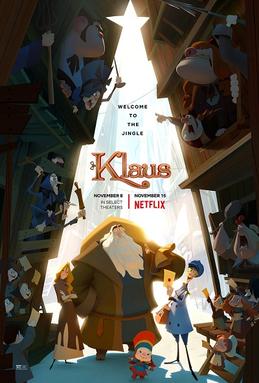
Career Overview
Sergio Pablos occupies a distinct and vital position within the modern history of animated cinema, functioning as a bridge between the classical methods of the late twentieth century and the technological possibilities of the present. Having cut his teeth during the Disney Renaissance, contributing to the kinetic visual energy of films reminiscent of Tarzan and Hercules, Pablos developed a deep affinity for the expressive potential of classical illustration. His career trajectory reflects a steadfast refusal to accept the obsolescence of this medium, prompting a transition from a skilled character designer to a visionary director who actively challenges contemporary industry norms.
To fully realize his ambitions, Pablos stepped outside the conventional Hollywood studio system, founding his own production house to cultivate a specialized, traditional pipeline. This bold institutional maneuver allowed him to assemble a dedicated team capable of executing an artisanal animation style, insulated from industry pressures that prioritize rapid, computer-generated uniformity. By establishing this independent ecosystem, he positioned himself not merely as a filmmaker, but as a preservationist and an innovator of the cinematic craft.
His directorial debut, Klaus, serves as the definitive manifesto of his artistic philosophy. More than a simple festive feature, the film functions as a sweeping proof of concept, demonstrating that traditional artistry can evolve rather than perish. Pablos currently stands as a singular auteur in the animation landscape, a director who successfully resurrected an old-school aesthetic while simultaneously pushing it into uncharted, visually striking territories.
Thematic Preoccupations
At the core of Pablos's narrative preoccupations is the concept of mythmaking and the organic, often messy origins of folklore. He demonstrates a keen interest in demystifying legendary figures, stripping away their ethereal qualities to reveal human frailty and pragmatic motivations. By framing his narratives as origin stories, he explores how grandiose traditions are built and torn down, illustrating that monumental cultural touchstones often begin as cynical schemes or accidental alliances before blossoming into earnest, communal belief.
This textual fascination with the birth of tradition mirrors his meta-textual obsession with artistic innovation. Pablos frequently isolates his characters in stagnant, archaic, or overtly hostile environments, forcing them to rely on unique storytelling approaches or novel inventions to survive. The tension between the old ways and disruptive new ideas is the engine that drives his plots, reflecting the director's own real-world mission to inject life into a medium deemed obsolete by mainstream commercial studios.
Furthermore, Pablos tempers the inherent sentimentality of his subject matter with a potent dose of absurd humor and a distinct Roald Dahl influence. He populates his worlds with eccentric, deeply flawed communities, utilizing an acerbic, slightly cynical comedic rhythm akin to the screwball dynamics found in The Emperor's New Groove. This careful calibration of tone allows him to deliver genuine nostalgic charm without succumbing to cloying sweetness, ensuring his emotional crescendos feel entirely earned.
Stylistic Signatures
The most defining stylistic signature of Pablos's cinema is his revolutionary approach to light and shadow within a two-dimensional framework. By engineering proprietary techniques that apply volumetric lighting and texturing to classical line work, he creates images that are intricately molded and shaded. This innovative aesthetic effectively mimics the depth and atmospheric complexity of a lavishly budgeted, live-action fantasy while preserving the organic, tactile imperfections inherent to the artisanal animation style.
In terms of kinetic movement and physical comedy, Pablos draws heavily upon a distinct Tex Avery influence. He employs exaggerated, gravity-defying physics and highly elastic character designs to communicate internal neuroses through aggressive physical posturing. His characterization relies on this dynamic flexibility, allowing for moments of goofy, frantic energy that contrast sharply with the quiet, beautifully crafted stillness of his snowy, desolate landscapes.
Cinematographically, Pablos constructs his frames with a sophisticated awareness of spatial depth and dramatic composition. He utilizes aggressive depth of field, striking color palettes, and precise blocking to elevate the theatricality of his settings. Every frame is treated with meticulous care, resulting in a visual language that critics have rightly described as a metaphor for its own unique and refreshing mode of expression.
Recurring Collaborators
Because Pablos possesses a condensed directorial filmography, his most significant collaborative partnership exists at the institutional level with the army of technicians and traditional draftsmen he assembled at his independent studio. This collective of artists serves as the vital engine behind his creative vision, dedicating themselves to the labor-intensive demands of his artisanal animation style. Their shared commitment to resurrecting classical methods forms the foundational bedrock of his cinematic output.
On a technological front, Pablos operates in close symbiosis with the software developers and lighting programmers who engineered the bespoke digital tools required for his films. This specific partnership bridges the gap between traditional illustration and modern rendering, allowing his team to achieve an unprecedented visual aesthetic. The resulting imagery is an absolute testament to this fusion of nostalgic craft and cutting-edge innovation.
Regarding performance and vocal talent, Pablos seeks out actors capable of anchoring his heightened visual comedy with resonant, grounded emotional reality. His collaboration with performers like J.K. Simmons illustrates a clear preference for actors who can seamlessly oscillate between intimidating gruffness and profound underlying warmth. These vocal anchors are crucial to his methodology, providing the necessary human gravity to counterbalance the highly stylized, kinetic environments they inhabit.
Critical Standing
Within contemporary film discourse, Pablos is celebrated primarily as a technological and aesthetic visionary. Critics frequently mention his work in the same breath as groundbreaking, medium-pushing projects like Genndy Tartakovsky's Primal or Spider-Man: Into the Spider-Verse, praising him for offering a striking, hand-crafted alternative to standard computer-generated fare. His dedication to an artisanal animation style has earned him immense respect from cinephiles and industry purists alike, who view his art as uniquely beautiful and historically significant.
However, the overwhelming critical acclaim for his visual mastery is sometimes tempered by reservations concerning his underlying narrative architecture. Some reviewers have characterized his story structures as relatively thin, noting that his reliance on familiar, PG-rated origin story templates can feel somewhat ho-hum when contrasted with his revolutionary aesthetics. While his imagery is intricately molded, critics occasionally argue that his scripts lean on old-school conventions and weakly sassy dialogue that play it too safe for older audiences.
Despite these minor narrative critiques, Pablos maintains an incredibly strong reputation as a restorative force in the industry. Film scholars and critics ultimately view his directorial efforts holistically, reading his films as powerful metaphors for the survival and evolution of classical art forms. He stands today as a celebrated innovator whose work addresses the very origins of tradition, leaving an indelible, nostalgic mark on the modern cinematic landscape.