Career Overview
Shaka King has established himself as a formidable presence in contemporary American cinema through a distinct approach to historical and political narratives. Emerging forcefully into the mainstream consciousness, King operates at the precise intersection of rigorous historical documentation and accessible genre filmmaking. His trajectory demonstrates a profound commitment to excavating marginalized chapters of American history, bringing a fresh and uncompromising lens to subjects that traditional Hollywood studios have historically ignored or sanitized.
Prior to his major cinematic breakthrough, King built a foundation in independent filmmaking and television directing. This background provided him with the necessary tools to navigate complex narratives and manage intricate character dynamics on a larger scale. When he transitioned to major studio filmmaking with Judas and the Black Messiah, he arrived fully formed as a director capable of balancing intimate human drama with sweeping political context. His work signifies a crucial shift in how American cinema approaches the radical political movements of the twentieth century.
Within the broader scope of cinema history, King represents a new wave of filmmakers who refuse to separate entertaining narrative structures from serious ideological critiques. His arrival marks a maturation in the cinematic portrayal of Black radicalism. By actively rejecting the simplistic and heroic tropes often found in traditional historical biopics, King secures a unique position. He treats historical figures not as flawless icons but as complex human beings caught in the machinery of systemic oppression and institutional violence.
Thematic Preoccupations
The thematic nucleus of Shaka King's work centers entirely on the collision between revolutionary activism and institutional racial injustice. He is deeply preoccupied with the mechanics of political struggle, specifically how grassroots movements attempt to unify disparate groups against common enemies. His exploration of the Black Panther Party serves as a historical case study, but the questions he asks about the cost of revolution and the endurance of systemic prejudice remain strikingly contemporary. He investigates how a radical vision, like building a multiracial rainbow coalition, becomes a direct threat to the established social order.
Equally central to his philosophical concerns is the devastating theme of betrayal. King does not merely focus on the righteous fight of the oppressed but delves deeply into the insidious nature of state infiltration. He explores how intelligence agencies manipulate vulnerable individuals, turning community members into FBI informants. This focus transforms his political narratives into intimate tragedies. The betrayal is never presented merely as a plot device but as a systemic inevitability engineered by powerful institutions designed to fracture solidarity.
Ultimately, King is obsessed with the tension between fiercely held ideals and the mournful reality of their suppression. His films serve as a testament to revolutionary flares that are deliberately snuffed out before they can fully take hold. He complicates the expected martyrdom arc by emphasizing the profound human loss that accompanies political assassination. Through this dual focus on both the inspiration of activism and the tragedy of its destruction, King continuously asks his audience to reconcile the promise of radical change with the brutal realities of state power.
Stylistic Signatures
The visual and structural language of Shaka King is defined by a coolly versatile direction that merges the kinetic pacing of a crime thriller with the gravitas of a historical epic. He favors an unflinching portrayal of political realities, refusing to look away from moments of tension, violence, or moral compromise. His framing choices often isolate characters in moments of quiet dread, contrasting these intimate scenes with the chaotic and vibrant energy of political rallies and community gatherings.
King possesses a distinct rhythm in his editing and narrative pacing, often utilizing unexpected twists to maintain a gripping and suspenseful atmosphere. His intense storytelling techniques generate a harrowing narrative experience, trapping the viewer in the same atmosphere of paranoia that consumes his characters. This approach ensures that the historical subject matter never feels like a dry academic exercise, but rather a visceral and present tense thriller where the stakes are a matter of life and death.
The tone of his work frequently walks a tightrope between electrifying inspiration and mournful tragedy. King expertly utilizes sound design and musical cues to heighten this emotional dichotomy. The auditory landscape of his films often blends period authentic music with a brooding and tense score, amplifying the psychological deterioration of the informant figure and the mounting danger surrounding the activists. This careful control of mood and atmosphere cements his reputation as a stylist who uses every cinematic tool to reinforce his powerful themes.
Recurring Collaborators
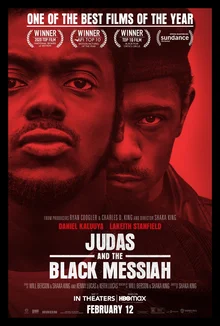
While Shaka King's major cinematic footprint is currently defined by a concentrated body of work, his creative partnerships are absolutely central to his success. The involvement of producer Ryan Coogler on Judas and the Black Messiah signals a vital alliance within modern cinema. Coogler, acting as a producer and creative sounding board, helped King navigate the studio system while protecting the radical integrity of the project. This partnership highlights a broader network of contemporary Black filmmakers who collaborate to bring uncompromising historical narratives to large audiences.
On screen, the casting of Daniel Kaluuya represents a pinnacle of collaborative synergy. Kaluuya provides the electrifying performance necessary to anchor King's ambitious vision. Through his embodiment of magnetic leadership, Kaluuya translates King's script into a physical reality, capturing both the charismatic orator and the strategic thinker. The critical consensus points to this partnership as the defining element that elevates the film from a standard historical drama into a riveting, award-worthy event.
Equally important is King's collaboration with Lakeith Stanfield, whose portrayal of the conflicted informant provides the necessary friction for the narrative. The dynamic between Kaluuya and Stanfield is the engine that drives King's exploration of loyalty and betrayal. By relying on these two actors to carry the dual perspectives of the story, King establishes a cinematic environment where complex and contradictory character arcs can flourish. This intense focus on layered and psychologically rigorous acting performances is a hallmark of his directorial approach.
Critical Standing
Shaka King entered the highest echelons of critical discourse with immediate force, earning universal acclaim for his ability to handle notoriously difficult historical material. Critics quickly identified his work as a guaranteed Oscar contender, recognizing his rare ability to synthesize political theory with engaging cinematic storytelling. His reputation was instantly solidified as a filmmaker of serious moral weight, capable of delivering stellar performances from his cast while maintaining a strict and uncompromising directorial vision.
The critical reception of his work frequently places him in conversation with major historical documentaries. Reviewers consistently compare his narrative approach to seminal nonfiction works like Eyes on the Prize 2 and MLK/FBI. These comparisons underscore the rigorous research and authentic historical grounding that King brings to his projects. Critics appreciate that his fictionalized accounts do not sacrifice factual integrity, noting that his films serve as essential companions to the established historical record of the American civil rights era.
Simultaneously, critics place King's stylistic achievements alongside iconic genre films. The frequent comparisons to undercover thrillers like Donnie Brasco and Point Break highlight his skill in crafting gripping character arcs centered on infiltration and compromised loyalties. Reviewers praise his coolly versatile ability to operate within these genre frameworks without letting the tropes overshadow the powerful themes of racial injustice. Ultimately, King is celebrated for avoiding the expected martyrdom arc, earning enduring respect for creating fierce and mournful cinematic testaments that challenge and captivate contemporary audiences.