Career Overview
Spike Lee stands as an uncompromising pioneer of American cinema. Long before contemporary digital activism and modern social movements took hold in the cultural consciousness, Lee was rigorously exploring social justice issues and savaging societal racism on screen. His background as an independent filmmaker instilled in him a fierce urgency that has defined his career arc from his earliest independent provocations to his mainstream critical triumphs.
The chronological development of his filmography reveals a director constantly evolving his methodology while remaining steadfast in his philosophical goals. Critical comparisons frequently map his journey from seminal early features like She's Gotta Have It and Malcolm X through the stylistic slickness of 25th Hour and the controversial provocations of Bamboozled. Throughout these eras, Lee has consistently weaponized the cinematic medium to dissect the American racial paradigm.
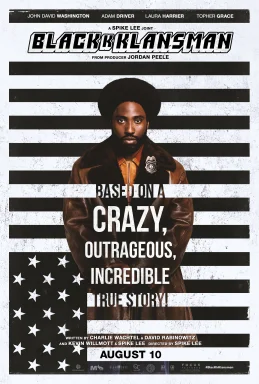
His late career marks a profound resurgence and a solidification of his place in cinema history. With historical crime dramas like BlacKkKlansman, Lee demonstrates his enduring capacity to adapt true stories into urgent modern parables. By filtering past decades through his uniquely confrontational lens, he continues to secure his position as one of the most vital chroniclers of the American experience working today.
Thematic Preoccupations
A central preoccupation of Lee is the enduring and insidious nature of American racism. He frequently explores this theme as a dichotomy between the absurd and the dangerous. His narratives often center on systemic bigotry, utilizing premises like a Black police officer infiltrating a hate group to expose the foundational rot of societal institutions. Through these explorations, he interrogates the mechanics of deception and identity, forcing audiences to confront how race is both performatively constructed and violently enforced.
Beyond interpersonal prejudice, Lee is deeply obsessed with the metatextual impact of cinema on race relations. He routinely engages with dangerous themes in film history, directly confronting the legacy of D.W. Griffith and The Birth of a Nation. By referencing these foundational racist texts, Lee dismantles the cinematic grammar of white supremacy and reclaims the narrative power of the medium for social justice narratives.
The cyclical nature of history serves as another recurring philosophical concern. Lee refuses to treat historical adaptations as mere period pieces. Instead, he uses the past to launch savage critiques of contemporary society. His films function as unsubtle premonitions of the modern political landscape, particularly regarding his exploration of the Trump era. For Lee, history is never truly past, and his adaptations are always designed to reflect the furious and unhealed wounds of the present day.
Stylistic Signatures
The visual and tonal language of a Spike Lee film operates on a broad emotional spectrum, characterized by a unique stylistic slickness. His aesthetic often mirrors a chaotic and overstimulated reality. Critics describe his framing and editing as resembling a barroom pinball machine that flashes with blaxploitation tropes and strategic anachronisms. This narcotic storytelling style lulls the audience into a specific rhythm before delivering sharp and devastating political realities.
Tonally, Lee is a master of blistering satire and unlikely comedic approaches. He routinely injects hilarious romps with sudden bursts of devastating drama, refusing to let viewers sit comfortably in any single genre convention. His portrayals of race and prejudice are intentionally broad and unsubtle, ensuring that his savage critiques hit their targets effectively and without ambiguity.
Furthermore, Lee employs sound, music, and casting as aggressive stylistic tools. The furious delivery of dialogue, often spat out by actors embodying bigoted archetypes, heightens the confrontational atmosphere. He is known to utilize prominent cameos to enhance narratives, dropping recognizable faces into highly charged ideological roles. This blending of slick visual execution with abrasive sonic and performative elements constitutes his definitive directorial signature.
Recurring Collaborators
While conventional databases may not always index overlapping cast members across his sprawling filmography, the collaborative spirit of Spike Lee is defined by his intense partnerships with actors who can anchor his socially charged narratives. He requires performers capable of navigating the extreme tonal shifts of his work, shifting seamlessly from blistering satire to devastating drama. Actors who step into his leading roles often serve as audience surrogates infiltrating hostile environments, demanding a profound level of trust between the director and his ensemble.
Lee also relies heavily on collaborative writing processes, frequently partnering with collaborating writers to adapt memoirs and historical accounts. This collective approach to storytelling ensures that his adaptations retain the authentic voice of their source material while being infused with his distinct authorial vision. The synergy between Lee and his writing teams is crucial for balancing the stranger than fiction comedic elements with the grave reality of the subject matter.
Additionally, Lee demonstrates a unique collaborative flair through his strategic use of cameos. He frequently casts recognizable character actors and television stars, such as Alec Baldwin, in brief but explosive roles. These performers are often tasked with delivering dialogue laced with racist furor, utilizing their established public personas to amplify the controversial potential of the scene. Through these targeted casting collaborations, Lee maximizes the impact of even the smallest roles in his sweeping societal critiques.
Critical Standing
Spike Lee occupies an exalted and highly scrutinized tier within critical discourse. Reviewers frequently laud his films as essential contributions to the American cinematic canon. His work is consistently celebrated for its bravery, with critics pointing out that he was savaging societal racism and addressing social justice long before such topics dominated mainstream cultural conversations. His undeniable impact on how cinema addresses race relations has cemented his reputation as a fearless auteur.
His recent output has been widely hailed as a triumphant return to form. Critics enthusiastically compare his modern achievements to his most acclaimed historical works, noting that films like BlacKkKlansman blend the controversial potential of Bamboozled with the stylistic slickness of 25th Hour. Earning prestigious accolades such as the Cannes Grand Prix, Lee has proven that his ability to provoke and entertain remains as potent as ever, drawing favorable comparisons to masterful documentaries like 4 Little Girls and biographical epics like Malcolm X.
Ultimately, the critical consensus frames Lee as a filmmaker whose unsubtle and blistering satires are exactly what the current cultural moment demands. Reviewers embrace his hilarious yet devastating tone, viewing his unvarnished explorations of the Trump era not as heavy handed flaws but as vital and effective filmmaking. He is revered as a director capable of transforming unlikely historical premises into some of the best works of cinema, securing a legacy defined by righteous fury and undeniable artistic brilliance.