Career Overview
Taika Waititi occupies a singular and frequently contested position in contemporary cinema, recognized for navigating the fragile intersection of historical trauma and quirky humor. Emerging from a background rooted in irreverent, highly imaginative storytelling, he has cultivated a career defined by bold narrative swings. His work consistently places goofy comedy in direct collision with somber historical realities, marking a distinct auteurist signature that courts both immense acclaim and intense critical scrutiny.
Within the broader landscape of film history, Waititi situates himself in a complex lineage of directors attempting to tackle totalitarianism and systemic horror through farce. Professional criticism frequently draws parallels between his approach and the cinematic satires of Mel Brooks and Charlie Chaplin, notably citing The Great Dictator and The Producers. However, Waititi attempts to modernize this tradition by centering the coming-of-age experience, utilizing the naive perspective of youth to dissect the mechanics of ideological indoctrination.
His career trajectory highlights a filmmaker who refuses to play it safe, actively embracing polarizing concepts that risk alienating purists. This daring and ambitious methodology culminated in his foray into World War II satire, a pivot that solidified his standing as a purveyor of the tragicomic. By aggressively mixing black humor elements with heartfelt sentimentality, Waititi has carved out a unique space in modern filmmaking, challenging audiences to find laughter in the darkest chapters of human history while continually testing the limits of acceptable cinematic taste.
Thematic Preoccupations
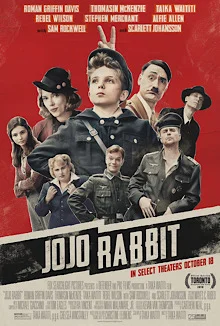
A central preoccupation of Waititi is the intersection of childhood innocence and systemic ideological corruption. He routinely employs coming-of-age themes to explore how environments of extreme hatred or war shape youthful identity. In Jojo Rabbit, this manifests through a rigorous examination of blind nationalism, asking how deeply entrenched prejudices can be unlearned. The director continually returns to the concept of identity exploration, treating the malleable minds of children as battlegrounds where human empathy must overcome state-sponsored cruelty.
To navigate these heavy philosophical concerns, Waititi utilizes imaginative storytelling as both a narrative framework and a psychological shield. A persistent motif is the imaginary friend, which functions not merely as whimsical window dressing but as a manifestation of a protagonist's internal conflict. Critics frequently link this approach to narratives of psychological bifurcation, drawing thematic parallels to Fight Club and Inside Out. For Waititi, imagination represents a coping mechanism, a way for vulnerable characters to process atrocities that are otherwise beyond their comprehension.
Finally, the director exhibits a profound obsession with vulnerability and heartfelt sentimentality. Despite the cynical historical backdrops of his narratives, his films are underscored by a recurring belief in the redemptive power of human connection. He juxtaposes bleak World War II contexts with sincere emotional beats, testing whether love and basic decency can dismantle deep-seated political programming. This thematic duality constantly places his work on the razor edge between profound humanism and what some critics perceive as schmaltzy oversimplification.
Stylistic Signatures
The visual language of Waititi is characterized by a deliberate and often jarring clash of tones, where bright, highly stylized compositions interrupt stark historical realism. Reviewers frequently compare his aesthetic to that of Wes Anderson, noting a shared reliance on symmetrical framing, vibrant pastel color palettes, and meticulous production design. This constructed artificiality serves a distinct purpose, filtering the horrors of the adult world through a sanitized, child-like lens that initially masks the underlying dread of the narrative environment.
Rhythmically and tonally, his stylistic signature relies heavily on erratic pacing and jarring juxtapositions. Waititi will rapidly pivot from slapstick joke-making to moments of profound, devastating tragedy. This pacing forces the audience into a state of emotional whiplash, intentionally creating mixed emotional tones that dominate his scenes. The technique is inherently manipulative, designed to lower the viewer's guard with goofy comedy before plunging them into unabashed sentimentality and trauma, a rhythm that critics often highlight as both his greatest asset and his most polarizing flaw.
Performance style and sound further cement his unique directorial voice. He favors broad, highly physical comedic performances, often characterized by gurning and goofball expressions that contrast sharply with the grim realities of the setting. Soundscapes and musical cues often feature anachronistic or highly ironic selections, amplifying the satirical elements. By marrying these idiosyncratic performance styles with unexpected auditory rhythms, Waititi constructs a cinematic environment where unintended humor and deep melancholy exist in perpetual, uneasy tension.
Recurring Collaborators
While specific recurring on-screen personnel are absent from the provided cinematic database, Waititi approaches casting with a distinct ensemble philosophy. He consistently seeks out performers capable of navigating extreme tonal shifts, blending established Hollywood veterans with completely untested youthful talent. This casting dynamic is essential to his vision, as it anchors the absurd, satirical elements in grounded, vulnerable storytelling. The success of his narratives heavily depends on these actors oscillating seamlessly between goofy comedy and deeply affecting dramatic beats.
Crucially, Waititi himself serves as his own most significant recurring collaborator. By frequently stepping in front of the camera to portray highly caricatured, historically loaded figures, he ensures a direct and unfiltered translation of his idiosyncratic authorial voice. His performance style, characterized by a goofy and gurning physicality, allows him to tightly control the precise brand of black humor that defines his work. This dual role of director and performer grants him total ownership over the erratic pacing and tonal eccentricities of his films.
Behind the camera, his collaborative ethos is geared toward realizing highly stylized, imaginative environments. He relies heavily on production designers, cinematographers, and editors who can translate bleak historical contexts into vibrant, child-like perspectives. These technical partnerships are absolutely essential for achieving the visual irony and the intricate tonal balancing acts that his scripts demand. The resulting synthesis between his directorial vision and his technical crew elevates his daring narrative swings from conceptual oddities to fully realized cinematic landscapes.
Critical Standing
The critical standing of Taika Waititi is deeply polarized, marked by fierce debates regarding his tonal balancing acts and thematic execution. While a significant faction of the critical establishment praises his work as daring, ambitious, and undeniably original, others view his approach to historical trauma as misjudged. The reception of Jojo Rabbit perfectly encapsulates this divide, drawing sharp accusations of being a safe, wrongheaded misfire that relies on cheap sentimentality, while simultaneously earning widespread praise for its engaging characters and imaginative storytelling.
Within the broader critical discourse, reviewers frequently situate Waititi in a lineage of formidable cinematic satirists. However, comparisons to foundational works like Come and See, The Tin Drum, and The Producers often highlight a perceived lack of bite in his social critiques. Prominent critical voices have argued that his satires sometimes feel redundant or unaware, suggesting that his reliance on goofball antics and heartfelt sentimentality blunts the necessary edge of true black humor. Detractors frequently label his narrative techniques as manipulative, pointing to moments of what they consider unearned schmaltz.
Despite these sharp and highly vocal critiques, Waititi maintains a robust and influential presence in contemporary cinema. Even his harshest detractors generally acknowledge the sheer ambition required to merge a coming-of-age narrative with such volatile historical subject matter. Ultimately, his reputation rests on his status as a provocative, risk-taking filmmaker who consistently tests the boundaries of taste. He has carved out a unique, if highly contested, niche as an auteur willing to utilize quirky humor to navigate the most agonizing chapters of human history.