Career Overview
Taylor Hackford occupies a distinct space in contemporary American cinema as a craftsman who frequently navigates the intersection of commercial appeal and serious biographical portraiture. While his broader career encompasses a variety of genres, his most enduring critical footprint centers on his ambitious musical biographies. Hackford established himself as a director who could wrangle complex, historical narratives into digestible, audience pleasing formats. His approach often prioritizes the emotional resonance of his subjects over radical structural experimentation, making him a reliable custodian of American cultural history on screen.
His journey to the director chair was marked by an early interest in the lives of musicians and the cultural forces that shape them. This fascination with musical heritage laid the groundwork for his later, more expansive features. Hackford demonstrated a unique ability to gain the trust of notoriously guarded artists, a testament to his genuine reverence for their artistic integrity. This credibility allowed him to access the inner workings of his subjects, providing a foundation for narratives that delve deeply into the personal and professional trials of iconic figures.
In the trajectory of his career, Hackford became synonymous with the Hollywood biographical drama, a genre that often teeters between hagiography and gritty realism. His position in cinema history is largely defined by his commitment to traditional storytelling frameworks, which he uses to anchor the often chaotic lives of his protagonists. By focusing on the undeniable power of music and the resilience required to overcome adversity, Hackford carved out a niche as a mainstream auteur who celebrates American musical innovation through the lens of individual struggle and triumph.
Thematic Preoccupations
At the core of Taylor Hackford's filmography is a profound preoccupation with the concept of overcoming adversity, particularly within the context of the American musical landscape. His narratives frequently explore the friction between immense raw talent and the systemic or personal barriers that threaten to derail it. Hackford asks how artistic integrity can be maintained in the face of commercial pressures, physical limitations, and societal prejudices. His protagonists are often iconic figures who must navigate a treacherous path to legendary status, making their internal and external battles the focal point of the drama.
Music history serves as both a backdrop and a thematic driver in his work. Hackford treats the evolution of American music not merely as a timeline of popular songs, but as a series of groundbreaking narratives forged by fiercely independent creators. He is fascinated by the alchemy of soul music, rock and roll, and rhythm and blues, examining how these genres serve as a voice for the marginalized. The director frequently draws implicit connections between the personal suffering of his subjects and the transcendent joy of their musical output, suggesting that true artistic genius is often inextricably linked to profound personal struggle.
Another recurring philosophical concern is the tension between mythmaking and credible representation. Hackford grapples with the responsibility of depicting real, deeply flawed individuals while satisfying the cinematic demand for a heroic arc. His films often interrogate the cost of fame and the isolating nature of visionary talent. By focusing on the granular details of musical creation, from the choreography of body language at a piano to the grueling reality of touring, Hackford explores the physical and emotional toll of achieving greatness in an industry that frequently consumes its brightest stars.
Stylistic Signatures
Stylistically, Taylor Hackford is heavily identified with conventional storytelling, employing classic Hollywood narrative structures to map the sprawling lives of his subjects. Rather than relying on avant garde techniques or fractured timelines, he builds his films on a foundation of rich storytelling that prioritizes clarity and emotional directness. This classical approach allows the inherent drama of the biographical subject to take center stage, though it occasionally invites critiques of relying on familiar, Oscar bait tropes. His visual language is designed to serve the performance, often utilizing steady, unobtrusive camerawork that captures the nuances of his actors.
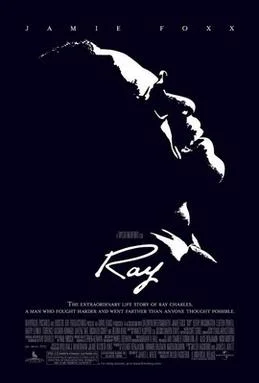
A defining hallmark of Hackford's cinema is his reliance on the exuberant performance of his lead actors, which he frames with an almost reverential attention. He treats the physical performance of music as a central visual motif. In films like Ray, he translates the kinetic energy of live music into cinematic language, focusing on the tactile relationship between the musician and their instrument. The musical sequences are rarely just interludes, they are the vital, driving force of the film, treated with an irresistible appeal that elevates the surrounding narrative. His staging of these moments often feels like a direct homage to the electrifying concert documentaries of the era, drawing stylistic parallels to seminal works like Hail! Hail! Rock and Roll.
However, this adherence to standard presentation sometimes results in a stylistic duality. While the musical sequences burst with authentic portrayal and dynamic energy, the transitional dramatic scenes can occasionally succumb to hokey presentation or stilted dialogue. Hackford's mise en scene in these quieter moments often leans heavily on period accurate, yet sanitized, recreations of mid century America. Despite these conventional trappings, his precise integration of sound and music ensures that the auditory experience of his films remains consistently powerful, using iconic tracks not just as a soundtrack, but as the very heartbeat of the picture.
Recurring Collaborators
Taylor Hackford's approach to filmmaking relies heavily on intense, focused partnerships with his lead actors, who are tasked with carrying the immense weight of his biographical dramas. While he does not possess a sprawling repertory company of recurring cast members across his major features, his directorial method requires a symbiotic relationship with his star. Hackford demands charismatic performances that transcend mere imitation, pushing his actors to achieve a credible representation of deeply familiar cultural icons. This necessitates a collaborative environment where the actor is encouraged to interpret the subject's body language as a specific form of choreography.
Behind the camera, Hackford frequently collaborates with music supervisors, composers, and sound designers who share his obsessive commitment to musical authenticity. These partnerships are crucial in realizing the auditory landscapes of his films. The success of a Hackford project hinges on the seamless blending of original historical recordings with meticulously recreated live performances. His audio teams work tirelessly to ensure that the sonic texture of the film honors the legacy of the groundbreaking artists being depicted, creating an immersive experience that resonates with both casual listeners and dedicated music historians.
The collaborative process also extends to the subjects themselves or their respective estates. Hackford is known for his ability to negotiate access and secure the blessing of highly protective artists and their families. This level of cooperation is rare and speaks to his reputation as a respectful filmmaker. By working closely with these estates, Hackford ensures a baseline of historical accuracy and personal truth, even when the narrative demands the streamlining typical of conventional biographical storytelling. These partnerships grant his films a layer of authorized legitimacy that is vital to their critical and commercial acceptance.
Critical Standing
The critical reception of Taylor Hackford's work has always been characterized by a sharp divide between admiration for his crowd pleasing musicality and skepticism toward his narrative conservatism. Throughout his career, reviewers have frequently praised his ability to mount highly entertaining, widely accessible biographical dramas. Mainstream critics often highlight the irresistible appeal of his films, noting that his projects combine involving true stories with spectacular musical sequences. In this regard, he is often viewed as a master of the audience pleaser, capable of delivering exactly the kind of robust, emotional cinematic experience that broad demographic groups crave.
Conversely, more rigorous critical circles have frequently taken issue with what they perceive as his reliance on formulaic structures. Publications with a sharper analytical edge have described his work as occasionally hokey, stilted, and overly reliant on cloying Oscar season conventions. For these detractors, his commitment to traditional storytelling feels restrictive, flattening the complex realities of his subjects into easily digestible arcs. Comparisons are frequently drawn to other standard music biopics like La Bamba or The Buddy Holly Story, suggesting that Hackford's films, while deeply competent, rarely break new formal ground or challenge the stylistic boundaries of the genre.
Despite these criticisms, Hackford's reputation is continuously salvaged and ultimately defined by the extraordinary performances he extracts from his actors. Even his harshest critics concede that his films provide an impeccable showcase for virtuosic acting and musical recreation, bringing the legends of figures like Chuck Berry and Ray Charles to vivid life. His standing in cinema history remains secure as a premier facilitator of the modern musical biopic. He is widely respected as a filmmaker who, despite his penchant for the conventional, possesses the rare credibility and artistic integrity required to capture the monumental spirit of America's greatest musical icons on the silver screen.