Career Overview
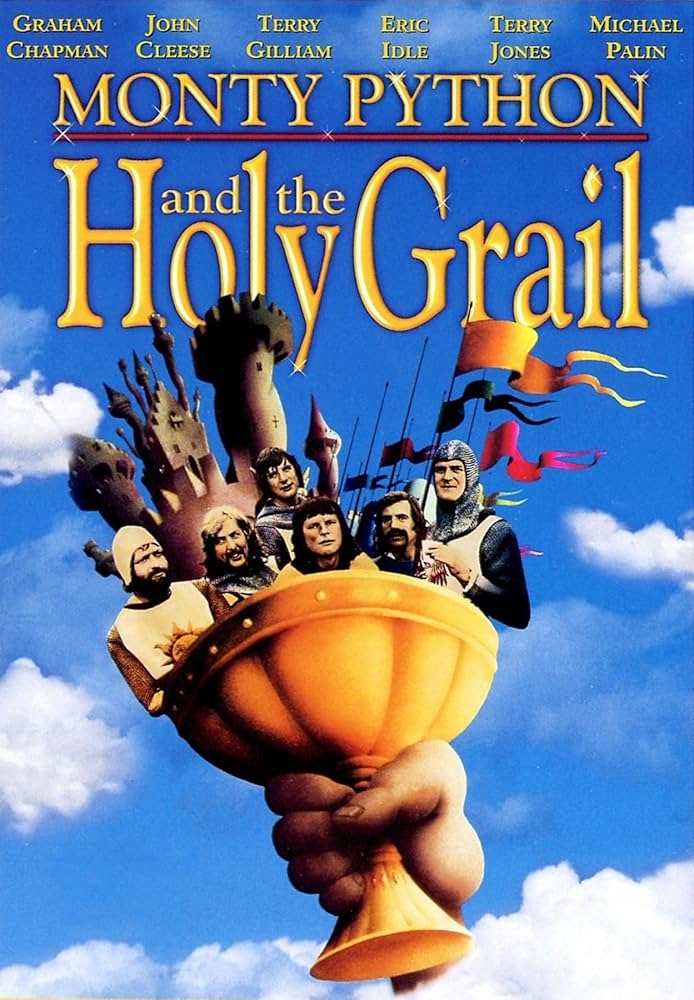
Terry Jones occupies a foundational place in the history of British cinematic comedy, emerging from the vibrant collegiate satire scene to become the structural architect of the Monty Python filmography. His early years at Oxford provided him with a deep appreciation for history and medieval literature, subjects that would later become the bedrock of his most celebrated cinematic parodies. Transitioning from the sketch format of television to the expansive canvas of feature films, Jones took on the responsibility of translating the troupe's chaotic energy into a cohesive cinematic vision. This evolution marked a significant shift in comedic cinema, proving that sketch comedians could sustain feature length narratives without losing their subversive edge. His directorial efforts introduced a new paradigm where intellectual rigor met unapologetic silliness, setting a high standard for generations of filmmakers. By taking the director chair for Monty Python and the Holy Grail, Jones demonstrated an innate ability to balance anarchic humor with genuine cinematic artistry. He recognized that for the absurdity to work, the world itself had to feel grounded, textured, and historically authentic. This approach moved his work beyond mere filmed sketches, establishing him as a filmmaker capable of blending profound historical critique with accessible entertainment. His career arc reflects a continuous pursuit of creative freedom, operating independently of major studio interference to protect the singular voice of his collaborators. Ultimately, Jones elevated the comedy genre, demonstrating that laughter could serve as a powerful vehicle for skewering ignorance and challenging unquestioned authority, securing his legacy as a visionary of satirical cinema.
Thematic Preoccupations
The thematic preoccupations of Terry Jones revolve around the relentless skewering of stupidity, ignorance, and the unquestioning acceptance of conventional pieties. At the heart of his filmography is a profound philosophical inquiry into the nature of authority and the absurdity of mythmaking. By utilizing the framework of medieval parody in Monty Python and the Holy Grail, Jones deconstructs the romanticized legends of King Arthur, exposing the illogical foundations of feudal power and divine right. This satirical exploration asks fundamental questions about why societies blindly follow absurd traditions and how systemic incompetence masquerades as nobility. His work constantly returns to the friction between logic and institutional insanity, championing the common person who recognizes the madness of their rulers. Another major theme is the celebration of inspired lunacy and the sheer joy of cherishing nonsense for its own sake. Despite the sharp intellectual critique, Jones never loses sight of the importance of youthful energy and creative freedom. The narratives often derail into anarchic humor, reflecting a worldview where the universe itself is fundamentally chaotic and resistant to order. This structural rebellion mirrors his thematic rejection of conformity. Whether portraying homicidal bunnies or misguided wedding guest massacres, the violence and absurdity are deployed not for shock value, but to highlight the fragility of social norms. The juxtaposition of highbrow historical context with lowbrow sight gags creates a timeless comedy that forces the audience to question their own reverence for historical and cinematic traditions. Through this lens, Jones creates a singular work that remains both accessible and deeply subversive.
Stylistic Signatures
The visual language and stylistic signatures of Terry Jones are defined by a brilliant contrast between muddy realism and blatant artificiality. In constructing his cinematic worlds, Jones favors a mise en scene that feels genuinely dirty, lived in, and historically accurate, which serves to heighten the impact of his sight gags. He draws on a surprisingly sophisticated cinematic artistry, occasionally evoking the austere, mist shrouded landscapes of Ingmar Bergman's Lancelot of the Lake or the mythic weight of John Boorman's Excalibur, only to aggressively undercut these aesthetic triumphs with killer lines and inspired absurdity. This visual commitment ensures the satire never feels lightweight or disposable. A hallmark of his cinematographic approach is the deliberate use of spatial comedy and meticulous timing. Jones frequently employs wide shots to emphasize the absurdity of a situation, allowing the physical comedy and visual anomalies to unfold naturally within the frame. The infamous use of coconut shells in place of actual trusty steeds exemplifies this approach, turning a budgetary limitation into a brilliant running joke about the artificial nature of filmmaking itself. The editing rhythms in a Jones film often defy traditional comedic pacing, favoring abrupt cuts and anarchic transitions that keep the audience perpetually off balance. Sound and music play an equally crucial role in his stylistic repertoire. The tremendous musical contributions provided by collaborators are used both to parody epic cinematic scores and to provide narrative momentum. Furthermore, the seamless integration of surreal animations creates a unique texture, blending live action grit with unhinged cartoon logic. This synthesis of sound, image, and pacing results in a distinct directorial signature that cherishes nonsense while maintaining rigorous artistic control.
Recurring Collaborators
The cinematic achievements of Terry Jones are inextricably linked to his lifelong creative partnerships, most notably with the members of the Monty Python troupe. Operating as a collegiate collective, this ensemble provided Jones with a reliable repertoire of performers who understood the precise tone required to deliver his killer lines. Michael Palin stands out as a crucial on screen collaborator, bringing a wonderful charm and versatile energy to the work. Palin's ability to seamlessly transition from portraying a bolshy peasant ridiculing the Lady of the Lake as a moistened bint to entirely different absurdist personas exemplifies the fluid, ego free performance style that Jones cultivated. The shared history and mutual trust among the cast allowed for a fearlessness that defined their singular work. Beyond the core acting ensemble, the visual aesthetic of Jones' films relies heavily on the brilliant contributions of his codirector and animator Terry Gilliam. Gilliam's timelessly brilliant animations serve as connective tissue within the films, bridging disparate sketches with an inspired lunacy that perfectly complements Jones' live action direction. While Jones anchored the films in a grounded, muddy reality, Gilliam provided the surreal, boundary pushing visual tangents. This dynamic tension between reality and cartoon logic became a defining characteristic of their shared cinematic output. Additionally, the musical landscape of Jones' work is vastly enriched by Neil Innes, whose tremendous musical parodies elevate the satirical elements of the narrative. Together, this tight knit group operated with unprecedented creative freedom, free from the constant peering of studio executives or censor boards. Their collective synergy allowed Jones to realize a vision of comedy that was simultaneously sophisticated and wonderfully chaotic.
Critical Standing
The critical standing of Terry Jones has evolved significantly over the decades, transitioning from his initial reputation as a prominent television comedian to his current status as a masterful director of satirical cinema. Upon the release of Monty Python and the Holy Grail, critics immediately recognized the project as a laugh riot packed with killer lines, yet some initially viewed it as an extension of the troupe's television sketch format rather than a cohesive film. However, retrospective reviews and anniversary rereleases have cemented its reputation as a singular work of timeless comedy. Prestigious publications like the Los Angeles Times and Slant Magazine now praise the film's superb, anarchic daring and the youthful energy that permeates every frame. Critics frequently situate Jones' early feature work in relation to his later, more structurally complex projects. While some reviewers suggest that his subsequent films, such as Life of Brian and The Meaning of Life, achieved a higher status as comic masterpieces due to their focused thematic rigor, Monty Python and the Holy Grail is continuously celebrated for its inviting accessibility and pure, inspired absurdity. It is often cited as the foundational text for modern cinematic spoof, paving the way for everything from the Broadway adaptation Spamalot to countless contemporary comedies. In the broader landscape of film criticism, Jones is respected for his unique ability to merge rigorous academic knowledge with lowbrow slapstick. He is celebrated not just as a comedian, but as a genuine filmmaker whose cinematic artistry proved that intelligent, subversive comedy could command global audiences. His critical legacy is that of a fearless innovator who forever altered the trajectory of comedic cinema.