Career Overview
Tom Hooper emerged as a dominant force in contemporary prestige cinema by mastering the historical drama, bringing a distinctly theatrical sensibility to meticulously reconstructed period settings. His career arc is defined by a transition from intimate, character driven British narratives to grand scale musical adaptations. He built his reputation on an ability to breathe life into historical figures, translating rigid biographical facts into palpable, heartfelt storytelling that appeals to both art house audiences and mainstream voters.
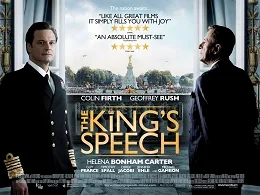
The critical turning point in his filmography arrived with The King's Speech, a film that firmly established his position as a premier chronicler of royalty and duty. By focusing on the personal struggles of King George VI, Hooper modernized the British historical biopic. His approach was frequently compared to the thematic depth found in Peter Morgan screenplays or films like The Madness of King George and The Queen, positioning Hooper as a vital successor in a long lineage of British cinematic portraiture.
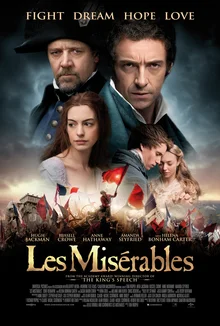
Following this massive critical and commercial validation, Hooper dramatically expanded his canvas with Les Misérables, shifting his focus to 19th century France. This musical adaptation required serious ambition, moving from the quiet, claustrophobic rooms of British palaces to epic coastal landscapes and crowded Parisian barricades. The film cemented his desire to operate on a truly grand scale, proving he was willing to risk overwrought melodrama to capture intense emotion on screen.
Today, Hooper occupies a unique space in film history as a director who straddles the line between traditional prestige filmmaking and brutal, overwhelming sensory experiences. His trajectory from observing intimate relationships to marshaling massive ensembles reveals a filmmaker constantly searching for the emotional core of monumental historical moments, regardless of the critical polarization that such serious ambition often invites.
Thematic Preoccupations
At the core of Tom Hooper’s filmography is a profound obsession with overcoming personal challenges in the shadow of historical obligation. His protagonists are frequently burdened by public expectations that stand in direct opposition to their private limitations. In The King's Speech, this manifests through a monarch struggling with a debilitating stammer at the precipice of global conflict. The tension between intimate personal struggle and public duty serves as the philosophical anchor of his work.
To navigate these massive societal burdens, Hooper’s narratives heavily emphasize friendship and intimate relationships as vehicles for salvation. The dynamic between King George VI and his unconventional speech therapist Lionel Logue is the emotional engine of The King's Speech, just as Jean Valjean’s relationship with Cosette provides the spiritual redemption necessary to survive the brutal realism of Les Misérables. Hooper views deep, empathetic connection as the only viable antidote to the crushing weight of history.
Furthermore, the director is deeply preoccupied with the concept of adaptation, whether translating historical record or beloved musical theater into cinematic language. He approaches these adaptations with serious ambition, seeking to uncover the raw, unpolished humanity beneath recognizable myths. This often results in a thematic exploration of vulnerability, where historical icons and literary legends are stripped of their polish and presented as flawed, suffering individuals.
However, this relentless pursuit of emotional truth occasionally pushes his themes into the realm of excessive dramatization. Critics often note the remorseless intensity of his narratives, where the heartfelt storytelling flirts with overwrought melodrama. Yet, this excess is fundamentally tied to Hooper’s thematic goals. He uses high emotional stakes to illustrate that the true theater of history occurs not on battlefields, but within the tormented psyches of his protagonists.
Stylistic Signatures
The visual language of Tom Hooper is characterized by a deliberate, often jarring juxtaposition of epic scale and extreme psychological intimacy. He favors wide angle lenses placed uncomfortably close to his actors, distorting the edges of the frame while plunging the audience directly into the emotional headspace of the characters. This stylistic signature ensures that even his most sprawling historical dramas retain a highly personal tone.
Nowhere is this approach more evident than in his musical adaptation Les Misérables, where his insistence on live performance fundamentally altered the sonic and visual texture of the genre. By recording the singing live on set, Hooper prioritized brutal realism over polished studio perfection. His camera frequently isolated performers in suffocating close ups, capturing the physical exertion and intense emotion of the actors to create a visceral, almost documentary like immediacy.
Hooper also uses meticulous production design and unconventional framing to mirror the internal states of his characters. In The King's Speech, the sets and visuals are actively deployed to convey the isolation and anxiety of a man trapped by his inability to speak. He frequently places his subjects off center, surrounded by expansive, imposing negative space that physically manifests the weight of the crown and the vastness of the public duties they must fulfill.
Despite the clear intentionality behind his aesthetic choices, his execution has sometimes been labeled uninspired or excessively rigid by detractors. The reliance on extreme close ups and warped focal lengths can create a sense of visual claustrophobia. Nevertheless, this stylistic persistence demonstrates an unwavering commitment to a specific cinematic vocabulary, one that forces audiences to confront the raw, unvarnished performances that anchor his character driven narratives.
Recurring Collaborators
A significant aspect of Tom Hooper’s success lies in his ability to cultivate key creative partnerships, particularly with actors who can bridge the gap between theatrical grandiosity and cinematic naturalism. Helena Bonham Carter serves as a vital recurring presence in his filmography, appearing in both The King's Speech and Les Misérables. She provides a grounding, eccentric energy that perfectly complements Hooper’s visual eccentricities.
Bonham Carter’s versatility is essential to Hooper’s tonal balancing act. As Queen Elizabeth, she offered a warm, sympathetic performance that anchored the royal drama, while her turn as Madame Thénardier brought a grotesque, theatrical vibrancy to the grim landscape of revolutionary France. Her ability to navigate both restrained, low key performance and remorseless intensity makes her an ideal surrogate for Hooper’s varied directorial ambitions.
Beyond recurring actors, Hooper’s work relies heavily on virtuosic, expert performances that can withstand the scrutiny of his relentless camera. His collaboration with Colin Firth and Geoffrey Rush in The King's Speech yielded deeply absorbing roles. These actors completely inhabited their characters, providing complex layers to a complicated human relationship. Hooper’s directorial style necessitates such fearless collaborators, as his extreme close ups leave no room for artifice.
Finally, Hooper frequently operates in conversation with the broader tradition of British prestige cinema, functioning as a cinematic collaborator with the themes established by writers like Peter Morgan. By drawing on the British royalty biopic template seen in films like The Queen and The Deal, Hooper builds upon existing dramaturgical frameworks. He takes these familiar structures and elevates them through his unique visual grammar and uncompromising emotional intensity.
Critical Standing
The critical standing of Tom Hooper is a subject of fascinating polarization within contemporary film discourse. Early in his cinematic career, particularly with The King's Speech, he enjoyed widespread acclaim and institutional validation. Reviewers praised his heartfelt storytelling and the sympathetic performances he elicited, viewing the film as a clever inversion of the Pygmalion myth that breathed new life into the historical drama genre.
However, as his ambition grew, so did the critical divide. While mainstream audiences and awards bodies frequently rewarded his work for being inspirational and expertly acted, a vocal contingent of critics began to scrutinize his stylistic idiosyncrasies. Publications like Slant Magazine argued that films such as The King's Speech barely bought what they were selling, accusing Hooper of masking conventional, sentimental narratives beneath a veneer of manufactured prestige.
This critical fracturing reached its zenith with the release of Les Misérables. The film’s serious ambition and unprecedented live musical performances divided critics sharply. Some, like the Los Angeles Times, lauded the painstaking work that made the film mighty, intense, and deeply personal. Conversely, others found the film’s remorseless intensity exhausting, comparing its sprawling, flawed execution to legendary underseen curiosities like Peter Bogdanovich’s At Long Last Love.
Ultimately, Hooper remains a deeply discussed figure in modern cinema, sitting at the intersection of populist success and art house skepticism. He is undeniably capable of taking impressive control of a grand canvas, yet his reliance on overwrought melodrama ensures his legacy is constantly debated. Whether viewed as a master of emotional depth or a purveyor of excessive dramatization, his undeniable impact on the scale and style of the modern historical epic secures his place in ongoing critical conversations.