Career Overview
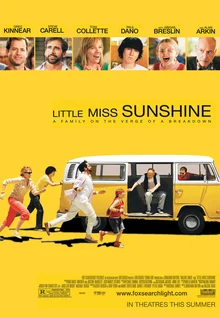
Valerie Faris emerged as a defining voice in American independent cinema during the mid-2000s, charting a distinct course that blended commercial accessibility with rigorous indie sensibilities. Her trajectory is most notably anchored by the monumental success of her 2006 feature debut, Little Miss Sunshine, a film that quickly evolved from a Sundance Film Festival sensation into a high-profile fixture during the subsequent awards season. This initial triumph cemented her position as a filmmaker capable of translating idiosyncratic visions into broad cultural touchstones.
Within the broader context of cinema history, Faris is frequently situated as a modern inheritor of the anti-establishment comedies of the 1970s. Critics have drawn compelling parallels between her sensibilities and the subversive yet humanist tones found in classics like Harold and Maude or Smile. By reviving these traditions for a new millennium, she carved out a space for narratives that privilege eccentric outsiders over polished archetypes. Her arrival signaled a shift in the landscape of studio-adjacent independent film, proving that commercial viability did not require the sacrifice of thematic depth.
Faris operates at the intersection of highbrow social commentary and mainstream comedy. While some filmmakers struggle to balance satirical bite with emotional resonance, her background and meticulous approach allow her to navigate this divide seamlessly. Her debut effectively redefined the modern road movie, demonstrating a sophisticated command of tone that continues to influence contemporary filmmakers who explore the comic absurdities of American life.
Thematic Preoccupations
A dominant preoccupation in the work of Valerie Faris is the systematic deconstruction of the American Dream, particularly as it intersects with the realities of working-class life and the ubiquitous loserdom narrative. In Little Miss Sunshine, the Hoover family serves as a microcosm for a society obsessed with binary notions of winning and losing. Faris interrogates these rigid definitions by placing her characters in opposition to the grotesque and hyper-competitive world of pre-teen beauty pageants, questioning whether such aspirational pursuits are inherently inspirational or merely inappropriate manifestations of late-capitalist decay.
Family dysfunction lies at the very core of her narrative explorations. However, Faris refuses to treat familial fracture as a mere punchline. Instead, she utilizes the claustrophobic confines of a road trip to force authentic interactions among deeply flawed individuals. The physical journey across the American West mirrors a psychological excavation, where characters confront their personal failures and collective traumas. This dynamic allows the director to mine dark comedy from genuine pain, resulting in a portrait of a classically dysfunctional family that feels both universally recognizable and fiercely singular.
Furthermore, her films champion radical nonconformity as a necessary survival tactic in an alienating world. The thematic depth of her storytelling reveals a profound empathy for outsiders who reject societal expectations. Whether navigating outrageous scenarios or intimate domestic disputes, her characters ultimately find salvation not in achieving their initial, socially conditioned goals, but in embracing their shared marginalization. Through this lens, Faris transforms a seemingly genial comedy into a layered critique of institutional values and the restrictive norms of contemporary American society.
Stylistic Signatures
The visual and tonal signatures of Valerie Faris rely heavily on the precise modulation of satirical humor and emotional authenticity. Her directorial approach favors a breezy storytelling style that belies the inherent darkness of her subject matter. By juxtaposing mundane, working-class environments with increasingly outrageous scenarios, she crafts a cinematic world where the bizarre feels entirely natural. This delicate balancing act prevents her work from devolving into broad farce, grounding the quirky humor in recognizable human struggles.
A hallmark of her style is the emphasis on understated performance and the communicative power of silence. As noted by contemporary critics, Faris excels at directing actors to understand how unspoken reactions can be significantly funnier and more poignant than standard dialogue or traditional punchlines. This restraint allows the camera to linger on the quiet desperation and eventual solidarity of her characters, ensuring that the comedy arises organically from their shifting interpersonal dynamics rather than from imposed gags.
In her staging and mise-en-scene, Faris frequently employs the motif of the journey, utilizing the physical constraints of an aging VW bus to create a pressurized environment that forces character development. The cinematography often highlights the sprawling, impersonal landscapes of the American highway, which stand in sharp contrast to the intimate, chaotic energy inside the vehicle. This spatial dichotomy underscores the thematic friction between the vast promises of the American Dream and the cramped, messy realities of the people attempting to chase it.
Recurring Collaborators
While the available critical data does not identify a sprawling stable of recurring actors across multiple films, the creative partnerships that defined Little Miss Sunshine remain central to understanding the directorial success of Valerie Faris. The realization of her vision was deeply dependent on the intricate screenplay penned by Michael Arndt. Arndt provided a foundation rich with quirky humor, biting sarcasm, and carefully structured outrageous behavior. The synergy between his written word and her directorial execution resulted in a narrative that perfectly balanced thematic depth with narrative momentum.
At the heart of her celebrated ensemble work is Abigail Breslin, whose portrayal of the young, pageant-obsessed Olive serves as the emotional anchor of the film. Faris demonstrates a remarkable ability to direct child actors, ensuring that Breslin remains an authentic, endearing figure rather than a precocious caricature. This collaboration is emblematic of the director's broader approach to casting, which prioritizes performers who can seamlessly navigate the tonal shifts between dark comedy and sincere drama.
The success of the Hoover family dynamic also speaks to a vital, if singular, collaborative achievement in ensemble chemistry. Faris relies on actors who grasp the necessity of portraying deeply individualized eccentricities while functioning as a cohesive familial unit. By cultivating an environment where unspoken reactions carry as much weight as spoken dialogue, she builds a collaborative space that elevates the material beyond a standard studio comedy, resulting in performances that are universally praised for their gentle satire and profound humanity.
Critical Standing
The critical reputation of Valerie Faris was firmly established upon the release of Little Miss Sunshine, a film that commanded immediate respect across the critical establishment. Reviewers widely praised her ability to breathe new life into the well-worn tropes of the family comedy and the American road movie. Critics frequently elevated her work above standard genre fare, favorably comparing her cinematic achievements to iconic touchstones like John Ford's The Grapes of Wrath and the subversively comic Harold and Maude. These comparisons highlight her unique capacity to blend profound socio-economic observations with crowd-pleasing accessibility.
Despite the overwhelming acclaim, her work has occasionally provoked divergent critical interpretations. While many reviewers celebrate the film as a refreshing and ultimately affirmative movie, some critics have engaged more skeptically with its underlying mechanics. For instance, certain voices within the critical community have described the satiric intent of her work as weirdly uncertain, questioning whether the film functions as a genuine corrective to patronizing attitudes toward working-class milieus or if it occasionally indulges in the very tropes it seeks to subvert. This debate only underscores the layered complexity of her seemingly breezy storytelling.
Over time, her standing within the cinematic landscape has solidified as a master of the modern dark comedy. She is widely recognized for taking the notion of a dysfunctional family to new levels of comic madness while maintaining a gentle, empathetic touch. By successfully navigating the treacherous waters of the Sundance-to-Oscars pipeline, Faris proved that a quirky, independent vision could achieve massive high-profile success without losing its soul. Her enduring legacy rests on her ability to craft joyful, endearing cinema that simultaneously operates as sharp, humorous social commentary.