Career Overview
Vittorio De Sica stands as a titan of post-war global cinema, functioning as a primary architect of the Italian Neorealist movement. His transition from a matinee idol in Italian romantic comedies to a director of socially trenchant cinema marks one of the most significant artistic evolutions in film history. By stripping away the artifice of studio filmmaking, he captured the raw, bleeding edge of post-war Italy.
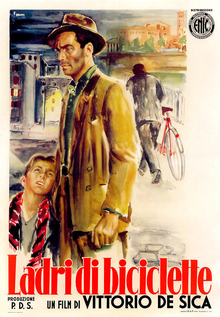
His definitive masterpiece, Bicycle Thieves, cemented his reputation as a chronicler of the working class. Emerging from the literal and economic rubble of World War II, De Sica sought a cinematic vocabulary that could honestly articulate the shattered reality of his nation. He moved his cameras to the streets, capturing urban life with an unprecedented level of documentary-like authenticity.
This pursuit of a tactlessly real art form positioned him alongside Roberto Rossellini and Luchino Visconti as the vanguard of a movement that would permanently alter the trajectory of international cinema. His influence rippled outward, directly inspiring filmmakers like Satyajit Ray, who found in De Sica a blueprint for a socially conscious, humanist cinema that transcended national borders.
Thematic Preoccupations
At the philosophical core of De Sica's directorial output lies an unwavering commitment to human dignity in the face of crushing systemic poverty. His work interrogates how economic deprivation corrodes the human spirit, specifically examining the impossible moral choices forced upon the working class. Bicycle Thieves distills this preoccupation into a desperate quest through a modern purgatory, where a stolen bicycle represents the fragile line between survival and destitution.
The father-son relationship emerges as a central thematic pillar in his narratives. De Sica uses the dynamic between adult desperation and childhood innocence to amplify the emotional weight of his stories. The child often serves as a silent witness to the systemic failures of the adult world. This juxtaposition creates an unbearable emotional weight, echoing the pathos found in works like Charlie Chaplin's The Kid, yet entirely devoid of sentimental palliatives.
Furthermore, De Sica mounts a sharp, socially critical commentary on urban life. The city itself acts as an indifferent antagonist. Institutions of authority, from the police station to the church, are portrayed as bureaucratic monoliths incapable of addressing individual human suffering. By focusing on universally recognizable struggles of protecting a family against societal obstacles, his narratives achieve a parable-like structure and an enduring relevance that stands outside of time.
Stylistic Signatures
De Sica's visual language is defined by its rigorous pursuit of a realistic portrayal, actively rejecting the polished aesthetic of studio-era cinema. He championed shooting on location, utilizing the actual streets, crowded markets, and rain-slicked piazzas of post-war Rome. This authentic storytelling approach provides his films with a textured, documentary-like immediacy, capturing the spontaneous rhythms of everyday urban existence.
A hallmark of his direct narrative style is the reliance on non-professional actors, a strategy that strips away theatrical artifice to reveal unvarnished human truth. By casting individuals whose faces and physicalities bear the genuine marks of the working-class struggles depicted on screen, De Sica achieves a heartbreaking emotional impact. Their performances possess a raw, unmannered quality that professional training often obscures.
The pacing and editing rhythms of De Sica's work prioritize observation over manufactured momentum. He allows moments of despair, exhaustion, and fleeting hope to play out with naturalistic duration. This refusal to employ the dramatic or comic palliatives common in commercial cinema forces the viewer into an immersive, uncompromising confrontation with the reality of his subjects, rendering his cinematic voice simultaneously compassionate and relentlessly observant.
Recurring Collaborators
While De Sica's directorial philosophy frequently demanded the use of non-professional actors to maintain his authentic storytelling, his work behind the camera relied on a tight-knit cadre of brilliant creative partners. The cornerstone of his neorealist period was his symbiotic partnership with the celebrated screenwriter Cesare Zavattini. Together, they forged the theoretical and narrative framework of Italian Neorealism, stripping away melodramatic contrivances to focus on the poetry of the mundane.
Zavattini provided the socially critical architecture for De Sica to execute his humanist perspective. Their collaboration produced narratives that functioned as modern parables, focusing on ordinary people navigating the oppressive realities of poverty and urban life. It was Zavattini who championed the idea of shadowing a character through ninety minutes of their daily existence, a concept De Sica realized with devastating clarity in Bicycle Thieves.
Regarding his on-screen personnel, De Sica famously avoided utilizing a stable of recognizable, recurring cast members across his neorealist projects. This was a deliberate artistic choice rather than a mere logistical consequence. By casting fresh, unknown faces for each project, such as the factory worker Lamberto Maggiorani in Bicycle Thieves, De Sica ensured that audiences could not project preconceived star personas onto his deeply localized, universally resonant tragedies.
Critical Standing
Vittorio De Sica occupies a rarefied position in the pantheon of global cinema, frequently cited by historians and critics as a fundamental architect of cinematic realism. Upon its release, Bicycle Thieves was immediately recognized as a masterpiece of humanist cinema. Its raw depiction of post-war reality struck a nerve internationally, earning widespread acclaim and establishing De Sica as an auteur of extraordinary empathy and social conscience.
Over the decades, the critical standing of his neorealist work has only solidified, maintaining an enduring relevance that transcends its specific historical context. Modern critics frequently note that the power of his films remains undiminished by time. The thematic exploration of systemic poverty and human dignity continues to resonate, drawing frequent comparative cinema analysis to contemporary works like Children of Heaven and foundational global classics like Satyajit Ray's Pather Panchali. Ray himself credited De Sica with altering the course of his artistic career.
While his later, more commercial efforts occasionally drew mixed responses from purists who yearned for a return to his neorealist roots, his foundational masterpieces remain untouchable within critical discourse. Contemporary assessments celebrate his work not merely as historical documents of a fractured Italy, but as endlessly affecting, universal parables. De Sica is remembered today as a director who masterfully balanced searing social critique with a profound, heartbreaking emotional impact.