Career Overview
Warwick Thornton occupies a vital position in contemporary global cinema, recognized for his uncompromising examination of marginalized histories. Emerging from a background deeply rooted in Indigenous Australian storytelling, his career arc reflects a consistent dedication to recontextualizing historical narratives. By placing Aboriginal experiences at the center of his cinematic universe, he challenges the traditional boundaries of national cinema and demands a reckoning with systemic historical violence.
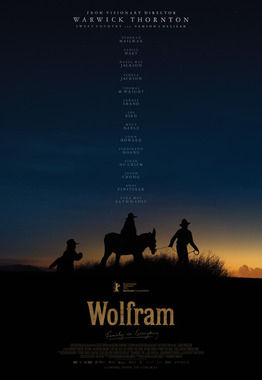
His evolution as a filmmaker reveals a trajectory moving toward expansive, genre-inflected historical dramas. Building upon the critical foundation established by previous works like Sweet Country, Thornton utilizes familiar cinematic frameworks to interrogate the past. In Wolfram, a 1932 period piece focusing on the abduction of Indigenous children for labor, he demonstrates his capacity to merge personal tragedy with broad, sweeping historical critique.
Within cinema history, Thornton is celebrated as a pioneer of the neo-Western, or Kangaroo Western, subgenre. He subverts the mythos of the frontier, stripping away its romanticized veneer to expose the brutality of colonial expansion. His work consistently demands that audiences confront uncomfortable truths, cementing his legacy as a director of profound ethical and artistic importance who reshapes the visual vocabulary of the Australian landscape.
Thematic Preoccupations
The thematic nucleus of Thornton's filmography is a rigorous interrogation of Australia's colonial past and an impassioned plea for Aboriginal rights representation. He repeatedly returns to the trauma inflicted by systemic exploitation. In Wolfram, the narrative of a mother seeking her abducted children at the Hatches Creek wolfram field serves as a potent microcosm for the stolen generations and the historical commodification of Indigenous bodies.
Family dynamics and identity struggles form the emotional core of these historical explorations. Thornton does not present historical events as abstract concepts but grounds them in the visceral pain of severed familial bonds. The quest to restore the family unit becomes an act of profound resistance against an empire determined to erase Indigenous identity. This good versus evil conflict is portrayed not in simplistic, binary terms, but through the agonizing daily realities of survival under an oppressive regime.
Furthermore, environmental challenges are inextricably linked to his thematic preoccupations. The exploitation of the natural world mirrors the subjugation of its original inhabitants. Mining operations, such as those depicted in Wolfram, represent a dual violation of the land and the people. Thornton uses the landscape to ask enduring philosophical questions about belonging, ownership, and the permanent scars left by industrial imperialism.
Stylistic Signatures
Thornton commands a visual language defined by rough-hewn aesthetics and harsh beauty contrasts. As a director who frequently acts as his own cinematographer, he possesses an intimate connection to the imagery he captures. His framing emphasizes the vast, indifferent expanse of the Australian outback, rendering the human figures within it both vulnerable and resilient. This approach results in striking visual imagery that lingers in the mind long after the narrative has progressed.
His mise-en-scene often leans into a brooding atmosphere, underscored by a pervasive melancholy tone. However, critics have noted specific technical evolutions in his recent work. In Wolfram, an occasional over-lit sheen effect creates a hyper-real glare. This stylistic choice amplifies the oppressive nature of the relentless sun, transforming the light itself into an antagonistic force that bears down heavily on the characters.
The editing rhythms and pacing in Thornton's films are deliberately measured, prioritizing atmospheric dread over rapid exposition. While this slow pacing can occasionally feel lumbering to some viewers, it functions to immerse the audience in the arduous, exhausting realities of his protagonists. The intermittently satisfying moments of narrative resolution are hard-earned, reflecting the grueling, unforgiving nature of the cinematic journeys he meticulously constructs.
Recurring Collaborators
While Thornton lacks a rigidly defined troupe of recurring actors across the specific films in this database, his casting choices reflect a deep, enduring commitment to authentic representation. He frequently elevates Indigenous performers, placing them at the center of narratives that have historically marginalized their voices. These actors contribute an essential, grounded reality to his stylized historical epics, anchoring the high-stakes drama in authentic lived experience.
Beyond human cast members, Thornton's most vital and recurring collaborator is the Australian outback itself. The Northern Territory functions not merely as a filming location but as a central, determining force in his productions. The unforgiving terrain dictates the logistical realities of his shoots and fundamentally shapes the visual and emotional texture of his cinema, operating as an active participant in the unfolding drama.
Behind the camera, Thornton's process is characterized by a remarkable degree of self-reliance. By often serving as his own director of photography on major projects, he maintains a singular, undiluted creative vision. This close-knit, highly controlled approach to image-making ensures that every visual choice directly serves his overarching critique of colonial history and his steadfast dedication to Indigenous storytelling.
Critical Standing
Warwick Thornton enjoys a formidable critical reputation as one of the most vital voices in the contemporary neo-Western landscape. Reviewers frequently laud his ambition and his unflinching willingness to tackle monumental historical injustices. His ability to craft films of rough-hewn beauty has earned him a permanent, respected place within international critical discourse, particularly among scholars analyzing post-colonial cinema and frontier narratives.
However, his recent work has elicited a more complex, nuanced critical reception. While critics universally praise his striking images, some note a tension in his narrative execution. Reviews from Slant Magazine for Wolfram describe it as an intermittently satisfying tale, suggesting that his efforts to stage a genuine reckoning with the colonial past occasionally flinch from the absolute darkest realities. A segment of the critical community feels the narrative focus can occasionally waver under the immense weight of its own thematic ambition.
Despite these minor critiques, his standing remains undeniably robust, with his newer films inevitably drawing comparisons to his universally acclaimed earlier projects like Sweet Country. Publications like The Guardian acknowledge that while his self-contained narratives might sometimes feel lumbering in their slowness, the sheer power of his harsh, beautiful visuals remains unchallenged. Thornton is widely regarded as a filmmaker whose aesthetic triumphs and moral inquiries make him an indispensable subject of modern film criticism.