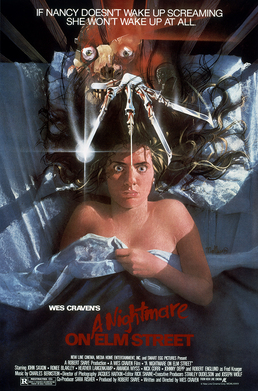
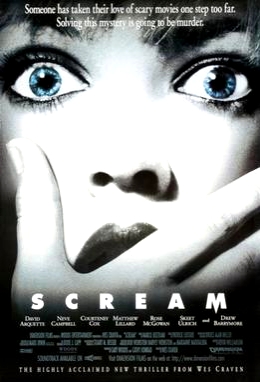
Career Overview
Wes Craven occupies a vital, transitional space in the history of American horror cinema. His career arc reflects a continuous engagement with the psychological and cultural anxieties of the United States. While early efforts established his willingness to push boundaries, his later trajectory reveals a filmmaker keenly aware of the very formulas he helped cement. This evolution culminates in a body of work that not only defines the contemporary horror landscape but also actively interrogates it.
Moving from visceral, independent cinema to polished studio features, his background demonstrates a consistent adaptation to shifting cinematic tastes. His position in cinema history is largely defined by his unique ability to resurrect dormant subgenres. By identifying the exhausted tropes of the teen slasher, he systematically tore them down and rebuilt them for a more cynical, media literate audience.
This chronological development positions him less as a traditional auteur and more as a cultural diagnostician. His work bridges the gap between the gritty horror movement of the 1970s and the glossy, hyper referential blockbusters of the late 1990s. Ultimately, his legacy rests on his rare capacity to orchestrate mainstream success while maintaining a sharp, provocative edge that challenges viewers to examine their own complicity in the consumption of violence.
Thematic Preoccupations
The most prominent thematic preoccupation across his later filmography is the concept of self-aware horror. His narratives frequently center on characters who are hyper conscious of the fictional universes they inhabit. By embedding teenage horror tropes within the text itself, he transforms standard genre exercises into rigorous meta commentary. The overarching philosophical concern becomes the relationship between media consumption and real world morality, asking how a generation raised on cinematic violence processes actual trauma.
This post-modern horror approach functions as both a celebration and a deconstruction of cinematic traditions. He repeatedly returns to the question of audience engagement, probing why viewers are drawn to horrific imagery. His films suggest that the boundaries between the screen and reality are porous, with characters weaponizing their knowledge of genre conventions to survive. The resulting provocative satire forces the audience to confront the absurdity of their own expectations.
Furthermore, genre revitalization serves as a core thematic engine. Rather than merely repeating established formulas, he leverages sharp humor and gory satire to refresh the landscape. The balance of humor and terror becomes a thematic statement in itself, illustrating how irony acts as a defense mechanism for modern youth. Through this lens, his work aligns with films like The Last Picture Show or Clerks in its depiction of highly articulate, culturally saturated youth, while maintaining the lethal stakes of a traditional slasher film.
Stylistic Signatures
Visually, his stylistic signatures are defined by an energetic style that propels the narrative forward without sacrificing spatial coherence. His mise-en-scene often contrasts the mundane, sunlit safety of suburban environments with the encroaching, chaotic violence of a home invasion. This juxtaposition amplifies the horror by violating the perceived sanctity of domestic spaces. The camera work remains fluid and responsive, utilizing tracking shots that implicate the viewer as an active participant in the suspense.
The editing rhythms in his films expertly balance the visceral impact of violence with a refreshing wit. He utilizes rapid, percussive cuts during sequences of extreme danger, which are then immediately counterbalanced by slower, dialogue heavy scenes that allow for meta commentary. This rhythmic oscillation between tension and release creates a unique tone, best described as gory humor, which prevents the narrative from collapsing into pure morbidity.
His approach to sound and music further reinforces the self-aware twist of his narratives. Instead of relying solely on traditional orchestral stingers, his soundscapes frequently incorporate jarring, unexpected auditory cues that mock the very mechanics of jump scares. The stylistic execution often mirrors the existential dread found in Edvard Munch's painting The Scream, translating that iconic visual distortion into a kinetic cinematic vocabulary. His style and wit merge to form a cinematic language that is simultaneously horrifying and exhilarating.
Recurring Collaborators
While comprehensive data on recurring casts across his entire career may be sparse, his key creative partnerships profoundly shape the texture of his most significant works. The ensemble nature of his casts often relies on a blend of established stars and emerging talent, creating a vibrant, believable community of targets. Performers such as Courteney Cox, David Arquette, Drew Barrymore, and Neve Campbell are central to executing the delicate balance of terror and irony required by his scripts.
These actors contribute an essential grounding to the heightened, post-modern reality of his films. Neve Campbell, for instance, anchors the narrative with a performance that transcends typical victimhood, offering a deeply felt emotional core amidst the gory satirical style. Meanwhile, performers like Courteney Cox and David Arquette provide the sharp humor and ironic detachment necessary to sustain the meta commentary.
The synergy between the director and this specific ensemble results in a palpable on screen chemistry that elevates the material above a standard teenage slasher. The tragic desperation and explosive violence echo the iconic criminal duo of Bonnie and Clyde, as the actors must navigate a landscape of sudden brutality while delivering rapid fire, culturally savvy dialogue. These performances are crucial in bridging the gap between the intellectual exercise of genre deconstruction and the visceral demands of commercial cinema.
Critical Standing
The critical reception of his work has undergone a significant evolution, shifting from dismissive reviews of early exploitation efforts to enthusiastic appraisals of his later, more sophisticated meta narratives. Critics frequently celebrate his ability to achieve genre reinvigoration, noting how he successfully breathed new life into the moribund slasher film. Reviewers consistently highlight his smart, stylish direction and the clever horror that defines his peak output.
Within critical discourse, he is positioned as a pivotal figure who bridged the gap between low-brow entertainment and high-brow academic analysis. Publications ranging from The A.V. Club to Variety have praised his work as a standout in the genre, emphasizing the sharp script and energetic direction that characterize his defining films. His films are frequently cited as masterclasses in audience appeal, successfully satisfying genre purists while engaging film theorists interested in semiotics and media studies.
Over time, his standing has solidified as that of a master orchestrator of suspense who never lost his subversive edge. Renowned critics, including Roger Ebert, have commended his willingness to violate the oldest rules in movie history by acknowledging the medium itself. Today, his legacy rests on his dual capacity as both an entertainer and a critic of the very genre he helped build, securing his place as an indispensable architect of modern American cinema.