Career Overview
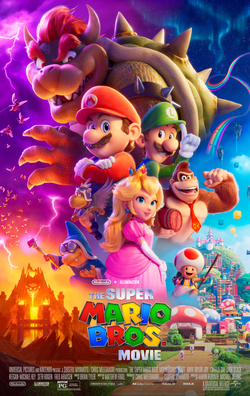
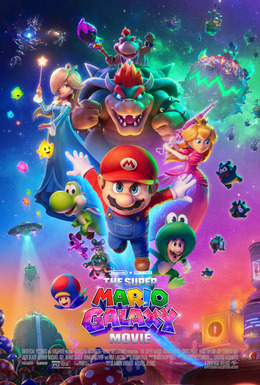
Aaron Horvath occupies a distinctive position in contemporary cinema, situated precisely at the intersection of staggering commercial success and intense critical debate. Operating primarily within the high-stakes realm of big-budget animation, he has become a defining architect of modern corporate franchise filmmaking. His primary works, notably The Super Mario Bros. Movie and its swift follow-up, The Super Mario Galaxy Movie, established him as a reliable steward of highly valuable intellectual property. Horvath navigates the notoriously perilous terrain of video game adaptations, transforming previously dormant cinematic properties into global box office juggernauts.
His entry into this specific franchise carries significant historical weight. For decades, the catastrophic critical and commercial failure of the 1993 live-action adaptation cast a long, prohibitive shadow over Nintendo properties in Hollywood. Horvath was tasked with the monumental challenge of resurrecting this potential, bridging the gap between interactive media and passive cinematic consumption. By successfully launching an animated universe that resonated deeply with global audiences, he cemented his status as a pragmatic and highly bankable director, effectively redefining the industry standard for family-friendly blockbusters.
By the time he helmed The Super Mario Galaxy Movie in 2026, Horvath's career arc had solidified around a specific brand of hyper-lucrative, nostalgia-driven filmmaking. His place in cinema history is currently understood as that of an industry technician rather than a traditional auteur. He is a director who delivers record-breaking box office performances by prioritizing absolute faithfulness to source material and broad audience appeal over rigorous artistic ambition, serving as a pivotal figure in an era dominated by corporate-synergized entertainment.
Thematic Preoccupations
The dominant thematic preoccupation of Horvath's cinematic output is the relentless commodification of nostalgia. Across both The Super Mario Bros. Movie and The Super Mario Galaxy Movie, he returns obsessively to the concept of familiarity as a substitute for traditional narrative progression or character development. His films ask not how iconic figures might evolve or challenge themselves, but rather how accurately their digital pasts can be reconstructed for modern audience engagement. This heavy reliance on fan service functions as the central thematic engine of his storytelling, prioritizing an itch for recognition over genuine emotional discovery.
Another recurring theme in Horvath's work is the tension between expansive world-building and narrative containment. While his protagonists traverse varied galactic worlds and detailed mushroom kingdoms, the storytelling remains strictly bound by adaptation challenges and corporate caution. Critics frequently note a lack of ambition in how these environments are explored, pointing to a rigid adherence to family-friendly tropes. The worlds are visually vast, but the philosophical concerns remain acutely localized around safe, easily digestible binaries of good versus evil, leaving vast swaths of narrative potential entirely unexplored.
Furthermore, Horvath's filmography grapples with the inherent anxieties of the modern franchise machine. The frantic energy and rushed storytelling frequently observed in his films reflect a broader cultural obsession with relentless forward momentum and the pressures of the sequel economy. While his films occasionally flirt with larger mythological structures, such as a noted influence from Star Wars in his 2026 sequel, these elements are deployed as pastiche rather than genuine thematic inquiry. The ultimate preoccupation of his work is the preservation of intellectual property, resulting in narratives that prioritize a mild, risk-averse amusement over challenging cinematic discourse.
Stylistic Signatures
Horvath's visual language is characterized by a relentless, candy-colored kineticism that prioritizes technical mastery over nuanced cinematic expression. In collaboration with Illumination Entertainment, he constructs impeccably rendered animated visuals that are remarkably beautiful and fiercely true to their 8-bit and 16-bit source material. The mise-en-scene is frequently densely packed with visual references and Easter eggs, creating a hyper-saturated aesthetic. However, this approach has led some critics to liken his compositions to a scattershot dash through established properties rather than the organic framing of a lived-in world.
The editing rhythms in a Horvath film are notoriously frantic and unrelenting. He favors a noisy, fast-paced approach that propels the viewer from one episodic encounter to the next with minimal breathing room or space for reflection. This flat pacing, often devoid of traditional dramatic builds or valleys, creates an experience designed to steamroll the senses rather than engage the intellect. The camera rarely lingers for emotional resonance, opting instead for a perpetual motion that mimics the mechanics of the video games he adapts, which frequently results in what critics describe as a tedious or inert narrative structure.
Sonically, Horvath leans heavily into recognizable musical motifs and high-energy voice performances to compensate for what many perceive as a hollow sense of humor. His approach to sound design and music is aggressive, utilizing iconic video game cues and contemporary rock ballads to manufacture emotional peaks. The integration of elaborate musical numbers serves as a stylistic crutch to inject bursts of energy into a visually bland or narratively flat framework. This results in an overarching aesthetic that is technically polished but often feels like an algorithmically generated checklist of audience expectations.
Recurring Collaborators
Horvath's approach to casting relies heavily on assembling high-profile, recognizable voices to anchor his animated spectacles, functioning as a key component of his commercial strategy. His most crucial recurring collaborator is Chris Pratt, who provides the central vocal performance across his primary franchise. Pratt's involvement has been central to the marketing and broad audience appeal of these films. However, critical reception of his contributions has been consistently mixed, often reflecting the broader industry tension between celebrity casting and specialized voice acting in modern animation.
Anya Taylor-Joy, Charlie Day, and Keegan-Michael Key form the core supporting ensemble of Horvath's cinematic universe, appearing across both major entries in his filmography. Taylor-Joy and Day provide the necessary, if superficial, emotional tethers for the protagonist, while Key is frequently tasked with injecting the frantic comedic energy that characterizes the director's pacing. Their recurring presence ensures a continuity of tone across the sequels, allowing Horvath to maintain a consistent, mildly amusing atmosphere that prioritizes character recognition over complex characterization.
Undoubtedly, the most critically celebrated collaboration in Horvath's filmography is his work with Jack Black. Across both films, Black's bombastic, rock-infused vocal performances have been universally cited as the standout element, frequently transcending the limitations of the script. By leaning heavily into Black's established musical persona, Horvath successfully creates a highly engaging villainous archetype, blending comedic menace with unexpected musicality. This partnership highlights Horvath's occasional, yet highly effective, ability to harness the specific eccentricities of his cast to elevate the surrounding material.
Critical Standing
Aaron Horvath occupies a deeply polarized space within contemporary critical discourse. From a purely commercial standpoint, his films are undeniable juggernauts. His work on The Super Mario Galaxy Movie and its predecessor generated massive, record-breaking box office returns, cementing his status as a highly bankable director capable of satisfying broad demographic appetites. However, his critical reputation is fraught with accusations of uninspired creativity and a fundamental lack of artistic ambition, positioning him as a frequent target for critics decrying the corporatization of cinema.
Critics frequently situate Horvath's work in direct contrast to more ambitious animated features or even the bizarre, avant-garde failures of the past. Reviews regularly invoke the 1993 live-action adaptation of the same property, noting that while Horvath's films are infinitely more faithful and technically competent, they entirely lack the outlandish, cult-classic charm of their predecessor. Unfavorable comparisons to The LEGO Movie or the Sonic the Hedgehog franchise highlight a perceived deficit in Horvath's approach, with critics arguing his films operate merely as a checklist of Easter eggs and fan service rather than clever, subversive, or engaging cinema.
The evolution of Horvath's standing has seen a steady hardening of critical attitudes toward his methodology. While his initial foray into the franchise was met with a mixture of nostalgic relief and tepid dismissal, subsequent releases have drawn notably harsher assessments. Reviewers have labeled his output as soulless, describing it as a vapid cocktail of technical mastery and rushed storytelling. Ultimately, Horvath is viewed by the critical establishment not as an auteur, but as a highly proficient technician executing corporate mandates, delivering products that are visually pristine but narratively inert and creatively hollow.