Career Overview
Alejandro González Iñárritu stands as a monumental figure in contemporary transnational cinema, celebrated for bridging raw visceral intensity with massive studio resources. Emerging from the Mexican film industry, he quickly established himself as a director of profound international significance. His early career was defined by complex, multi-strand narratives that sought to map the emotional geography of an increasingly globalized world. Films from this period positioned him as a cinematic sociologist, deeply invested in the invisible threads connecting disparate human lives across borders and cultures.
As his career progressed, Iñárritu underwent a fascinating artistic evolution, pivoting from the sprawling hyperlink cinema of his early years to intensely focused, subjective narratives. Critics frequently note this director's evolution and reinvention, observing how he traded the macroscopic lens of his earlier dramas for microscopic, often grueling examinations of individual endurance and ego. This shift marked a period of technical and thematic audacity, moving from the solemnity of interwoven tragedy to exhilarating, surrealist experimentation.
Today, Iñárritu occupies a unique position in film history as a purveyor of ambitious emotional narratives who continually tests the limits of the medium. Reviewers have likened his trajectory to that of visionary filmmakers who prioritize sensory immersion over traditional exposition. Whether orchestrating a delirious showbiz comedy or a brutal frontier epic, he remains an authoritative voice in modern filmmaking, consistently demanding both physical rigor from his collaborators and intellectual engagement from his audience.
Thematic Preoccupations
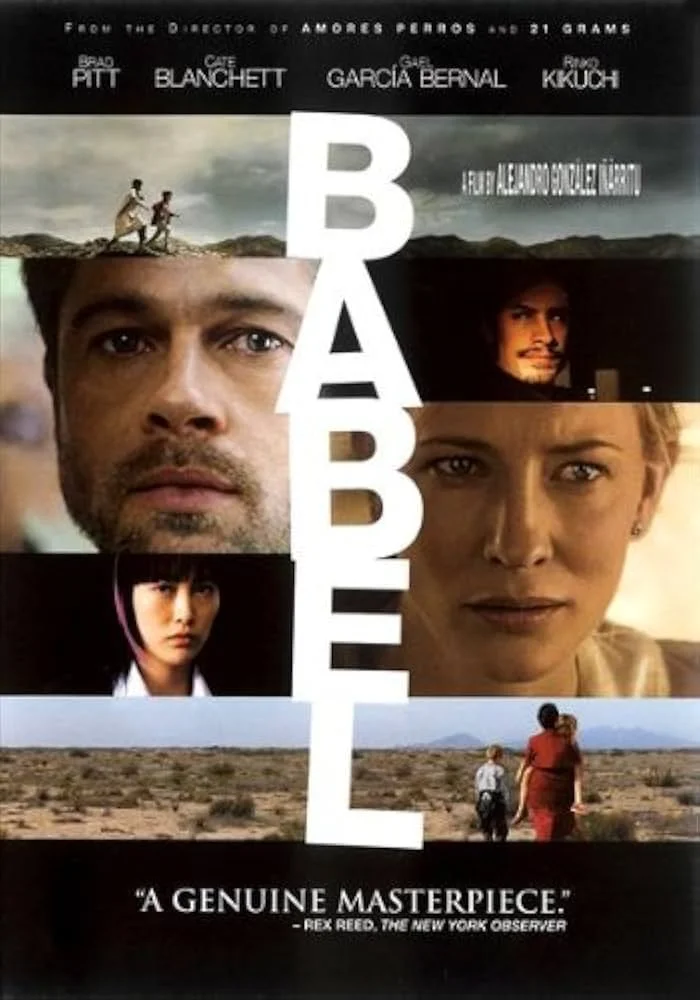
The cinema of Iñárritu is anchored by a persistent exploration of global interconnectedness and human suffering. In Babel, he treats cultural misunderstanding and isolation not merely as plot devices but as existential conditions. He maps out the tragic consequences of cultural collision, presenting a world where an isolated incident triggers a ripple effect across continents. His films suggest that pain is a universal language, connecting individuals through shared vulnerability and emotional turmoil while simultaneously highlighting profound cultural division and American privilege.
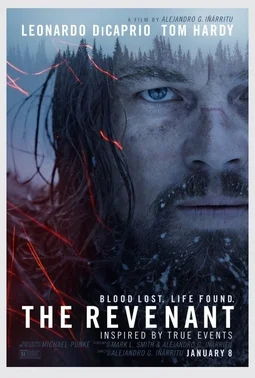
Another dominant philosophical preoccupation is the concept of survival instinct and the classic paradigm of man vs. nature. In The Revenant, the director distills human endurance to its most brutal, elemental form. The revenge narrative operates as a framework for a deeper meditation on resilience against extreme adversity. Here, isolation is physical and environmental rather than strictly sociological. The natural world is depicted as a deeply indifferent, violent force, forcing protagonists to confront their own primal instincts to persist in the face of nature's brutality.
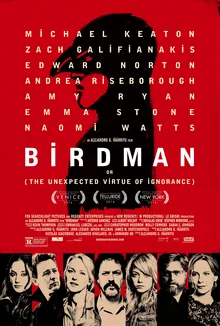
Complementing these physical trials are his intense psychological explorations of identity and celebrity culture. In Birdman or (The Unexpected Virtue of Ignorance), Iñárritu turns his focus to the internal wilderness of the human ego. He dissects an actor's identity crisis in storytelling, utilizing the satirical elements of modern fame to explore the desperate need for validation. Despite the comedic overtones, this thematic obsession mirrors the suffering found in his heavier dramas. Whether his characters are battling a relentless winter landscape or the suffocating weight of a past superhero persona, they are uniformly trapped in a struggle for agency and meaning.
Stylistic Signatures
Visually and structurally, Iñárritu is defined by an insistence on visceral experience and immersive storytelling. He utilizes a dynamic, often aggressive camera style designed to collapse the distance between the spectator and the screen. Critics have compared this sensory overload to Aldous Huxley's concept of sensory-enhanced cinema, noting how his beautiful cinematography frequently serves to highlight brutal realism. His visual language often relies on long, unbroken takes or the illusion thereof, creating a gripping narrative momentum that traps the audience within the protagonist's immediate reality.
His approach to narrative structure has shifted dramatically over his career. Early works like Babel rely heavily on disjointed structures and complex narrative layers, weaving disparate storylines to reflect a fractured global consciousness. In contrast, his later stylistic signatures embrace a brilliant and technical execution that feels intensely unified. The audacious and delirious creativity of Birdman or (The Unexpected Virtue of Ignorance) evokes the subjective camera experiments of Robert Montgomery and the innovative direction of Gaspar Noé, producing a surrealist and hallucinatory experience that mimics the frantic rhythm of a theater backstage.
Tonally, Iñárritu is a master of atmosphere, often conjuring a haunting, intense mood accompanied by raw emotions. While he is widely praised for his slick production and expressive storytelling, this staggering ambition has occasionally drawn critique. Some reviewers have noted overlong pacing, self-indulgent moments, and manipulative elements in his orchestration of tragedy. Nevertheless, his ability to seamlessly blend comedic and emotional elements with apocalyptic themes ensures that his stylistic imprint remains instantly recognizable and relentlessly provocative.
Recurring Collaborators
While Iñárritu does not rely on a fixed troupe of actors across his entire filmography, his approach to casting and collaboration is a critical component of his filmmaking architecture. He frequently mixes marquee Hollywood stars with lesser-known international talents to build a highly specific, textured reality. In Babel, the casting of global icons like Brad Pitt and Cate Blanchett alongside international performers such as Gael Garcia Bernal and Rinko Kikuchi serves a deliberate thematic purpose. This strategy underscores his themes of cultural exploration and universalizes the narrative, allowing him to elicit dynamic character arcs from a diverse ensemble.
When working with leading actors, Iñárritu has a reputation for pushing performers to their absolute physical and psychological limits. His protagonists are often subjected to extreme duress, requiring actors to deliver performances rooted in raw, unvarnished emotion. The visceral impact of his films relies entirely on the total commitment of his cast, who must navigate both the grueling environmental conditions of his outdoor shoots and the demanding choreography of his complex, sweeping camera movements.
Furthermore, Iñárritu often weaponizes the real-world personas of his actors to enhance his thematic critiques. The casting of Michael Keaton in Birdman or (The Unexpected Virtue of Ignorance) functions as a brilliant meta-textual stroke. By drawing on the actor's own history with superhero franchises, Iñárritu deepens the film's satire of celebrity culture and identity. This willingness to blend an actor's off-screen legacy with their on-screen character demonstrates his sophisticated, manipulative command of the cinematic medium, resulting in career-defining performances that resonate far beyond the confines of the script.
Critical Standing
The critical reception of Alejandro González Iñárritu is characterized by a mixture of profound admiration and intense debate. During the peak of his interwoven narrative phase, films like Babel were championed by many as masterpieces in the making. Reviewers praised his massive cinematic appetite and his ability to articulate a global intuition of pain. However, this era also saw detractors who argued that his overambitious storytelling occasionally resulted in wafer-thin approximations of real people, with some critics feeling that his narratives suffered from a gradual sense of deflation under their own thematic weight.
His critical standing underwent a seismic shift and a celebrated return to form with the release of Birdman or (The Unexpected Virtue of Ignorance). Critics embraced this pivot, hailing the film as a complete blast from start to finish and a delicate, dazzling high-wire act. The industry marveled at his capacity for reinvention, celebrating his transition from somber, intersecting tragedies to a frantic, hallucinatory showbiz comedy. This film cemented his reputation as a supreme technical stylist capable of generating freaky and exhilarating vibes that challenged conventional cinematic storytelling.
With The Revenant, Iñárritu solidified his status as a director of grueling, monumental cinema, drawing comparisons to the visionary madness of Werner Herzog's Aguirre, the Wrath of God and Francis Ford Coppola's Apocalypse Now. Critics lauded the picture as a classic B picture fortified with Grade A resources, emphasizing its gut-churningly brutal beauty. Yet, the film also amplified the polarizing aspects of his work, with some reviewers citing a deadly script and self-indulgent moments. Ultimately, Iñárritu commands a towering position in critical discourse, respected as a fearless auteur whose relentless pursuit of immersive, ambitious cinema continually challenges both the industry and the audience.