Career Overview
Andrew Stanton is a pivotal figure in modern American animation, primarily through his foundational role at Pixar Animation Studios. His evolution from a story artist to a premier director represents a significant shift in mainstream studio filmmaking, blending classical Hollywood narrative structures with pioneering digital artistry. Stanton helped define an era of cinema where computer animation matured into a medium capable of profound emotional resonance and sophisticated storytelling.
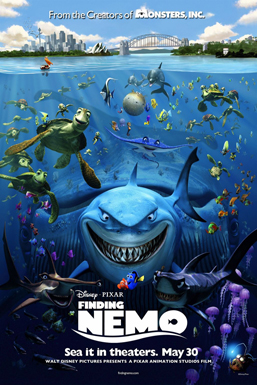
His directorial debut, Finding Nemo, established him as a master of the animated feature. By grounding an expansive oceanic adventure in relatable parental anxieties, he helped solidify his studio as an unstoppable creative force in Hollywood. The film demonstrated his capacity to balance broad comedic storytelling with palpable emotional depth, appealing to the broadest possible audience without insulting their intelligence.
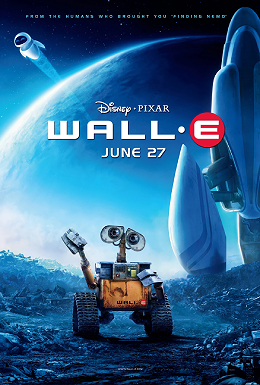
With WALL-E, Stanton achieved what many critics consider his masterwork. He pushed the boundaries of studio animation by delivering a stark environmentalist parable that relies heavily on visual storytelling and features a nearly dialogue free first act. This daring narrative choice cemented his reputation as an auteur capable of smuggling profound philosophical questions into major family entertainment.
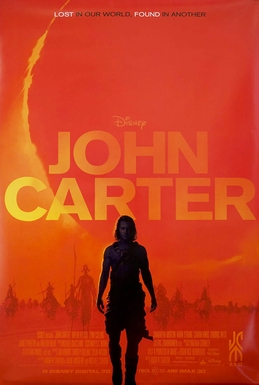
His transition to live action cinema with John Carter marked a complex chapter in his career trajectory. Adapting Edgar Rice Burroughs for the screen, Stanton attempted to translate his massive visual ambitions into a sprawling science fiction epic. Although the project showcased his enduring commitment to the hero's journey and grand visual scale, it ultimately forced a critical reevaluation of his directorial limits when working outside his traditional animation pipeline.
Thematic Preoccupations
Across his filmography, Stanton consistently returns to narratives of self-discovery framed within vast, often intimidating environments. Whether navigating the perilous currents of the Great Barrier Reef in Finding Nemo or traversing the desolate, garbage strewn ruins of Earth in WALL-E, his protagonists are isolated figures compelled to undertake monumental journeys. These epic travels serve as external manifestations of internal emotional maturation.
A profound exploration of loneliness and humanity forms the emotional core of his most celebrated work. WALL-E interrogates the relationship between technology and organic life, suggesting that a rusty, obsolete robot might harbor more soulful humanity than the human race itself. This fascination with what constitutes the human spirit is a recurring obsession, echoing through the cybernetic landscapes of the future and the alien civilizations depicted in John Carter.
The burden of memory and nostalgia frequently haunts his characters. The solitary robot in WALL-E clings to relics of a forgotten human past, finding romantic resonance in old musical films. Similarly, the protagonist of John Carter is an American Civil War veteran deeply scarred by his past, seeking purpose in an interplanetary conflict. Stanton uses these historical anchors to ground his fantastical adventures in recognizable psychological trauma.
Finally, Stanton is deeply preoccupied with parental love and the anxieties of guardianship. Finding Nemo explicitly dissects suburban parental anxiety transposed onto an underwater realm, questioning the balance between protection and overbearance. This thematic thread highlights his enduring interest in familial bonds as the ultimate anchor in a chaotic, unpredictable universe.
Stylistic Signatures
Stanton is renowned for his visually stunning approach to world-building, utilizing expansive wide shots to emphasize the scale of his settings relative to his diminutive protagonists. The infinite blue depths of Finding Nemo and the cosmic void of WALL-E are rendered with a challenging visual wonderment that invites the audience to feel the overwhelming vastness of the cinematic world. His camera movements often mimic the fluid dynamics of his environments, floating gracefully through water or zero gravity.
A defining hallmark of his directorial style is his reliance on pure visual storytelling, particularly evident in sequences devoid of conventional dialogue. The entire first act of WALL-E operates as a masterclass in silent cinema techniques, communicating complex exposition, character motivation, and romantic longing entirely through pantomime, mechanical sound design, and meticulous blocking. This daring approach harkens back to the comedic physicality of classic silent film stars.
Contrast plays a vital role in his mise-en-scène. Stanton frequently juxtaposes organic warmth with sterile or hostile landscapes. The bright, cheerful atmosphere of the coral reef stands in stark opposition to the murky dangers of the open ocean. Likewise, the rusted, tactile reality of a ruined Earth is contrasted with the sleek, homogenized luxury of the starliner, serving as a visual critique of mindless consumerism and ecological decay.
Despite his roots in precise digital animation, his pacing sometimes falters when applied to live action blockbuster templates. In John Carter, the visual arrest of the Martian landscapes is frequently undercut by erratic pacing and a chaotic editing rhythm during epic battles. While his animated features boast tightly structured, dynamic character arcs, his live action framing sometimes struggles to organize traditional pulp elements into a cohesive visual narrative.
Recurring Collaborators
Stanton's career is inextricably linked to the collaborative machinery of his home animation studio. His creative partnerships with fellow animation pioneers provided the foundational support necessary to develop his sophisticated narratives. This institutional backing allowed him to pursue grand ambitions, secure in the knowledge that a robust story trust would refine and elevate his daring narrative choices.
In front of the camera, or rather behind the microphone, Stanton frequently employs actors who can convey immense vulnerability and comedic timing through voice alone. Willem Dafoe stands out as a notable recurring collaborator across different mediums. Dafoe provided the weathered, authoritative voice of the scarred Moorish idol fish in Finding Nemo and later reunited with Stanton to perform motion capture duties as a towering Martian warrior in John Carter.
Dafoe's involvement highlights Stanton's preference for classically trained actors who can bring theatrical gravity to highly artificial environments. By anchoring digital avatars with Dafoe's grounded, resonant performances, Stanton manages to inject palpable emotional heft into computer generated characters, ensuring they remain compelling even when surrounded by overwhelming digital spectacle.
The synthesis of Stanton's visual storytelling with evocative musical scores further defines his collaborative process. His work consistently benefits from composers who understand how to translate his thematic preoccupations into musical motifs. The soulful, romantic undertones of his films rely heavily on this aural landscape, bridging the gap between technological artistry and heartfelt emotion.
Critical Standing
Andrew Stanton occupies a fascinating and somewhat polarized space in contemporary film criticism. For the first decade of his directorial career, he was universally heralded as one of the most reliable and innovative voices in American cinema. Finding Nemo brought him immense commercial and critical acclaim, celebrated for managing what many critics deemed impossible by appealing to a massive audience without sacrificing intellectual rigor or emotional depth.
The release of WALL-E elevated his critical standing to the level of auteur. Critics championed the film as an unparalleled cinematic experience, praising its bold ecological themes and its willingness to embrace contradictions. By fusing a melancholic apocalyptic narrative with a romantic comedy structure, Stanton earned comparisons to cinematic legends, securing his reputation as a master storyteller willing to take daring narrative risks.
However, his critical trajectory shifted dramatically with the release of John Carter. The film was met with widespread skepticism and harsh reviews, with major publications dismissing it as a visually impressive but narratively flawed science fiction epic. Critics lamented the erratic pacing and the lack of depth in the human characters, arguing that the film devolved into a suffocating feast of boredom despite its massive budget and grand ambitions.
Today, Stanton's legacy is dualistic. He is fiercely defended by animation scholars as a trailblazer who proved that family films could handle complex psychological and environmental issues with grace. Concurrently, his foray into live action serves as a cautionary tale in critical circles about the difficulties of translating animation sensibilities to studio tentpoles. Despite the critical misstep of his Martian adventure, his animated masterpieces ensure his enduring status as a visionary filmmaker.