Career Overview
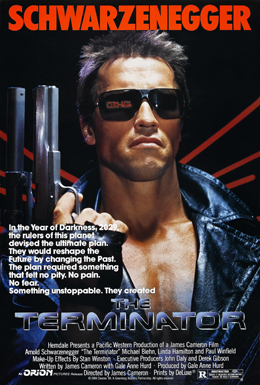
James Cameron occupies a singular space in modern cinema, operating at the intersection of genre filmmaking and unprecedented technological innovation. His career began in the gritty realm of low-budget science fiction, where he quickly demonstrated a remarkable aptitude for kinetic storytelling. The release of The Terminator established him as a formidable new voice, marrying cyber-punk imagination with chillingly efficient execution. This early triumph set the stage for an auteur who would continually redefine the boundaries of visual effects and audience immersion.
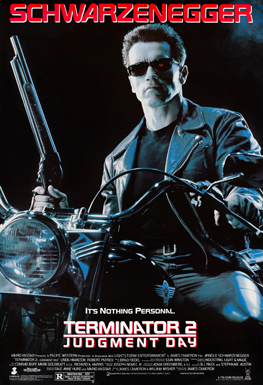
Building upon this foundation, Cameron systematically expanded the scale of the Hollywood blockbuster. His approach evolved from scrappy, practical ingenuity into the orchestration of massive, high-budget productions. With Terminator 2: Judgment Day, he cemented his status as the consensus choice for the premier action director of his generation. He proved that a sequel could transcend its origins to become a monumental cultural event, utilizing state-of-the-art technology to alter the very fabric of popular cinema.
In the latter stages of his career, Cameron has increasingly focused on expansive world-building and the advancement of cinematic technology. His commitment to pushing the medium forward is evident in ambitious, long-gestating projects like Avatar: Fire and Ash. Here, he continues to explore immersive environments, trading the urban decay of his early thrillers for meticulously designed, alien ecosystems. His evolution reflects a director shifting from terrestrial anxieties to sprawling, extraterrestrial mythologies.
Surprisingly, his relentless pursuit of audience immersion recently led him to the concert documentary format. By co-directing Billie Eilish, Hit Me Hard and Soft: The Tour, Cameron applied his fascination with 3D filmmaking to the realm of pop stardom. This unexpected pivot underscores a career defined not just by narrative preferences, but by an enduring obsession with how cutting-edge technology can fundamentally alter the viewing experience.
Thematic Preoccupations
A pervasive theme across Cameron's filmography is the desperate struggle for human survival against seemingly unstoppable forces. This preoccupation is most explicit in his early narratives, which pit vulnerable protagonists against malevolent artificial intelligence and relentless cyborg assassins. The Terminator functions as a grim warning about humanity's hubris regarding its own technological creations, a motif that echoes through decades of his work and establishes a persistent anxiety concerning apocalyptic futures.
As his career progressed, these apocalyptic themes expanded to encompass broader ecological and cultural conflicts. In Avatar: Fire and Ash, the existential threat shifts from time-traveling machines to the destructive consequences of war and colonization. The conflict between the Na'vi and the volcanic Ash People allows Cameron to interrogate tribalism, environmental devastation, and the heavy burden of grief and loss within a science fiction framework, expanding his thematic canvas beyond literal humans versus machines.
Despite the grandiose scale of his conflicts, Cameron consistently grounds his narratives in emotionally resonant, unconventional family dynamics. The shifting allegiances in Terminator 2: Judgment Day transform a lethal machine into an unlikely father figure for a rebellious youth. This exploration of makeshift families serves as an emotional anchor, counterbalancing the high-octane firepower that typically dominates his climactic acts and allowing his characters to find humanity in the most barren circumstances.
Furthermore, the director frequently explores the intersection of youthful vulnerability and overwhelming external pressure. This thematic thread connects his fictional protagonists with his documentary subjects. In Billie Eilish, Hit Me Hard and Soft: The Tour, Cameron examines the crushing weight of global pop stardom, utilizing his colossal cinematic apparatus to capture the fragile, intimate reality of a young artist navigating massive audience expectations and hyper-visibility.
Stylistic Signatures
Cameron is widely celebrated for a visual language defined by magnificent, state-of-the-art technological spectacle. His films often serve as proving grounds for innovative cinematic techniques, particularly in the realms of computer-generated imagery and immersive 3D filmmaking. While his early work contained loving homages to practical effects and legendary animators like Ray Harryhausen, his mature style is entirely committed to pushing the boundaries of digital world-building, as seen in the revelatory visuals of Avatar: Fire and Ash.
His approach to mise-en-scene in action sequences is characterized by virile, stylish direction and meticulous narrative balance. Even when staging the most complex, destructive set pieces, Cameron ensures that the action never drowns out the storyline. The relentless pacing of The Terminator and its sequel rely on a clear spatial geography, allowing the audience to fully comprehend the mechanics of the chase while experiencing a truly electrifying atmosphere.
In his pursuit of audience engagement, Cameron frequently employs a flashy presentation that occasionally risks overwhelming the subject matter. When applying his signature 3D technology to live music, the results can reveal his inclination toward overwhelming scale. His heavy reliance on extreme close-ups in Billie Eilish, Hit Me Hard and Soft: The Tour represents an attempt to manufacture a bedroom intimacy within a massive arena, highlighting his tendency to filter raw emotion through highly complex technical apparatuses.
Consequently, his stylistic signatures sometimes result in a juxtaposition of mismatched elements. The friction between a profoundly intimate performance and a grandiose, technologically advanced filmmaking style creates a unique aesthetic tension. Whether rendering the apocalyptic ruins of a future Los Angeles or capturing the vibrant energy of a contemporary concert venue, Cameron's visual strategy remains consistently maximalist, prioritizing immense scale and cutting-edge delivery.
Recurring Collaborators
The defining creative partnership of Cameron's early career was his collaboration with Arnold Schwarzenegger. The director effectively weaponized the actor's imposing physique and impassive delivery, turning him into an impossibly cool cinematic icon in The Terminator. Their subsequent reunion allowed Cameron to subvert the very image he helped create, repositioning the actor as an idealized protector and yielding a signature role that defined the action cinema of the late twentieth century.
Equally vital to his narrative architecture is Linda Hamilton, who provided the emotional and physical backbone for his most famous franchise. Through her, Cameron developed his archetype of the fiercely capable, battle-hardened survivor. Her transformation from a vulnerable civilian into a heavily armed militant in Terminator 2: Judgment Day encapsulates the director's fascination with characters forced to evolve under extreme, apocalyptic duress.
Supporting players also provide crucial connective tissue within his cinematic universe. Character actors like Earl Boen bring a necessary human fallibility and skepticism to narratives dominated by futuristic machines and high-concept science fiction. Boen's recurring appearances help ground Cameron's expansive storytelling in a recognizable, cynical reality, contrasting sharply with the cyber-punk imagination of the central plots.
In recent years, Cameron's collaborative circle has expanded to include major figures from the music industry, reflecting his desire to merge distinct artistic visions. His co-directing effort with a major pop artist on Billie Eilish, Hit Me Hard and Soft: The Tour demonstrates a willingness to share creative control. However, critics noted that this specific collaborative effort sometimes struggled to harmonize the musician's subtle artistry with the veteran director's overwhelming preference for visual spectacle.
Critical Standing
James Cameron's critical standing has undergone a fascinating evolution, shifting from universal acclaim as a genre maestro to a more polarizing figure in contemporary blockbuster discourse. Initial reviews of his early thrillers praised his slick direction and chillingly efficient pacing. By the time he released Terminator 2: Judgment Day, he was widely lauded by the critical establishment, recognized as a visionary who could successfully marry ambitious, ironic storytelling with unprecedented technological advancements.
During this peak era, critics marveled at his ability to deliver highly successful sequels that surpassed the original films in both scope and execution. The immense budgets of his projects were frequently justified by the tremendous impact of the final product. Reviewers often cited his work as the idealized template for summer tentpole releases, praising his capacity to weave emotionally weighty themes of sacrifice and survival into massive, crowd-pleasing narratives.
However, as his focus shifted almost exclusively toward digital immersion, critical consensus became increasingly fractured. Recent assessments of Avatar: Fire and Ash suggest a growing frustration among critics who feel his commitment to visual boundaries has begun to eclipse narrative substance. While some reviewers continue to find his technological advancements genuinely revelatory, a vocal contingent argues that the emotional core of his recent epics feels hollow, suggesting his reach occasionally exceeds his grasp.
This critical skepticism extended to his foray into nonfiction filmmaking. When evaluated against acclaimed contemporaries like Stop Making Sense, Taylor Swift, The Eras Tour, or R.J. Cutler's intimate documentary Billie Eilish, The World's a Little Blurry, his concert film was frequently met with disappointment. Critics lamented that Billie Eilish, Hit Me Hard and Soft: The Tour suffered from mediocre 3D execution and an underwhelming production design that missed the subtlety of the music. Consequently, his modern reputation rests on a fault line between unparalleled technical mastery and a continuously debated capacity for genuine emotional resonance.