Career Overview
Jason Reitman emerged in the late 2000s as a defining voice in American cinema, carefully straddling the line between independent sensibility and mainstream accessibility. His trajectory reflects a filmmaker keenly attuned to the cultural zeitgeist. By focusing on deeply flawed but inherently relatable characters, he established himself as a director capable of dissecting modern social anxieties. His breakthrough period arrived with a pair of critical and commercial successes that cemented his reputation as a perceptive observer of American life.
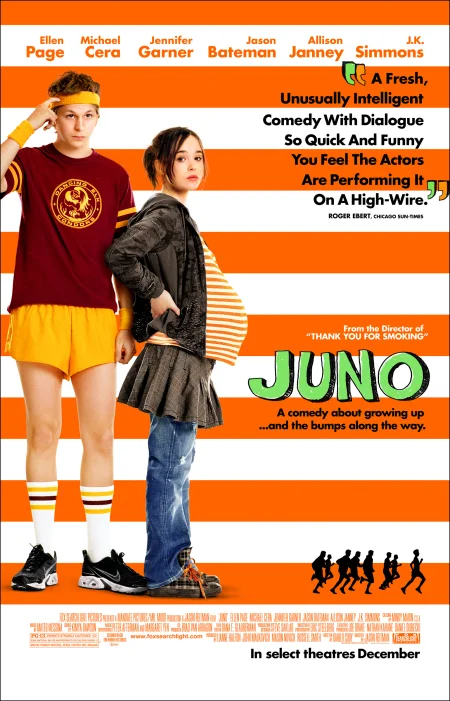
With the release of Juno in 2007, Reitman transitioned from a promising independent director to a major cinematic force. The film demonstrated his unique ability to handle sensitive subjects like teenage pregnancy with a mixture of grounded realism and quirky humor. Critics widely recognized his skill in elevating the material beyond typical teen comedy tropes. This success allowed him to carve out a distinct niche, proving that character-driven narratives could achieve both widespread popularity and serious critical acclaim.
Following this triumph, Up in the Air in 2009 marked a significant maturation in his artistic development. Arriving during a period of global economic instability, the film served as a timely social commentary on corporate downsizing and professional isolation. Reitman proved he could adapt his sweet-tempered storytelling to darker, more cynical subject matter. The evolution from the youthful angst of his earlier work to the middle-aged existential dread of his subsequent film showcased a versatile director expanding his thematic range.
Ultimately, Reitman secured his position in contemporary film history by mastering the art of the sophisticated dramedy. His early filmography operates as a crucial bridge between the ironic detachment of 1990s independent cinema and the earnest, character-focused narratives of the 2010s. By consistently blending entertainment and insight, he has built a body of work that captures the specific economic and emotional realities of his era.
Thematic Preoccupations
Across his acclaimed filmography, Jason Reitman consistently interrogates the tension between human connection and profound isolation. His protagonists often exist outside traditional societal structures, finding themselves adrift in worlds of their own making. In Up in the Air, this theme is literalized through the character of a hired business gun who practically lives in airports, avoiding the vulnerability of permanent relationships. Similarly, the protagonist of Juno isolates herself through her hyper-articulate cynicism and defensive wit, only gradually realizing the necessity of relying on others.
The concept of family dynamics, particularly unconventional or fractured families, serves as a major thematic pillar. Reitman explores adoption and teenage pregnancy not merely as plot devices, but as catalysts for examining how modern families are constructed and deconstructed. His characters frequently face the daunting task of navigating personal growth within these complicated relationship dynamics. Whether it is a teenager searching for the perfect adoptive parents or a corporate downsizer dismantling the livelihoods of providers, the films constantly question what it means to belong to a family unit.
Finding humor in adversity is perhaps the most defining philosophical concern of his work. Reitman forces his characters to confront bleak realities, such as economic ruin or unplanned life-altering events, while maintaining a sharp, witty perspective. This tonal juxtaposition prevents his narratives from becoming overly melodramatic. Instead, the persistent quirky humor highlights the absurdity of modern life, suggesting that laughter is an essential coping mechanism for navigating grief, regret, and uncertainty.
Ultimately, these recurring preoccupations culminate in a unique brand of coming-of-age cinema that applies to both youth and adulthood. While his younger characters learn to shed their armor and accept responsibility, his older characters undergo a parallel maturation process, realizing that a life devoid of attachments is ultimately hollow. This insightful exploration of emotional evolution allows Reitman to deliver poignant moments of realization that resonate deeply with audiences.
Stylistic Signatures
The visual language of Jason Reitman is frequently characterized by what critics have termed an anonymous polish. Rather than employing ostentatious camera movements or highly stylized color grading, he utilizes a clean, understated aesthetic. This grounded approach ensures that the cinematography never distracts from the nuanced performances of his actors. By framing his subjects within vast, impersonal spaces like airport terminals or sterile high school hallways, he subtly reinforces the overarching themes of detachment and modern alienation.
A hallmark of his mise-en-scène is the careful choreography of poised exchanges. Reitman thrives on rhythm, structuring his scenes around rapid-fire, highly literate dialogue. This editing rhythm requires a delicate balancing act, as the pacing must maintain a smooth ride without losing the underlying emotional gravity. The conversational musicality in his films demands precise timing from his ensemble casts, creating a distinct auditory signature that is as recognizable as any visual motif.
In terms of tone, Reitman possesses a rare ability to craft grounded narratives that effortlessly shift from acerbic wit to sincere melancholy. He directs his actors to deliver highly stylized dialogue with complete naturalism. This prevents his sweet-tempered storytelling from ever feeling overly saccharine. The soundscapes and soundtracks he employs, often featuring acoustic indie folk or carefully selected pop tracks, further anchor the emotional reality of the scenes, providing a warm counterpoint to the sometimes cynical subject matter.
Critics frequently note that this stylistic restraint is precisely what makes his films so engaging. By prioritizing character study over visual flair, Reitman achieves a level of easy entertainment that subtly disguises its own complexity. This cinematic approach demands active engagement from the viewer, who must read between the lines of the smart and witty banter to discover the heartfelt and touching realities hidden just beneath the surface.
Recurring Collaborators
The cinematic identity of Jason Reitman is heavily defined by his strategic partnerships with a stable of highly capable actors. Chief among these is J.K. Simmons, who provides a grounding presence across multiple films. Simmons brings a unique blend of authoritative gruffness and unexpected warmth, often serving as an unconventional paternal figure or a voice of pragmatic reality. His consistent appearances provide a comforting connective tissue between the director's varied narrative worlds.
Jason Bateman is another crucial collaborator who perfectly embodies the specific type of modern, flawed masculinity that Reitman loves to explore. Transitioning smoothly from his origins as a teen star, Bateman utilizes his natural affability to portray characters who are outwardly charming but internally compromised. In Juno, his performance challenges the protagonist's idealized notions of adulthood, highlighting Reitman's knack for casting actors who can weaponize their inherent likability.
When working with leading performers, Reitman exhibits a talent for subverting established screen personas. He famously leveraged George Clooney's past roles to craft the ultimate hired business gun in Up in the Air. By stripping away the actor's traditional romantic invulnerability, Reitman elicited what many critics heralded as his best performance yet. Similarly, his collaboration with Ellen Page resulted in an Oscar-worthy breakthrough, tapping into a forthright spikiness that defined the character and the film.
Behind the camera, his collaboration with writers has yielded extraordinary results, most notably with Diablo Cody. Her screenwriting debut on Juno provided Reitman with a text that perfectly matched his directorial sensibilities. Together, they crafted a warm, wonderful, and wry film that married Cody's idiosyncratic, hyper-verbal dialogue with Reitman's restrained, empathetic direction. This creative partnership remains a defining highlight of his career, establishing a template for the smart, nuanced cinema he would continue to produce.
Critical Standing
The critical reputation of Jason Reitman was firmly established during the late 2000s, an era when reviewers enthusiastically embraced his distinctive blend of irony and earnestness. Juno was greeted with overwhelming acclaim, widely championed as just about the best movie of the year. Critics were quick to position the film alongside touchstones like Ghost World and Knocked Up, praising it for providing a fresh, perceptive insight into youth culture. This initial wave of success cemented his status as a director capable of executing highly original, smart, and witty cinema.
His standing evolved into that of a premier American auteur with the release of Up in the Air, which critics lauded as a vital film for this time. Reviewers were captivated by its timely social commentary, frequently comparing its sophisticated tone to Soderbergh's The Informant!. The critical discourse celebrated his assured and confident direction, particularly his ability to generate a dynamic reminiscent of Bogart and Bacall's on-screen chemistry. This period marked the apex of his critical adulation, where he was viewed as a master of blending entertainment and insight.
However, Reitman has also faced localized pushback from certain factions of the critical establishment. Publications like Slant Magazine have occasionally critiqued his aesthetic as an anonymous polish, arguing that his films can sometimes offer a smooth ride that intentionally glosses over deeper systemic issues. These dissenting voices suggest that his pursuit of easy entertainment sometimes blunts the impact of his more fascinating character studies, creating narratives that are almost too poised for their own good.
Despite these occasional critiques, his overall place within film history remains secure and highly respected. He is consistently recognized as a filmmaker who perfectly captured the anxieties of a specific American epoch. By continuously offering heartfelt and touching narratives wrapped in sophisticated, engaging storytelling, Reitman retains a privileged position in the critical consciousness as a director who made complex human connections accessible to a broad audience.