Career Overview
Park Chan-wook stands as a towering figure in contemporary South Korean cinema, bridging the gap between visceral genre thrills and elevated arthouse prestige. His career arc reflects a fascinating trajectory from a purveyor of uncompromising shock to a master of classical restraint and intricate narrative puzzles. Emerging onto the international stage with a distinctively brutal voice, Park initially built his reputation on stories of extreme human endurance and moral complication. His early works established him as a director capable of fusing spectacular violence with profound psychological inquiry.
During this foundational period, his cinema positioned him alongside modern provocateurs like David Fincher and Quentin Tarantino, creators known for their stylish and darkly cynical explorations of human nature. Park utilized extreme narrative premises to excavate the darkest corners of the human psyche, crafting films that shocked audiences while demanding serious critical engagement. His willingness to confront taboo subjects head-on cemented his status as a daring and uncompromising auteur in a rapidly globalizing film landscape.
As his career progressed, Park demonstrated a remarkable artistic evolution. Moving from the jagged, gritty complexity of his early thrillers, he transitioned toward works of voluptuous beauty and artful elegance. The Handmaiden represents a profound leap in his artistic patience, showcasing a director who has decisively matured from orchestrating outlandish genre spectacles into a more unironic classicist. This maturation has solidified his place not merely as a master of tension, but as an artist operating at the absolute peak of his powers.
Thematic Preoccupations
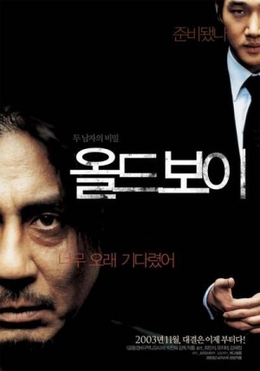
At the core of Park Chan-wook's filmography is a relentless investigation of revenge, human nature, and the limits of psychological endurance. He approaches vengeance not as a simple mechanism for justice, but as a deeply corrosive force that unravels the moral fabric of his protagonists. In Oldboy, the quest for retribution is depicted as a spectacular convulsion of violence, where the lines between captor and victim blur into a shared tragedy of sacrifice and moral dissolution. The emotional depth of his characters is often measured by their capacity to withstand trauma.
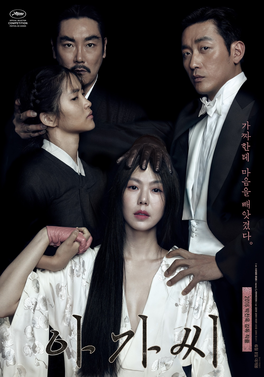
Intertwined with this fixation on revenge is a profound exploration of erotic tension and suppressed desires. Park frequently utilizes intimacy and explicit sexuality as tools for power, manipulation, and ultimate liberation. In The Handmaiden, eroticism becomes a complex game of longing and affection, weaponized within a con-artist story but ultimately revealing genuine psychological themes. His framing of sexuality echoes the transgressive spirit of Nagisa Oshima, yet it remains distinctly anchored in his own gothic influences and romantic sensibilities.
The concept of the twisting narrative serves as both a structural device and a thematic obsession for Park. His films are intricately constructed puzzle boxes that continually reorient themselves, refusing to show all their cards until the final moments. Characters are trapped within these labyrinthine plots, navigating deceit, gaslighting, and shifting loyalties. This narrative whiplash forces the audience to confront the unreliability of perception, reinforcing the director's central thesis that human motivation is inherently deceptive and endlessly complex.
Stylistic Signatures
Park Chan-wook possesses a visual language defined by its seductive imagery, meticulous composition, and a striking balance between the grotesque and the beautiful. His early stylistic signatures, heavily present in Oldboy, rely on a visceral, kinetic energy. The camera captures uncompromising brutality with an unflinching eye, turning moments of extreme violence involving limbs, teeth, and live octopuses into haunting, blood-spattered tableaux. This approach yields authentic thrills while forcing the viewer into a state of complicity with the on-screen horror.
In contrast to the raw kineticism of his early work, Park's later stylistic evolution embraces a lush, classicist approach to mise-en-scène. The Handmaiden exemplifies this shift toward artistic elegance, featuring period piece production design that drips with gothic influence and ornate detail. Every frame is carefully calibrated to enhance the psychological themes of the narrative, utilizing shadow, texture, and opulent sets to manifest the internal claustrophobia of his unforgettable characters. The visual imagery is so quietly masterful that it elevates genre conventions into high art.
Beyond his visual mastery, Park employs editing rhythms that enhance the psychological disorientation of his narratives. He utilizes jarring cuts and intricate match transitions to bridge fractured timelines, perfectly complementing his twisting, layered scripts. Whether indulging in the gritty complexity of an urban thriller or the artful elegance of an erotic romance, his stylistic choices are never merely decorative. They are essential mechanisms for exploring the profound depths of human cruelty and desire.
Recurring Collaborators
While Park Chan-wook's major breakthrough films do not rely on a strictly recurring ensemble cast, his approach to collaboration is defined by an ability to extract career-defining performances from dedicated actors. His demanding narratives require performers willing to undergo extreme physical and psychological trials. Rather than relying on a fixed troupe, Park seeks out specific talents who can embody the precise mixture of vulnerability and menace required for each unique cinematic puzzle.
The director's collaborative genius is incredibly evident in his casting of deeply layered, dual-natured characters. In The Handmaiden, he pairs impressive newcomer Kim Tae-Ri with the experienced Kim Min-hee, guiding them to create an intimacy that is both frankly sexual and emotionally profound. This partnership onscreen drives the erotic triumph of the film, proving that Park's strength lies in forging intense, temporary alliances with his actors to serve the specific needs of his shifting narratives.
The isolation of his protagonists often mirrors his distinct casting choices. By avoiding a predictable stable of recognizable faces across all his projects, Park ensures that each character feels uniquely trapped within their beautifully constructed nightmare. The actors become singular avatars for his explorations of redemption and sacrifice, throwing themselves into the visceral demands of the production. This philosophy of collaboration prioritizes the immediate, shocking impact of the performance over the comfort of familiarity.
Critical Standing
Park Chan-wook's critical standing has undergone a fascinating evolution, mirroring his transition from a provocative genre filmmaker to an internationally revered auteur. Early in his career, the reception of Oldboy polarized some critical circles. While many hailed it as a beautifully blood-spattered modern classic that pushed the boundaries of the thriller genre, others viewed it as an endurance test. Detractors occasionally labeled his early work as pristine examples of style and plot over substance, questioning the moral complications of his brutal revenge elements.
Despite these initial debates, the undeniable craftsmanship and audacious vision of his thrillers secured his place as a seminal figure in the South Korean cinematic New Wave. He drew frequent comparisons to Western masters of tension, with critics placing him in the lineage of David Fincher and Quentin Tarantino. His uncompromising willingness to explore the darkest corners of human nature earned him a devoted cult following and demonstrated that his work possessed a spark that sterile remakes wholly lacked.
With the release of The Handmaiden, critical consensus shifted toward unanimous acclaim, recognizing a profound maturation in his artistry. Reviewers who once questioned his reliance on extreme violence now praised his artful elegance and unironic classicist styling. Comparisons expanded from contemporary provocateurs to classical traditions, invoking the spirits of Rebecca, Jane Eyre, and In the Realm of the Senses. Today, Park is firmly situated in the critical pantheon as a master filmmaker, celebrated for seamlessly weaving thrilling plots with undeniable emotional depth.