Career Overview
Ang Lee stands as one of contemporary cinema's most adaptable and culturally transcendent auteurs. Emerging from the Taiwanese New Wave, he quickly established a reputation for fluidly navigating deeply specific cultural milieus while maintaining a universal emotional resonance. His career is characterized by a fearless genre-hopping trajectory, moving from intimate domestic dramas to sweeping historical epics and technologically groundbreaking spectacles without ever losing his signature humanist touch.
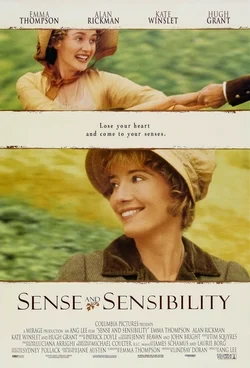
His breakthrough into prestigious English-language filmmaking arrived with Sense and Sensibility in 1995. This project proved his extraordinary ability to decode the rigid societal structures of nineteenth-century England, earning him widespread acclaim and demonstrating his capacity for faithful, highly intelligent adaptations of literary classics. The film positioned him as a director capable of infusing traditional period pieces with witty dialogue and profound emotional intelligence.
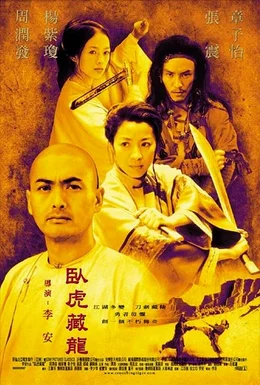
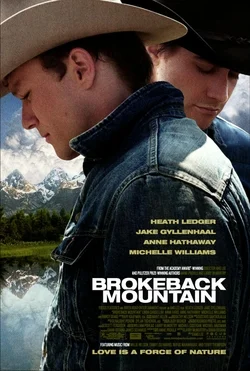
Lee completely shifted critical expectations at the dawn of the new millennium with Crouching Tiger, Hidden Dragon. This breathtaking venture into martial arts cinema brought a largely marginalized genre to the forefront of global prestige cinema. Five years later, he subverted the American Western with Brokeback Mountain, delivering a slow-burning romance that challenged the traditional cinematic boundaries of masculinity and became a defining cultural touchstone of the 2000s.
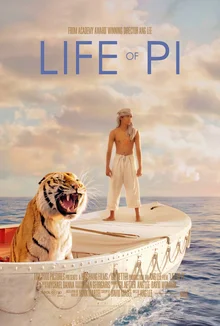
In his later career, Lee transitioned into a pioneer of digital cinema. Life of Pi marked a daring leap into 3D technology and intensive computer-generated imagery, exploring grand existential themes through visual mastery. While this technological phase of his career has sparked varied critical discourse, Lee's historical position remains secure. He is a cinematic chameleon whose distinct authorship relies on profound empathy, rigorous formal control, and an unyielding desire to explore the human condition across diverse historical and geographic landscapes.
Thematic Preoccupations
The conflict between personal identity and societal constraints is the defining thematic spine of Ang Lee's filmography. His protagonists are frequently trapped by the expectations of their environments, forced to navigate the agonizing space between duty and desire. In Sense and Sensibility, love and marriage are heavily mediated by social class and familial obligations, forcing the characters to conceal their truest affections behind polite decorum.
This tragic suppression of the self reaches its devastating apex in Brokeback Mountain. Here, forbidden love is stifled by the rigid, hyper-masculine codes of the twentieth-century American West. Lee crafts a sorrowful narrative where societal homophobia and internalized shame prevent his protagonists from living authentic lives, turning their enduring bond into a source of profound heartache and existential isolation.
Existential exploration and spiritual journeys form another crucial pillar of Lee's narrative preoccupations. Life of Pi pushes the boundaries of a survival adventure to interrogate the nature of faith itself. By stranding his protagonist in the vastness of the Pacific Ocean, Lee transforms a tale of a shipwreck into an inquiry about humanity as a vessel of insignificance within a miraculous universe, blending multiple religious traditions to enfold the story in the wonder of life.
Furthermore, themes of love and honor permeate his action-oriented works. Crouching Tiger, Hidden Dragon intertwines martial arts in nineteenth-century China with a profound meditation on obligation and repressed passion. Even the most legendary warriors in Lee's universe are bound by societal codes and unexpressed desires, proving that the internal battle for emotional liberation is always more grueling than any physical combat.
Stylistic Signatures
Ang Lee possesses a remarkable visual adaptability, tailoring his cinematographic approach to the specific thematic demands of each narrative. He seamlessly marries gritty realism with luminous imagery, utilizing landscape and setting as active emotional forces. The breathtaking, isolated vistas of Brokeback Mountain and the grand aesthetic of the treacherous ocean in Life of Pi serve as vast external mirrors for the intimate, internal struggles of his characters.
A trademark of Lee's directorial style is his devastating understatement. He frequently relies on nuanced storytelling, using subtle gestures, loaded silences, and lingering glances to convey heartbreak. This profound restraint prevents his films from slipping into melodrama, allowing the tragic and sensual themes to resonate with a quiet, lingering power that critics often compare to the introspective cinema of Ingmar Bergman.
When exploring action, Lee subverts genre conventions through an emphasis on grace and mysticism. In Crouching Tiger, Hidden Dragon, he captures martial arts with a mystical weightlessness, staging combat as a form of balletic expression. The fight scenes are choreographed with exquisite grace, functioning not merely as spectacle but as an exhilarating extension of the characters' dialogue, romantic yearning, and spiritual discipline.
In his later work, Lee has embraced cinematically bold technological innovation to achieve magical realism. Life of Pi represents a landmark in visual mastery, utilizing mindblowing digital effects and immersive 3D formats to plunge the viewer into aquatic environments and astonishing nighttime typhoons. Despite this heavy reliance on digital manipulation, Lee ensures that his startling moments and grand visual flair always serve the spiritual voyage at the heart of the narrative.
Recurring Collaborators
Unlike many auteurs who build a consistent repertory company of actors, Ang Lee's filmography is defined by a chameleon-like adaptability that necessitates entirely distinct ensembles for each project. Across the films in this database, there are no recurring cast members, a fact that highlights his expansive, eclectic approach to casting. He approaches each unique cultural milieu as a blank slate, selecting performers who perfectly embody the specific societal constraints of the given world.
Instead of carrying actors from project to project, Lee excels at extracting career-defining performances tailored to the immediate narrative. He guided Heath Ledger and Jake Gyllenhaal to startling, deeply nuanced performances in Brokeback Mountain, rooting their forbidden love in a gritty realism. By focusing intensely on the unique chemistry required for a single film, Lee crafts singular, isolated masterpieces of ensemble acting.
Behind the camera, Lee relies on targeted creative partnerships that elevate his adaptations. For Sense and Sensibility, his collaboration with screenwriter and star Emma Thompson resulted in an exceptionally intelligent script. Thompson's witty, insightful dialogue captured the essence of Jane Austen's novels, providing Lee with the perfect foundation to explore family bonds and social class.
Similarly, Lee's partnership with veteran action choreographer Yuen Woo-ping for Crouching Tiger, Hidden Dragon was instrumental in achieving the film's original cinematic style. Woo-ping brought an exquisite grace to the martial arts sequences, allowing Lee to master a completely new genre. These specialized collaborations demonstrate that Lee's most consistent creative strategy is seeking out the ideal experts to help him build entirely new cinematic worlds.
Critical Standing
Ang Lee occupies a rare and exalted space in contemporary cinema as a filmmaker who seamlessly bridges independent art-house sensibilities with global blockbuster appeal. His critical standing is anchored by massive awards recognition and a reputation for directing faithful adaptations that often surpass their source material. Reviewers frequently compare his cinematic scope to monumental classics like Lawrence of Arabia, while simultaneously recognizing his work's thematic ties to introspective masterpieces like The Ice Storm.
His mid-career works achieved nearly unanimous critical adulation for their emotional resonance and formal restraint. Sense and Sensibility established him as a premier director of period dramas, drawing highly favorable comparisons to established Merchant Ivory films. Subsequently, Crouching Tiger, Hidden Dragon was heralded as a knockout blow for its genre, soaring above lesser martial arts films to win top honors from critics circles worldwide and introducing unprecedented elegance to action cinema.
Brokeback Mountain solidified Lee's legacy as a courageous, boundary-pushing auteur. Critics praised the film for avoiding cruel simplifications and didactic messaging, instead delivering an epic, slow-burning romance that fundamentally altered the cultural landscape of the Western genre. The film's sweeping accolades cemented his position as a preeminent director capable of deep human empathy and tragic storytelling.
However, his later technological experiments have occasionally polarized critical discourse. While Life of Pi was widely celebrated as a miraculous achievement and a best-of-the-year contender, it also faced detractors. Some critics found the film's magical elements to be a shallow, self-important narrative that culminated in an exasperating ending. Despite these divided responses to his digital experimentation, Lee remains universally respected as a cinematically bold visionary who continuously tests the limits of the cinematic medium.